


Apr 29, 2015 4:51 PM
Updated Feb 10, 2022 10:23 PM
Larry Wines: So, on April 30th, when we think about the fall of Saigon, we should think about the Tonkin Gulf Resolution that set us on the tragic, bloody road that took us there. And we should think about the arrogant decision to invoke "regime change" in Iraq.
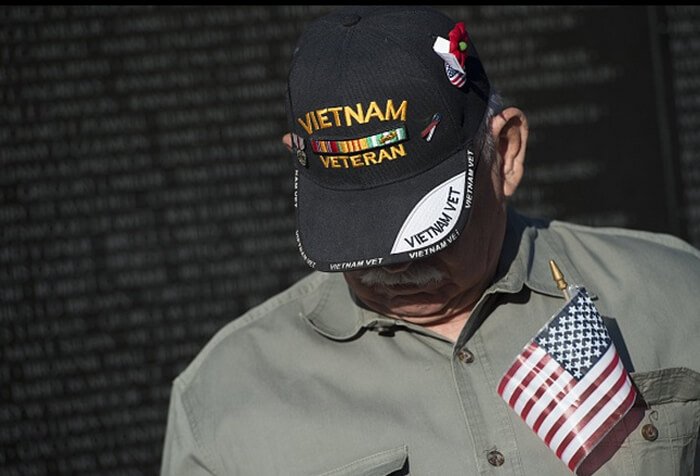
April 30th marks 40 years since the fall of Saigon rendered, with clarity and finality, the utter absurdity and uselessness of the American involvement in Vietnam. Nearly 60,000 dead American troops, plus countless others maimed by wounds, afflicted by Agent Orange, damaged from or addicted to various drugs, torn apart internally by what we now call PTSD, or beset with other ailments, maladies - and whether catalogued or never adequately diagnosed, some form of residual damage.
We never think about it because it makes us feel dumb, but before America moved in, the French military lost nearly 76,000 killed there. While Vietnamese deaths, military and civilian, from the 30 years of war AFTER World War II's Japanese occupation - are in the millions.
For four decades, America has managed to avoid or obfuscate the central question, whether we have learned anything of value, anything abiding, anything profound, anything that guides or cautions or sets parameters on our national ego. At the very least, that question is too rarely examined in terms of even obvious aspects in the spectrum of its ramifications. It's not simply an historical exercise, a post mortem on dominos we created to skew our view. Because we need to ask if some of today's most agonizing issues are a product of refusing, for all these years, to honestly and adequately face that question.
Related stories
Both the impending anniversary - we are a society that likes to focus our memory when dates roll around - and several chances to catch a TV airing should encourage us to resurrect that painful old question.
Tuesday night, with replays still ahead, PBS aired Rory Kennedy's Oscar-nominated two-hour documentary, "The Last Days in Vietnam." It's compelling, thoughtful, and revealing. If you're expecting the Alamo or Custer's Last Stand, those are the wrong analogies. It's far more complex and interesting, and told with great clarity. In the end, it is the multifaceted human story it should be, and it brings light to a national nightmare most of us have tossed into a dark closet.
You can catch it from 4-6 pm or 9-11 pm on Wednesday, and 9-11 am Saturday, all on the PBS World channel. And it airs 10 pm-midnight Saturday on the PBS+ channel, and 1-3 pm Sunday on PBS SoCal.
Our focus here is to pick up where the story told in the documentary left off, because that's the same place America left off in 1975, in our national need not to accept that "we" had lost a war.
After Saigon fell, American politicians spent the following few years assuring us we "would never be drawn into another Vietnam." Indeed, singularly in modern history, through the end of the '70s - the partial term of unelected President Ford and the four years of President Carter - America didn't invade or militarily attack anybody.
But we should note that the politicos who assured us against being "drawn in" do not appear to have ever said we would never be responsible for creating, from scratch, another Vietnam.
Welcome to Iraq and Afghanistan. And to endlessly tangled consequences with wholly unforeseeable outcomes we have naively unleashed in Syria, Yemen, Libya, Lebanon, Palestine, Israel, Saudi Arabia, Pakistan, Iran, and Iraq. And a lot of former Soviet "-stans" that we haven't yet heard from. We will.
Welcome to a world where obsessed absolutists gleefully torture educated women because they are educated, and deface, demolish, and ultimately destroy, completely, the archaeological treasures that are the common heritage of humanity. Where zealots who want to return to the Dark Ages of the 12th century make effective use of the internet, cyber malware, and all the modern weapons they can hijack, and where they finance it with stolen oil and cyber banking.
It is a strange world. Vietnam now makes your shoes. Syria and Iraq make your YouTube videos of beheadings of aid workers, reporters, any other westerners they can capture, and the gleeful destruction of the monuments left by ancient civilizations.
There are lessons in all this. We could take the easy road and say thanks, neocons - Shrub, Cheney, Rumsfeld, Wolfowitz, et. al. - but that is too easy. It fails to cite the media for allowing itself to be co-opted in the run-up to Iraq, when the only thing "embedded journalists" lacked was pom-poms, routines with basket tosses, and letterman's jackets.
And it fails to cite the politicians in congress who gave a pugilistic presidential administration - with a simplistic vision and no clear plan - the same, insanely irresponsible, wontonly reckless open-ended authorization for war in Iraq (and wherever else) that a previous congress had given a presidential administration 38 years earlier for an open-ended war in Vietnam (and wherever else).
So, on April 30th, when we think about the fall of Saigon, we should think about the Tonkin Gulf Resolution that set us on the tragic, bloody road that took us there. And we should think about the arrogant decision to invoke "regime change" in Iraq.
So, on April 30th, when we think about the fall of Saigon, we should think about the Tonkin Gulf Resolution that set us on the tragic, bloody road that took us there. And we should think about the arrogant decision to invoke "regime change" in Iraq. And ultimately, we should think about the protests that millions of dead voices would scream at us if somehow we could hear them after our actions were culpable in making them forever silent. In the words of a '60s anthem:
"How many times must the cannonballs fly,
Before they are forever banned?
The answer, my friend,
Is blowin' in the wind.
The answer is blowin' in the wind."
And we need to think about all the metaphors that swirl with that blowin' wind from Bob Dylan's lyrics. Because it's always too late for the poets when the bombs detonate, whether dropped from a drone or detonated under a vehicle.
Once the cannonballs fly, we repeat, anew, the easily forgotten, instantly rediscovered confrontation with the incomprehensible. The insane confusion of dust-in-the-eyes, blood-spattered clothes, impaired senses, fog-of-war winds.
And we always assure ourselves that before we ever casually or self-assuredly or zealously believe it again, we will, THIS time, learn the lesson from having just done it (again). Yet the metaphors multiply tragically and mix crazily in the insanity of war: again we engage in a chess game of bloodsport to reap the whirlwind and exchange Hollywoodesque hoo-rahs without bracing for the crashing, crushing, deafening reality of the hurricane, with its flooding and drowning and suffocation and the communications losses of its power outages and its truckloads of body bags and its solemn arrival of flag-draped caskets. All because it's crazy, and it makes those caught up in it crazy.
So we must destroy the village to save it. And all we seem able to do is crank-out another silly linguistic grab-bag, a word salad to explain the unexplainable, because we require justification. All to make the incomprehensible fit into the news hole between all the ads.
And despite cable's neo-news channels with lineups of newsotainment's talking head stars and Fox's bevy of fear-mongering bimbos, it still doesn't make sense. Uncle Walter is as gone as Joe DiMaggio when the nation turns its lonely eyes, because nobody has ever taken the place of the long-gone most trusted man in America. Instead, we get exaggerated experiences from embedded reporters who succumb to the me-too of the Pentagon's rah-rah-hooo-rah.
And we fail, again, to recognize it's all representative of what you're guaranteed to get after the fact when thrill-seeking journalists are in helicopters that are hit, but not really. And when their editors are influenced by their corporate mega-giant owners whose other stocks post dividends from the military-industrial complex's avionics contracts. And because politicians who were responsible must preserve plausible deniability to keep reelection cash coming in.
Then, that unholy alliance tries, in common, to explain what happened after the actual reality of shock and awe was invoked, but they must do it within parameters of what is acceptable from the perspective of the interests they serve.
Of course, yet again, no promised lesson was learned.
So, now: who is thinking, "The hell with those uncivilized bastards over there. Let them have their damned sand. Let them all kill each other." And the more educated and worldly among us add, "We just need to keep them from destroying any more irreplaceable archaeological sites."
Yep. Just realize who bears responsibility for those uncivilized bastards gaining the ability to do what they are now doing. We are, as usual, playing with forces we cannot begin to understand. Sadly, that isn't new.
It keeps manifesting in so many ways. The Bushies instituted a policy that put leftover tanks and other military combat gear and weapons into the hands of local cops, where it becomes "tactical" gear. Using it isolates and alienates police from the citizens they are supposed "to protect and serve." It may even make police who use it feel invincible in wholly new ways (that's currently being studied). Who knows what encountering it does to combat veterans dealing with psychological or other wounds?
In a sense, it's one manifestation of proof that we haven't learned anything about sending Americans into war, because it is clear that we do not comprehensively or thoughtfully plan for what happens to the people or the armament we spend astronomical amounts to send. We should never have created a scenario that requires us to passionately demand that we end this insane robocop crap and put our police back on the streets, walking beats in ordinary cop uniforms. Every serious analysis supports those making that demand, going back to the published studies that followed the Watts Riots in 1965, the Rodney King Riots, Ferguson, most recently - and wait for it, because Baltimore will surely follow.
There is an insidious multilayered connection that should never have developed. It is between a foreign policy that defaults to war; veterans who have experienced ghastly battle-environment shocks and come home to a sudden loss of a supportive trusted peer environment where they can't get decent civilian jobs; cops that redefine themselves as so endangered that they need tanks to control the citizenry; and in general, society's post-9-11 obsession with the illusion of controlling everything and everyone.
We have become a society that expects violence, whether racial or instigated by law enforcement, despite the fact that crime is down dramatically. It doesn't matter that only one-half of one percent of our population signs-up for military service. The NRA has enough people convinced they need assault rifles to protect themselves from the threat (presumably, the threat from the rest of us).
Circumvent threats. Lock 'em up. The basis for how we operate our society is predicated on how we control things, and ultimately, how we control people. A wall at the southern border because we need control. Requirements for things you never needed before if you want to vote, because we need control. Robocop gear because we need control. Walking while black on THIS street, well, that needs to be controlled. If you don't have control, things get violent. So we get felt-up at the airport. We're no longer able to spend a few hours in Tijuana or Vancouver or Toronto without a passport.
Control. For your protection. It doesn't make us safer. It makes us stressed and alienated and cynical and angry. Sociologists and psychologists tell us those emotions and attitudes and frustrations are causal factors that precipitate problems, extending to all forms of domestic and societal violence, from spousal abuse to road rage. Apply it to a neighborhood with high unemployment, a predominantly minority population, a history of racism and real or imagined racist law enforcement, and you get Ferguson or Baltimore. Where exposing that control is an illusion produces a need for applying extreme measures of control, and escalating it until a higher authority stops it.
We were going to learn a bitter lesson about hubris from our experience in Vietnam. Because we didn't do that, the thing we needed to learn became the base cause of our alienation. It made us self-obsessed with showing we aren't losers. It gave us a need to prove we're the biggest badass on the block. And, like the frat boy who just keeps drinking, it set us on the pursuit of a lot of bad options. Here we are, left with the legacy of all that, after it became an exponential phenomenon.
The fall of Saigon, forty years ago Thursday. A failure of control too embarrassing to face. The fall of Mosul in 2015, a city with a million-and-a-half citizens, to a bunch of barbarians whose cause and organization would not have existed but for our bull-in-a-china-shop arrogant desire to cause regime-change. Because in 2002, we had an opportunity to extend our sphere of control.
Maybe we don't watch enough horror movies. If we did, it may give us pause before unleashing so much real horror, over and over and over.
Or maybe we should hold ourselves and our national policy up to a mirror that isn't a funhouse mirror. Maybe we should apply ourselves to learning lessons when we say we will, and not avoid that task for forty years - and counting.

April 30th should be a day of national reflection, of realization that military strength is a dangerous illusion, because it can be suddenly shattered by a single individual as inconsequential as a suicidal absolutist.
Or, when it happens again, we can simply dismiss our inability to control it using our new-for-the-21st-century favorite default. We just righteously condemn and dismiss the terrorist as a brutal subhuman who convolutes religion into the ultimate obscenity. Then we take advantage of it to rattle our own saber and divert money once again from education and collapsing bridges - so we can upgrade our suddenly inadequate level of preparedness. Because we need control.
Will we ever learn that this behavior, both as policy and mind-set, does not change the fact that military might does not make right, for anybody? Or that the world's ruthless zealots have already proven themselves smart enough to make our vast arsenals irrelevant against their deadly techniques and methodology.
We are full-circle to the one question that has gone unanswered for 40 years, come Thursday.
Just whatever did happen to those politicians back in 1975 who pledged we would learn from our humiliating defeat in Vietnam, and we would never have another Vietnam?
Perhaps our undoing was allowing some supposed leaders to rewrite history for the popular consciousness to assert that we didn't "lose" in Vietnam, and to pump-up the rah-rahs and exercise the national ego with invasions of Grenada and Panama and Kuwait. That is, after all, the fork in the road that took us on the journey away from the lesson we should have learned in 1975, and lost completely during the Reagan and Bush 41 years.
So it brings us to now, beyond any lost intervening opportunies, 40 years hence, in 2015. And to the still open question whether we will learn now, or ever learn - that over-reliance on military options invokes a dangerous illusion of control, while unleashing myriad unforeseeable and wholly uncontrollable forces that can dwarf the importance of the original problem.
That should, in turn, bring us to such things as the observation making the rounds of social media last week, that future historians will be stunned that we were more afraid of Iran than global climate change.
History keeps bringing us to the same teachable moment, again and again. How many times? It's still blowing in the wind. We should call April 30th National Mea Culpa Day. That would allow us, at long last, to consider and ask and study and internalize and reflect and understand, and finally, to learn that lesson our politicians pledged to learn in 1975.
Larry Wines
Comments

Powered by RoundtableAn AI/DeFi-powered Enterprise Media Operating System. Learn more at Roundtable.io.© Roundtable 2026. By using this site you agree to the Terms of Use and Privacy Policy