


Apr 20, 2026 6:49 PM
Updated Apr 21, 2026 2:25 PM
As U.S. military spending dwarfs other priorities and Los Angeles continues increasing police funding despite falling crime, new People’s Budget data—and decades of research—show a stark truth: public will has little influence on how money is spent.
The United States spends more on its military—call it what it is: a global force apparatus—than the next several countries combined. Not just more in absolute terms, but as a sustained priority over decades. Other wealthy democracies fund militaries. The U.S. organizes its budget around projection of force.
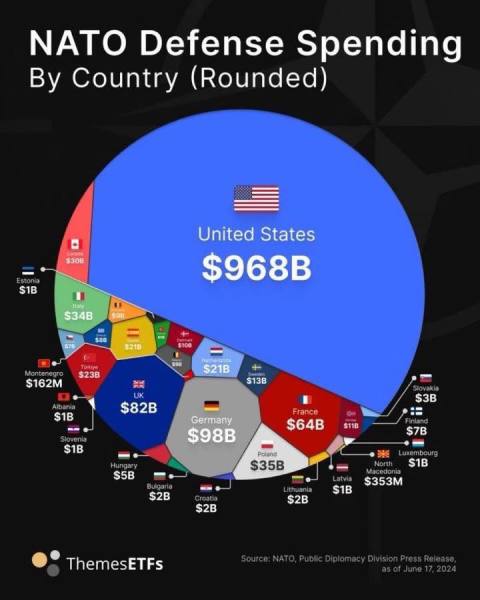
Now come down a level.
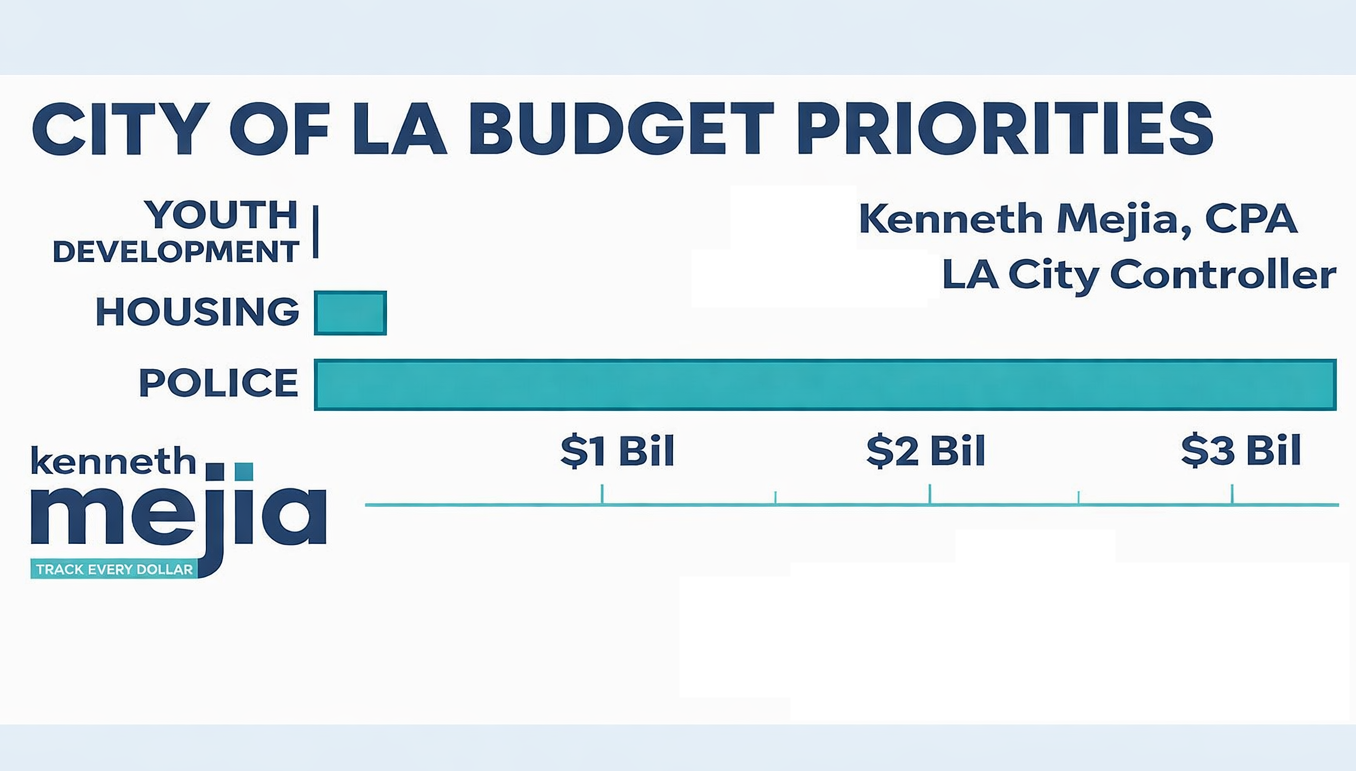
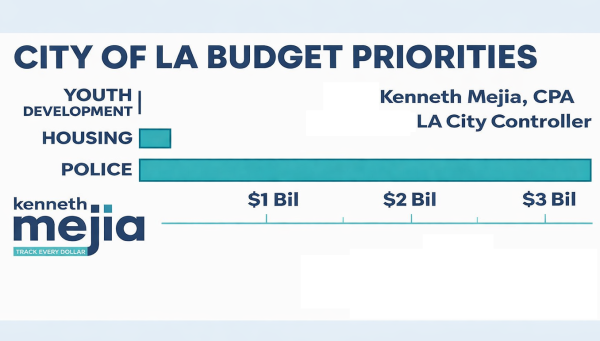
In Los Angeles, the same pattern repeats. Year after year, the city’s discretionary budget elevates policing—billions of dollars—while housing, youth development, and care systems fight over the crumbs that are left.
Different scale. Same logic.
Related stories
This isn’t coincidence. It’s a governing philosophy:
force and control first, everything else negotiable.
The Pattern Hiding in Plain Sight
Look at how priorities show up in both places:
United States
- Massive, persistent military spending
- Continues regardless of shifting global conditions
- Justified as necessary, non-negotiable, urgent
- Rarely subjected to the same "how will we pay for it?" scrutiny
Los Angeles
- Expanding police budgets
- Police budgets grow despite declining crime rate
- Growth justified as necessary—even when conditions change
- Consistently prioritized over housing, care and crime prevention
Here’s the contradiction:
We are told we live in a constant state of vulnerability.
But our budgets tell a different story.
If the danger—globally and locally—were truly as severe and relentless as we’re led to believe, we would expect to see greater investment in diplomacy abroad and prevention at home.
Instead:
- Crime declines, yet policing budgets grow
- Conflicts persist, yet military spending expands
- Social needs deepen, yet investment in meeting them falls behind
This isn’t a system responding to risk.
It’s a system organized around force—regardless of what the data shows.
That’s not a response to danger.
That’s a commitment to a model.
The People’s Budget Says the Quiet Part Out Loud
On April 16, 2026, the People’s Movement Assembly presented this year’s People’s Budget in Los Angeles.
What it revealed should reset the conversation.
Crime has been down for multiple budget cycles.
And yet:
Funding for the Los Angeles Police Department continues to grow—well beyond what residents repeatedly say they want or need.
This is the key point:
- The level of spending does not track with the level of harm
- It tracks with entrenched priorities
In other words:
We are spending far more than the actual level of vulnerability warrants.
What the Data Says About Democracy
This isn’t just a Los Angeles story.
Political scientists Martin Gilens and Benjamin Page studied decades of policy outcomes and found:
The preferences of average citizens have little to no independent influence on what government actually does. Case in point, what percentage of Americans want to spend $2 billion a day on what is going on in Iran?
Now put that next to what the People’s Budget process reveals:
- Residents call for housing, care, and community investment
- The city continues to expand policing
Different methods. Same result.
What people want does not resemble what they get.
The Room Tells the Truth Too
I attended the People’s Budget report this past Thursday in Los Angeles.
Roughly 200 people were in the room.
All but a half dozen were Black and that number was bolstered by the political candidates in the room who were each given an opportunity at the mic.
That’s not incidental.
That’s diagnostic.
Because while the data shows a disconnect between public will and public policy, the room shows another:
We have not built the cross-racial, cross-cultural alliances necessary to force alignment.
Power doesn’t respond to isolated constituencies.
It responds to broad, sustained coalitions.
The Language That Keeps the System in Place
Now go back to the words we hear every day:
- “Security”
- “Public safety”
- “Tough on crime”
After everything we’ve just seen, those words should land differently.
Because they are not neutral descriptions.
They are narrative tools.
They do three things:
1. They inflate perceived threat
They keep the public oriented toward fear—suggesting danger is ever-present and escalating—even when data shows otherwise.
2. They obscure uneven impact
They present policies as universally protective, while the harms are concentrated:
- Black and Brown communities over-policed and under-protected
- Poor communities under-resourced
- Entire regions abroad are destabilized
3. They secure buy-in from those least affected
That language reassures populations who are not the primary targets—at least not right now—so the system can operate without broad resistance.
What “We Can’t Afford It” Really Means
Now the phrase comes into focus.
When leaders say:
“We can’t afford housing, healthcare, or education at scale”
What they mean is:
“We are choosing to prioritize systems of force and control—even when the level of threat does not justify the level of spending.”
When budgets expand in the absence of corresponding need:
That is not prudence.
That is misalignment reinforced by narrative.
The Throughline
From Washington to Los Angeles, the pattern holds:
- Spending on force expands beyond demonstrated need
- Public preference is sidelined
- Language is used to maintain compliance
And the result is a public that is:
- more fearful than conditions warrant
- less empowered than a democracy requires
Bottom Line
“We can’t afford it” has never really been about affordability.
It has been about:
- maintaining priorities that don’t match actual conditions
- sustaining a gap between public will and public policy
- and using language to make that gap feel reasonable
We are not under-resourced.
We are misled about what the resources are for—and how necessary that spending really is.
That’s not a budgeting problem.
That’s a democracy problem.
Thank you for reading the LA Progressive. Please share this article and the information it contains. Here is a list of Peoples Budget sites. If you know of other sites that offer opportunties to take action, please place a link in the comments.
Comments

Powered by RoundtableAn AI/DeFi-powered Enterprise Media Operating System. Learn more at Roundtable.io.© Roundtable 2026. By using this site you agree to the Terms of Use and Privacy Policy