


Jun 15, 2026 4:13 PM
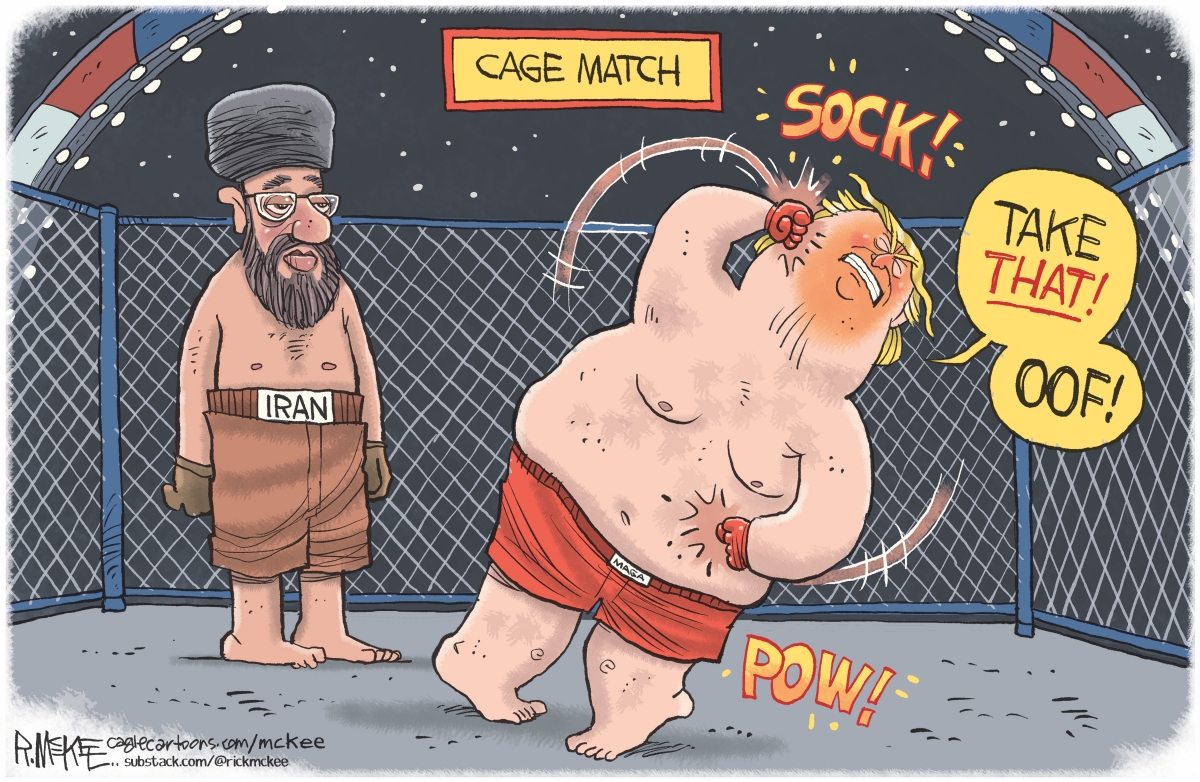
The recent U.S.-Iran confrontation may have revealed a strategic reality Washington has long ignored: Iran’s ability to disrupt global oil flows gives it more leverage than a nuclear arsenal ever could.
Negotiating with the Iranian regime is no job for amateurs. It took American diplomatic professionals several years to finalize the agreement President Obama made with Iran, and about ten seconds for Donald Trump to tear it up early during his first administration. The recent negotiations by Trump cronies may or may not have gotten a deal—after several dozen Trump statements that it would happen soon—but one might wonder just how good it is for the United States.
I suspect that the goal sought by both Obama and Trump—eliminating the possibility that Iran would produce atomic weapons—no longer needs to be an American priority, and actually never should have been a priority.
Iran's leaders have long insisted that they had no intention of developing atomic weapons. However after Donald Trump scrapped Obama's agreement, Iran began enriching uranium way beyond any conceivable purity needed for peaceful purposes—medical, power stations, etc.
Iranian leaders clearly have been lying. (What, political leaders lying? How unusual!) As we will see, they have also been wasting a great deal of money. But they are intelligent people and, thanks to Donald Trump's ill-advised military attack, they probably now understand that they no longer need atomic weapons.
Related stories
The American attack revealed that Iran's ability to block traffic through the Strait of Hormuz is a more powerful military asset than atomic weapons. Blocking Hormuz can be used both defensively (as Iran has been doing since Trump's attack) and offensively. Atomic weapons, however, can only be used defensively.
Atomic bombs could only be used when they were all controlled by one country—the United States from 1945 until the Soviet Union exploded its first bomb about four years later. Since 1949, they have been useful only as deterrents against the use of such weapons by another country.
President Trump once famously asked why we should have atomic weapons if we don't use them,
suggesting that he did not understand why these bombs have never been used since the United States lost its short-time monopoly. Apparently his failure to understand this is shared by millions of Americans including members of Congress, since we have been obsessed with preventing “proliferation” to counteries like North Korea and Iran for decades.
The United States was able to deter a large and powerful Soviet Union from bombing us, so it obviously has the ability to deter minor countries like North Korea and Iran from doing so.
Even if Iran now has a much better weapon and does not need atomic bombs, Iran's leaders would be crazy to give up their right to produce them without getting something in return. At the very least, they will probably insist on having Iran's frozen foreign assets—many billions of dollars—unfrozen.
But Americans need not worry if Iranian leaders continue to waste their money pursing atomic bombs, since the country will not be able to use them to attack anybody, least of all Israel, which itself has atomic weapons.
Would that the United States itself would stop wasting tons of taxpayer money “upgrading” our own atomic weapons. The thousands of bombs that we already have are more than ample to deter other countries from bombing us, far more in fact than we need for that purpose. Why do we continue to spend hundreds of billions of dollars for useless “upgrades” which will be just as unuseable as the bombs we already have?
If Iran's rulers want to continue wasting money on atomic weapons, there is no reason why the United States needs to emulate their folly. We have much better things we can spend taxpayer money on.
Comments

Powered by RoundtableAn AI/DeFi-powered Enterprise Media Operating System. Learn more at Roundtable.io.© Roundtable 2026. By using this site you agree to the Terms of Use and Privacy Policy