


Aug 21, 2025 6:18 PM
Updated Sep 3, 2025 5:41 AM
When I first visited Japan twenty-five years ago, I had hoped to understand myself better, and to explore the negative feelings I carried about being Japanese American.
When I first visited Japan twenty-five years ago, I had hoped to understand myself better, and to explore the negative feelings I carried about being Japanese American. More Videos
Visiting Japan during the 2025 World Conference Against Atomic and Hydrogen Bombs, brings out the contradictions and complications of being Sansei Japanese Americans. We are born in the US, yet are the bridge to the past as we remember our Grandparents who immigrated from Japan (and spoke little English), and our parents who were US citizens. When WWII broke out the contradictions forced Japanese Americans to take a side. There were those who renounced their US citizenship, others fought in the US military to prove their loyalty, as Japanese Americans were the target of hate and racism and forced into incarceration camps in desolate parts of the country. When I first visited Japan twenty-five years ago, I had hoped to understand myself better, and to explore the negative feelings I carried about being Japanese American. I was surprised that the visit kindled a feeling of homecoming to a land I never knew and brought thoughts of my ancestors making the difficult choice to leave Japan back in the 1880’s.
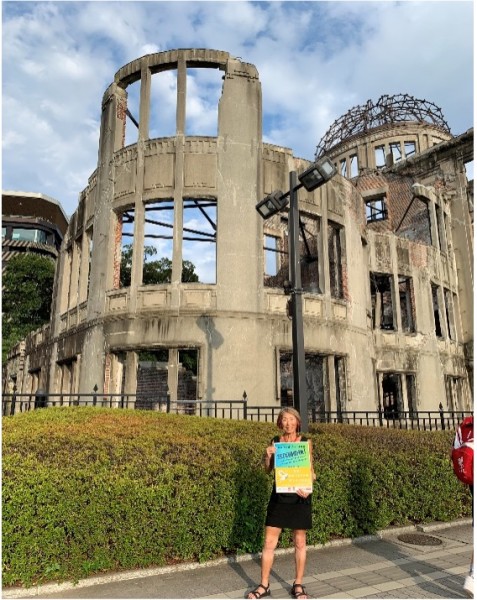
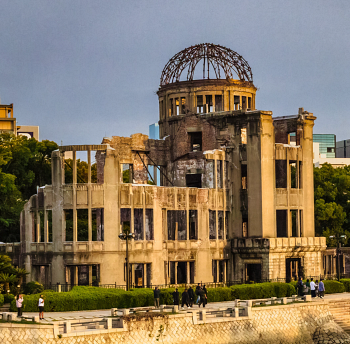
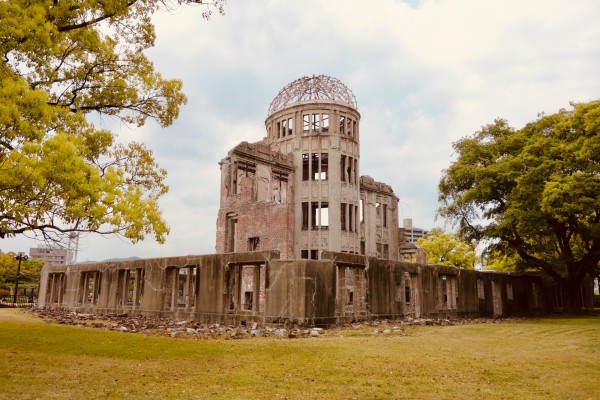
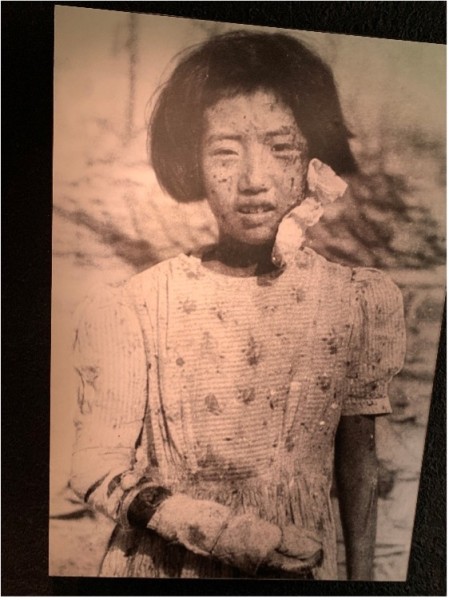
When visiting Hiroshima on the 80th anniversary of the bombing, the horror of seeing August 6th at 8:15 am through the eyes of those who experienced it is harrowing and painful. While some may be quick to say that it was necessary to end the war, I ask those persons if they have heard the stories of the Hibakusha atomic bomb survivors, have they seen the pictures of the burnt bodies and the pain and suffering. And what if it was your own family that was bombed, because they lived on the other side of the Pacific? And why after all the devastation in Hiroshima, was a second bomb dropped in the city of Nagasaki three days later? The coverups of huge atrocities and degrading of humanity can be seen throughout history and across governments such as with the “Comfort Women” of WWII and prison camps. It is not a far cry to then ask how can there be reconciliation and how can we learn from the past when it is denied and erased?
Today 80 years later we are 89 seconds to midnight according to the doomsday clock put out by the Bulletin of Atomic Scientists, that tells us we are at our most dangerous point in human history and closest to human annihilation. We are aware that military force has increased as dialogue and restraint have decreased. The US preemptive attacks on Iran’s nuclear facilities, the genocide in Gaza, Russia’s nuclear threats as it continues its invasion of Ukraine are all reasons for alarm. Added to that are the real dangers of fascism that the Trump Presidency unilaterally unleashes everyday on our livelihood, our safety, upon our neighbors and cities extending to the world. While nuclear war may seem less imminent, in truth, it is before our eyes. It takes being on the ground in Hiroshima and Nagasaki to remember that nuclear war is also right in front of us.
On August 6th, 228 international delegates and guests at the 2025 World Conference against A and H Bombs from 15 countries gathered in remembrance of the over 210,000 deaths of people exposed to the radiation. This includes about 20,000 Koreans and unknown number of Chinese who were killed on foreign soil as they were forcibly brought to Japan. We gathered with an appeal to leaders and people around the world to open the road to a nuclear weapon-free peaceful and just world. We heard from the Hibakusha, survivors of the “hell on earth” who have suffered from the deep sorrow of losing their loved ones, as well as the health aftereffects of the atomic bombs, discrimination, prejudice and hardship.
Related stories
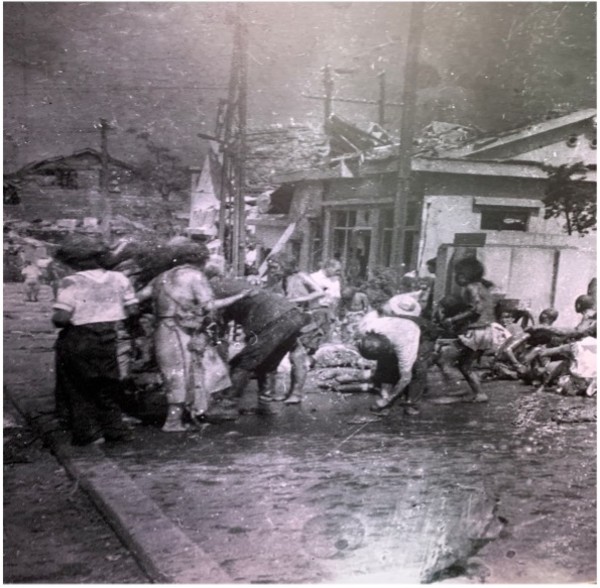
Knowing that we are closer to nuclear annihilation than ever before, the international delegation approved a resolution that called on the peoples of the world to take grand actions for prevention of nuclear war and the elimination of nuclear weapons.
Let us develop diverse forms of actions for the elimination of nuclear weapons as our common goal everywhere in the world, raising awareness of Hiroshima and Nagasaki, stop nuclear tests, and achieve compensation and assistance to Hibakusha and nuclear test victims. Action starts with education about the issues. Check out these resources for information, www.thebulletin.org, www.winwithoutwar.org, [email protected]. See the PBS show, “Atomic People.”
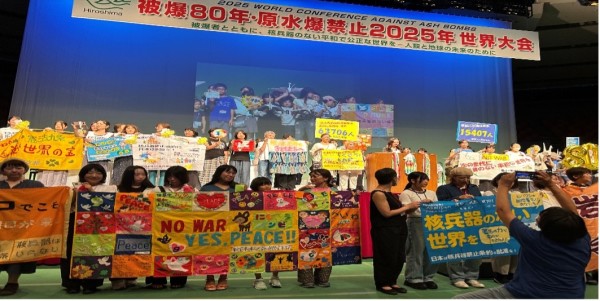
- Let us build up public opinion and movements calling for joining in the TPNW (Treaty on the Prohibition of Nuclear Weapons) in each country. In the US, as the country with the most nuclear weapons we have a responsibility to uphold arms control agreements and call upon our tax money to support human life and not modernizing our arms race. WILF (Women’s International League for Peace and Freedom) has a campaign on congressional bill HR-1888 and two resolutions H.Res-317 and 100 that leads to abolishing nuclear weapons and nuclear power.
- Let us further develop cooperation with governments and the United Nations that pursue the abolition of nuclear weapons calling upon international joint action to take place on the occasion of the Nuclear Non-Proliferation Treaty (NPT) Review Conference planned for 2026.
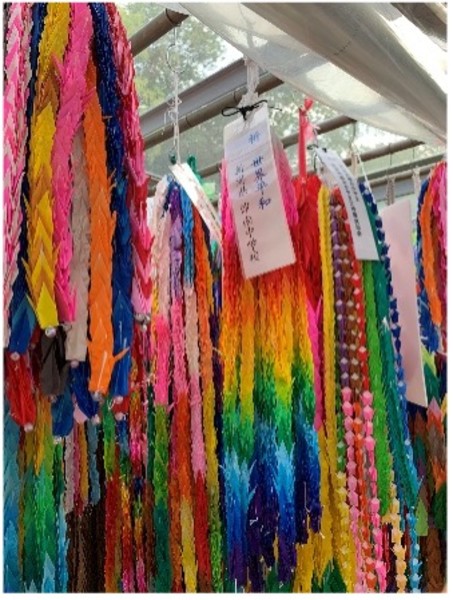
- Let us uphold the UN Charter, oppose aggression, war, and military buildup and work in solidarity with various movements seeking peace and disarmament to develop a global movement toward a “nuclear weapon-free, peaceful and just world.” Let us compensate victims of wars and make a shift from the trend for confrontation, division and military buildup so that resources can be used for the solution of various problems facing humanity. Let us address gender equality as an indispensable issue for peace and nuclear disarmament. Let us develop solidarity and cooperation with movements addressing issues such as the environment and climate crisis, poverty and inequality, discrimination and xenophobia, human rights and democracy.
And if you feel that you are just one person with little understanding or voice, taking committed actions with others makes a movement and can bring change. The choice we have is to do nothing and allow things to continue in the same direction, or to make a change. Joseph Gerson of Peace Action who has been doing this work for decades says “you keep moving in the ups and downs and look for the window of opportunity.” As Margaret Mead said, “Never doubt that a small group of thoughtful, committed citizens can change the world. Indeed, it’s the only thing that ever has.”
Comments

Powered by RoundtableAn AI/DeFi-powered Enterprise Media Operating System. Learn more at Roundtable.io.© Roundtable 2026. By using this site you agree to the Terms of Use and Privacy Policy