



May 14, 2016 2:19 AM
Updated Feb 10, 2022 10:59 PM
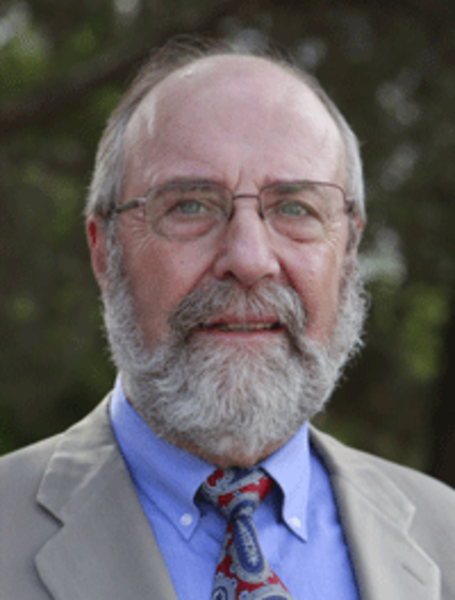
Robert Nelson: Of the remaining presidential contenders, only Bernie Sanders can lay claim to having participated for his entire career in the movement to stop nuclear war.
Stepping far from the madding crowd to prevent nuclear war
The presidential campaign slipped into silly season last week.
Ted Cruz withdrew. This reduced the number of neo-fascists in the race by 50 percent.
Donald Trump drew a major wild card seeking a fascist royal flush. He earned the endorsement of Dick Cheney.
Related stories
Secretary Clinton’s campaign continued to walk back her racist language used when she said “I have a lot of experience dealing with men who sometimes get off the reservation …,” referring to Trump. Her campaign refused to apologize, saying only that “she meant no disrespect to Native Americans.”
The Clinton-Trump mudfest undermines such contributions by grassroots voters to the national debate.
On the serious side of things, the only candidate who stayed out of the mudslinging, Bernie Sanders, picked up a primary election win in Indiana and moved closer to pulling off an upset in West Virginia.
A Look at History
In the past, the Democratic National Convention offered a chance for an energized Democratic base to influence national and world affairs.
Of the remaining presidential contenders, only Bernie Sanders can lay claim to having participated for his entire career in the movement to stop nuclear war.
Three decades ago, many leading Democrats and Republicans said our nuclear weapons arsenal could be rationally used as part of our military posture. But the weapons were too numerous; their delivery systems were too accurate. A movement for a nuclear weapons freeze sprang up. The committee for a SANE nuclear policy and a bilateral nuclear weapons freeze led a grassroots movement for change.
In 1982, the Southern California Federation of Scientists (SCFS) produced a study called “Nuclear War in Los Angeles.” It was devastating. If only 10 percent of the Soviet nuclear capability were successful in attacking Los Angeles, it would incinerate the entire LA basin. SCFS recommended that the United States should announce that we would never be the first to use nuclear weapons, and to challenge the Soviet Union to do the same. I was an author of that report.
Two years later, the Democratic Club of Pasadena and the Foothills endorsed the No First Use concept and brought the measure to the Democratic State Convention. I introduced the measure from our Pasadena club. California Democrats responded. It passed overwhelmingly.
At the time of the 1988 Democratic National Convention in Atlanta, the No First Use policy had the endorsement of a major presidential aspirant, the Rev. Jesse Jackson. Jackson advanced a No First Use plank for the Democratic Party Platform. I was selected as a local delegate to that convention. I was excited to learn that the Jackson campaign asked me to present this plank to the full plenary session of the Democratic National Convention. Our local Democratic Club had placed an issue before the entire world!
The Agony of Defeat
Sadly, the call for a No First Use policy on nuclear weapons was defeated on the convention floor. The old cold warriors prevailed, behind the support of group calling itself New Democrats led by a young Bill and Hillary Clinton.
In the years that followed, the absence of serious nuclear arms control by the superpowers led to a major increase in nuclear armed nations. The nuclear powers were joined by three nuclear armed upstarts: Israel, India and Pakistan. These upstarts embrace a morality defined by a self-centered concept of a higher being. Each has God on its side.
A Step Back From the Brink
Twenty years passed. A young Barack Obama wrestled control of the Democratic Party back from the Clintons. Despite making significant concessions to Democratic hawks, Obama advanced significant nuclear arms reductions by negotiating treaties with the other nuclear powers. For his efforts he received the Nobel Peace Prize.
The No First Use plan had succeeded despite being defeated 20 years previously on the convention floor. It is a point of civic pride that it all started with our Democratic club in Pasadena.
What Happens Now?
The two great leaders of the peace movement from decades past (SANE and Freeze) have merged to form Peace Action, which lays claim to roots from the Ban the Bomb movement of 1957. Their activism has continued for more than a half-century.
Today even Donald Trump and Hillary Clinton do not speak publicly of winning a nuclear war. Incineration of the world has become politically unpopular.
Of the remaining presidential contenders, only Bernie Sanders can lay claim to having participated for his entire career in the movement to stop nuclear war. For his efforts he earned the endorsement of Peace Action — and its legacy of a half-century of activity calling attention to the consequences of nuclear war.
While Mr. Trump and Mrs. Clinton continue to trade insults, Sanders continues to take the high road.
Robert Nelson
Pasadena Weekly
Comments

Powered by RoundtableAn AI/DeFi-powered Enterprise Media Operating System. Learn more at Roundtable.io.© Roundtable 2026. By using this site you agree to the Terms of Use and Privacy Policy