


Mar 4, 2026 7:40 PM
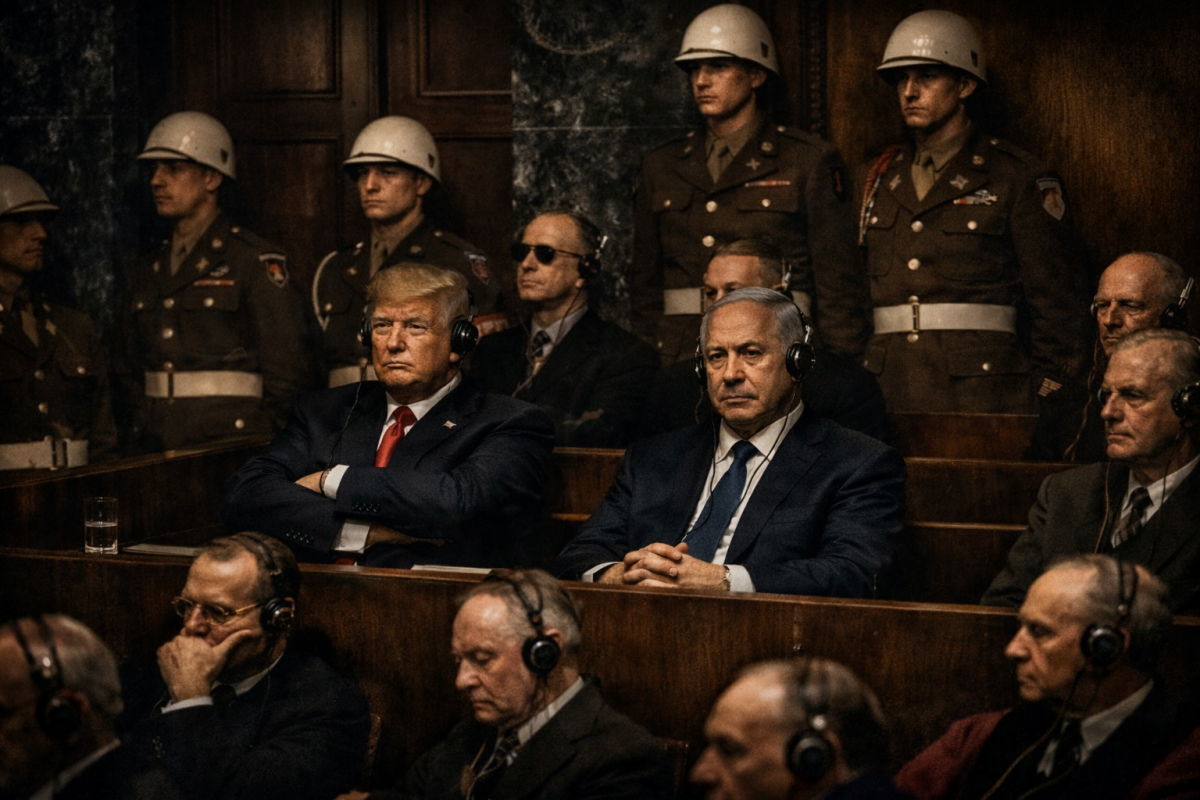
Nuremberg’s promise was simple but radical: power does not erase responsibility. The Iran strikes — and the global reaction to them — test whether that promise is finally meant for everyone.
Four score and three months ago, the Nuremberg Trials against the surviving German Nazis leaders began in the wake of World War II, forming the basis for post-World War II international law and the right to say “No” to illegal orders.
Celebrations of the 80th anniversary of those trials were still underway when five U.S. Members of Congress who previously served in the military, the CIA, and naval intelligence were threatened by Donald J. Trump’s Justice Department with prosecution. Their alleged crime? A video posted on social media reminding members of the US military and intelligence agencies of their duty to refuse to follow illegal orders.
Trump claimed the actions, the mere ratification of principles set down in the Uniformed Code of Military Justice, were nonetheless “seditious behavior … punishable by death.”
A year earlier, on November 21, 2024, the distillation of Nuremberg legacy called the International Criminal Court (ICC) issued arrest warrants for Israeli Prime Minister Benjamin Netanyahu and former Defense Minister Yoav Gallant regarding alleged war crimes and crimes against humanity in Gaza, starting October 8, 2023. Tens of thousands of Palestinian children were killed in the bloodbath. Netanyahu is, the ICC charged, “allegedly responsible for the war crimes of starvation as a method of warfare and of intentionally directing an attack against the civilian population; and the crimes against humanity of murder, persecution, and other inhumane acts.”
Related stories
The February–March 2026 U.S.–Israeli strikes on Iran have drawn sharp condemnation from U.N. human rights experts, regional leaders, and international legal scholars. Critics argue the attacks violated Nuremberg-inspired core principles of the U.N. Charter, including the prohibition on the use of force and respect for sovereign equality. Reports of civilian casualties — including claims that schools were struck — have prompted warnings that international humanitarian law may have been breached.
The “Nuremberg defense,” the claim that one was “just following orders” used by the defeated Nazi defendants, was found then to be an illegitimate legal argument, with subordinates open to prosecution for executing manifestly unlawful orders.
These reactions do more than criticize a single military campaign. They revive a foundational question first posed at Nuremberg: Do the rules prohibiting aggressive war apply equally to powerful states?
In 1946, the Nuremberg Tribunal declared aggressive war “the supreme international crime.” U.S. Chief Prosecutor Robert Jackson insisted that individuals — not abstract states — bear responsibility for unlawful war. That principle was revolutionary. It was meant to constrain power itself.
Yet for decades, American officials operated beyond meaningful legal accountability. Henry Kissinger’s tenure as national security adviser and secretary of state remains emblematic. His role in the clandestine upending of the 1968 peace negotiations with North Vietnam, the secret bombing of Cambodia, U.S. tolerance of repression in Latin America, and strategic calculations in South Asia generated intense criticism.
Former Nuremberg prosecutor Benjamin Ferencz repeatedly argued that the prohibition on aggressive war must apply universally. But no permanent court existed. No codified crime of aggression was operational. Prosecution of Army Lt. William “Rusty” Calley for his leadership in the 1968 My Lai massacre in South Vietnam and later commentary made clear that obedience to a manifestly illegal order does not shield an American service member from criminal responsibility. Kissinger, however, remained free.
The institutional gap mattered.
Today, the legal landscape is different. The Rome Statute of the International Criminal Court codifies war crimes, crimes against humanity, and — since 2017 — the crime of aggression. It defines leadership liability with precision. Civilian superiors may be criminally responsible if they knowingly facilitate or fail to prevent serious violations.
Against that framework, critics of the Iran strikes argue the action lacked U.N. Security Council authorization and did not meet the stringent requirements of self-defense under Article 51 of the Charter. Legal analysts writing in international law forums have characterized preemptive or preventive force absent imminent attack as unlawful. Human rights experts have warned that targeting civilian infrastructure or causing disproportionate harm could constitute war crimes.
Whether prosecution is likely is another matter. The United States is not a party to the Rome Statute. Aggression jurisdiction is limited. Power still shields.
But the difference from Kissinger’s era is structural. Accountability is no longer purely rhetorical. International institutions exist. Arrest warrants have been issued in other conflicts, perhaps most importantly against Trump promoter Vladimir Putin, officially wanted by the International Criminal Court for the kidnapping of thousands of Ukrainian children. Legal scrutiny travels farther.
Nuremberg’s promise was simple but radical: power does not erase responsibility. The Iran strikes — and the global reaction to them — test whether that promise is finally meant for everyone.
Comments

Powered by RoundtableAn AI/DeFi-powered Enterprise Media Operating System. Learn more at Roundtable.io.© Roundtable 2026. By using this site you agree to the Terms of Use and Privacy Policy