


May 25, 2023 2:58 PM
The terrible vengeance wreaked by the U.S. nuclear attacks on Hiroshima and Nagasaki has been wielded on the rest of the world ever since.
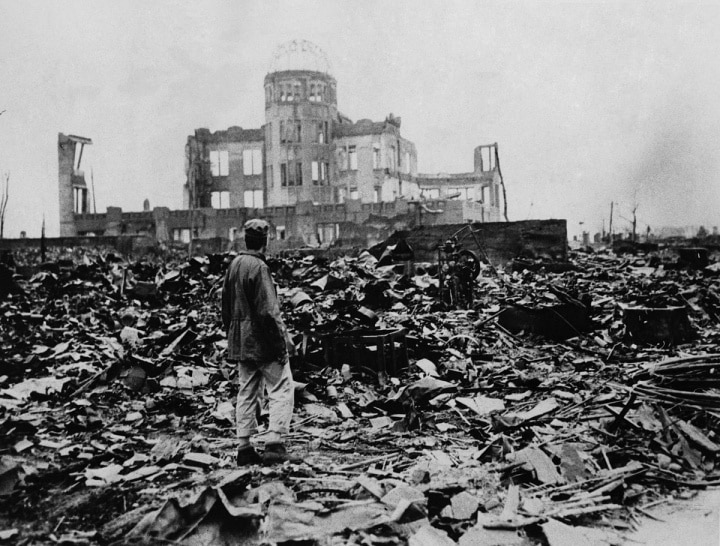
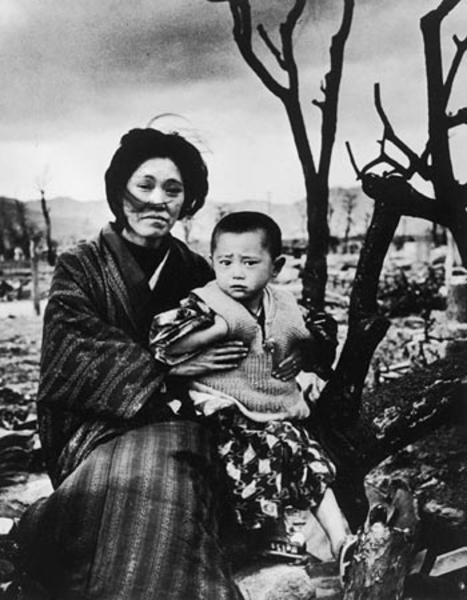
A Group of 7 meeting in Hiroshima to intensify war in Ukraine and escalate threats against China made perfect sense to the U.S. and its G7 allies. Hiroshima was crushed by the first of two nuclear bombs launched by the United States against Japan on August 6, 1945, at the end of World War II. It was the culmination of a bombing campaign that devastated 64 Japanese cities, killing hundreds of thousands of people – mainly civilians. This first nuclear attack left a toll of follow-on deaths from dramatically increased cancer and birth defects. It spawned the myth of “Godzilla, King of the Monsters” – a metaphor for nuclear weapons, but also considered by many Japanese to be a metaphor for the United States: a giant beast which took terrible vengeance on Japan.
President Biden had a chance to apologize to Japan during the G7 summit, when he joined other G7 leaders at the Hiroshima Peace Memorial.
President Biden had a chance to apologize to Japan during the G7 summit, when he joined other G7 leaders at the Hiroshima Peace Memorial. Staring at the monument for Japan’s Atomic Bomb Victims, Biden said nothing. Instead, he and the other G7 leaders issued a statement denouncing “Russia’s irresponsible nuclear rhetoric,” which has in fact been limited exclusively to warnings to the U.S. and NATO against nuclear escalation.
The G7 includes the United States, Britain, Italy, France, Germany, Canada and Japan. Leaders from South Korea, Brazil, Australia, Vietnam, Indonesia, India, Comoros, Cook Islands and some international organizations were also invited to the three-day gathering.
Related stories
The terrible vengeance wreaked by the U.S. nuclear attacks on Hiroshima and Nagasaki has been wielded on the rest of the world ever since. The “balance of terror” has been a fraction of it. Bolstered by “successful” bomb attacks on Japan, U.S. Air Force Commanders took out all the cities of North Korea during the Korean war, dropping more bombs there than the global total for World War II. It wasn’t enough. The Koreans, together with their Chinese neighbors, fought the U.S. to a draw – a no-victor armistice – in Korea that continues seven decades later. The United States maintains dozens of bases in South Korea, many nuclear-enabled, and many more in Japan and Japanese-occupied Okinawa. Nuclear missiles at these bases are aimed not only at North Korea and China, but also Russia. During far-right South Korean Prime Minister Yoon’s recent visit to Washington, Biden announced the U.S. would deploy nuclear submarines in South Korea (as well as in Australia and Guam), all aimed at both North Korea and China.
Asian Peace Movement Protests
The Japanese peace movement and its friends from the Philippines, South Korea, and the U.S., mobilized massively against the G7 meeting. There were continuous street protests during the three-day summit. Slogans were “Junk G7!” and “US Out of Asia Pacific!” and “End the Build Up to War!” Key organizers were the Tokyo-based Asia-Wide Campaign on People’s Resistance, and the Filipino popular movement BAYAN. The Resist US-Led War Movement, based in the U.S., also sent representatives.
Following days of protests, hundreds of demonstrators rallied May 21 against the G7 leaders' communiqué and other documents adopted by the summit, according to a Xinhua report. Protesters gathered near the Peace Memorial Park, which was closed due to the summit. They marched along the main streets in Hiroshima, crowded by hundreds of riot police officers.
‘Dr. Strangelove Is No Longer Satire’
“The world was fortunate that the Cuban Missile Crisis ended with both sides willing to seek accommodation rather than victory,” Roger D. Harris wrote recently. Harris is part of the U.S. Peace Council and the Sanctions Kill campaign. “In contrast,” he continued, “the currently raging and indeed escalating Ukraine War could be the prelude to World War III because neither side appears to have an exit strategy; one by choice, the other because its back is to the wall.”
Harris says “The U.S.’s intent is victory by ‘overextending and unbalancing’ Russia,” as a 2019 RAND paper suggested. Harris cites analyst Rick Sterling that “this was the playbook for the U.S. to provoke Russia into the current conflict. Bombers have been repositioned within striking range of key Russian strategic targets, additional tactical nuclear weapons deployed, and U.S./NATO war exercises have been held on Russia’s borders.”
Harris adds that “Now the prevailing propaganda from Washington is that nuclear war can be ‘won.’ Dr. Strangelove is no longer satire. This planning to fight a nuclear war as if it were not an existential threat is institutionalized insanity.” He cites Robert Kagan, spouse of U.S. Under Secretary of State Victoria Nuland, asking: “Can America learn to use its power?” He says Kagan “argues in favor of a vigorous nuclear confrontation with Russia on the grounds that Putin will most likely back down.”
Whether Russia will “back down” or not is debatable. But back in December 2021, Russian initiatives might have prevented hostilities and made the region more secure with a reduced likelihood of war. Russia proposed that:
- neither side use the territory of other countries to prepare or conduct attacks against the other;
- neither side should deploy short- or intermediate-range missiles where they could reach inside the other’s territory;
- neither would deploy nuclear weapons abroad and that any such weapons already deployed be returned; and
- both sides eliminate any infrastructure for deploying nuclear weapons outside their own territories.
When these measures were proposed by Russia, the U.S. considered them “non-starters.”
‘The Edge of Nuclear Catastrophe’
Jeffrey Sachs, Columbia University professor and Director of the UN Sustainable Development Solutions Network wrote last August that “The world is on the edge of nuclear catastrophe… because of the failure of Western political leaders to be forthright about the causes of the escalating global conflicts. The relentless Western narrative that the West is noble while Russia and China are evil is simple-minded and extraordinarily dangerous,” Sachs wrote. “It is an attempt to manipulate public opinion, not to deal with very real and pressing diplomacy.”
Sachs added that “European leaders should pursue the true source of European security: not U.S. hegemony, but European security arrangements that respect the legitimate security interests of all European nations, certainly including Ukraine, but also including Russia…. Europe should reflect on the fact that the non-enlargement of NATO and the implementation of the Minsk II agreements would have averted this awful war in Ukraine.”
Retired U.S. Colonel Douglas MacGregor says “NATO’s governments are divided in their thinking about the war in Ukraine. Except for Poland and, possibly, Romania, none of NATO’s members are in a rush to mobilize their forces for a long, grueling war of attrition with Russia in Ukraine. No one in London, Paris, or, Berlin wants to run the risk of a nuclear war with Moscow. Americans do not support going to war with Russia, and those few who do are ideologues, shallow political opportunists, or greedy defense contractors.”
Patriot Missiles, Tanks, and Fighter Jets
The U.S. and its G7 allies agreed to send F16 fighter jets at the Hiroshima summit. That culminates a parade of escalated weapons deliveries since late December, when the U.S. decided to send a Patriot air-defense system. Then came armored fighting vehicles; then tanks.
The flood of weapons shows Ukraine has “already become a de facto member of the NATO alliance,” as Defense Minister Oleksii Reznikov said in a January 2023 interview with a Ukrainian TV station. “We are carrying out NATO’s mission today. They aren’t shedding their blood. We’re shedding ours. That’s why they’re required to supply us with weapons.” Reznikov added that Kyiv is constantly reminded by its “Western partners” that it, “like a real shield, is defending the entire civilized world, the entire West,” from the Russians.
The Russian Security Council Secretary Nikolai Patrushev confirmed this view: “The events in Ukraine are not a clash between Moscow and Kyiv – this is a military confrontation between Russia and NATO, and above all the United States and Britain,” Patrushev said. “The Westerners’ plans are to continue to pull Russia apart, and eventually just erase it from the political map of the world.”
As Jeffrey Sachs wrote in August, “There is only one country whose self-declared fantasy is to be the world’s dominant power. It’s past time the U.S. recognized the true sources of security: internal social cohesion and responsible cooperation with the rest of the world, rather than the illusion of hegemony. With such a revised foreign policy, the U.S. and its allies would avoid war with China and Russia, and enable the world to face its myriad environment, energy, food and social crises.”
Parts of this article are excerpted from Dee Knight’s new book, A Realistic Path To Peace: How to Stop the New Cold War and Prevent Nuclear Disaster, available in mid-June from Solidarity Publications.
Comments

Powered by RoundtableAn AI/DeFi-powered Enterprise Media Operating System. Learn more at Roundtable.io.© Roundtable 2026. By using this site you agree to the Terms of Use and Privacy Policy