
ChatGPT

From Oppenheimer to Hiroshima
Apr 13, 2025 5:28 PM
Updated Apr 14, 2025 10:06 PM
My father, a nuclear physicist who received his PhD under Oppenheimer and later worked on the Manhattan Project, died of radiation-induced cancer
I am thinking this morning about cognitive dissonance, the psychological state of trying to reconcile two diametrically opposed ideas, like the woman who is opposed to abortion until she has to have one herself. The state of conflict she experiences is called cognitive dissonance. Or take, for example, the conflict of a vegetarian who secretly yearns for the taste of meat. They say people usually reconcile the dissonance by adding a third idea: the vegetarian reads an article on the importance of animal protein in his diet and decides occasional meat eating is OK as long as the beef is responsibly sourced; the woman speaks to her doctor about the problems with her pregnancy and comes to accept her medical need for an abortion. On the other hand, there are some opposing ideas that are a lot more difficult to reconcile, especially during times of war, like the use of nuclear weapons.
You might say I grew up with that kind of cognitive dissonance. We can all agree that nuclear weapons are wrong, but my father, a nuclear physicist who received his PhD under Oppenheimer and later worked on the Manhattan Project, died of radiation-induced cancer when I was not quite four years old. It was the defining event of my life. When I was barely old enough to talk, I was overwhelmed by my grief for him and lived in that state for years. The one thing that made it a little bit easier was that my mother told me he had been a very smart man, a man who knew Einstein and who helped to build the atomic bomb. I knew atomic weapons were wrong, but I never felt guilty or ashamed. He was dead, but he was special.
Later, when I decided to be a writer, I began to research his history in depth, reading books on the making of the bomb, going to every place he had ever worked, and talking to people who knew him. If I could not know my father in fact, I would know him through history, and it was fascinating. More than fascinating: a science fiction war drama to the Nth degree about saving the world from Hitler by achieving the most difficult scientific feat of all. It was a drama full of hubris, as only a great Greek tragedy can be, but the achievement was astounding: literally, remaking the power of the sun on earth. That Germany surrendered months before the bomb was used, I put down to too much hubris. Also, my father had signed the Franck Report, a petition from many of the scientists not to drop the bomb.
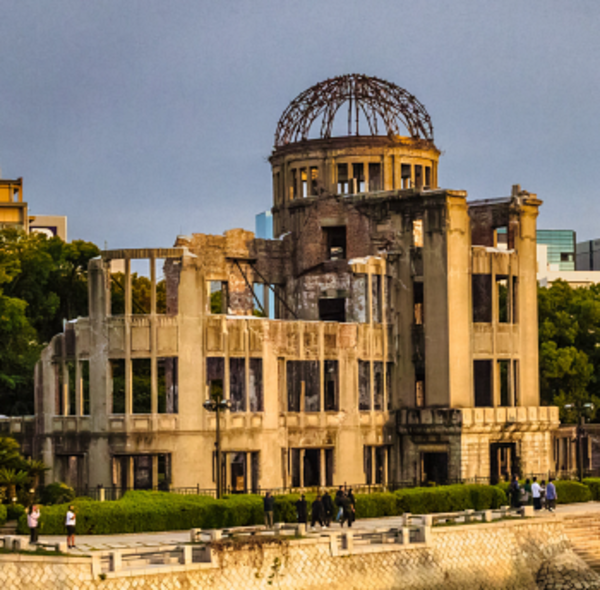
Then, a few years ago, I went to Hiroshima. Today it is a thriving city with towering glass office buildings that look more like the richer parts of West Los Angeles than the bombed-out city of my imagination, yet how could I hold onto the thrilling drama of the scientists as I walked in the shadow of so much suffering? I was there just a few days, but it was long enough. Inside Hiroshima’s Peace Museum, their memorial built on Ground Zero, is a permanent exhibit, and it was there that I met my perfect opposite: a few scraps of burnt clothing from a man killed by the bomb and his story written by his son, first in Japanese then translated into English: My father was on his way to work when the bomb exploded, the son wrote. He was incinerated instantly. He was an average man, but I was four years old, and I loved him. He was my father!
Related stories
Think about that kind of dissonance: the two men on opposite sides of a war killed by the same weapon, the one a victim, the other a maker, and the two children forever changed. I don’t love my father any less for what he helped to do, but I also don’t close my eyes to it.
Living with cognitive dissonance is difficult, but I am inspired by Thich Nhat Hanh, the great Buddhist teacher, who was exiled from Vietnam for almost forty years for not taking sides.
Of course I take sides against hatred, discrimination, and violence. How could I not? But not against people because, as Thich Nhat Hanh says, there is some goodness in all people, on all sides, if we can only listen long enough to find it. A few months ago, I had the honor of attending a presentation given by Seeds of Peace, a Palestinian/Israeli organization committed to the pursuit of peaceful change and to revolutionary listening. The world is always asking us to take sides, but we don’t have to.
Comments

Powered by RoundtableAn AI/DeFi-powered Enterprise Media Operating System. Learn more at Roundtable.io.© Roundtable 2026. By using this site you agree to the Terms of Use and Privacy Policy