


Jul 7, 2026 7:22 PM
Updated Jul 24, 2026 10:24 PM
From the Revolutionary War and Indigenous displacement to post-9/11 veterans’ trauma, America’s July 4th celebrations too often conceal the enduring human costs of war.
During July 4th celebrations full of fireworks, barbecues, and baked goods decorated like the American flag, it’s easy to forget that the date we just celebrated—the Declaration of Independence’s adoption—came during ongoing war. Notwithstanding some insightful journalistic commentary on that period’s complexity, sometimes I wonder whether most of us think of war at all when we see signs marking the 250th anniversary of the United States’ founding. Personally, as a military spouse, co-founder of Brown University’s Costs of War Project, and a psychotherapist serving military families, I want to remember violence removed from my own life, because forgetting makes it easier for us, as Americans, to continue hurting each other and people elsewhere in the world.
The Wars We Forget
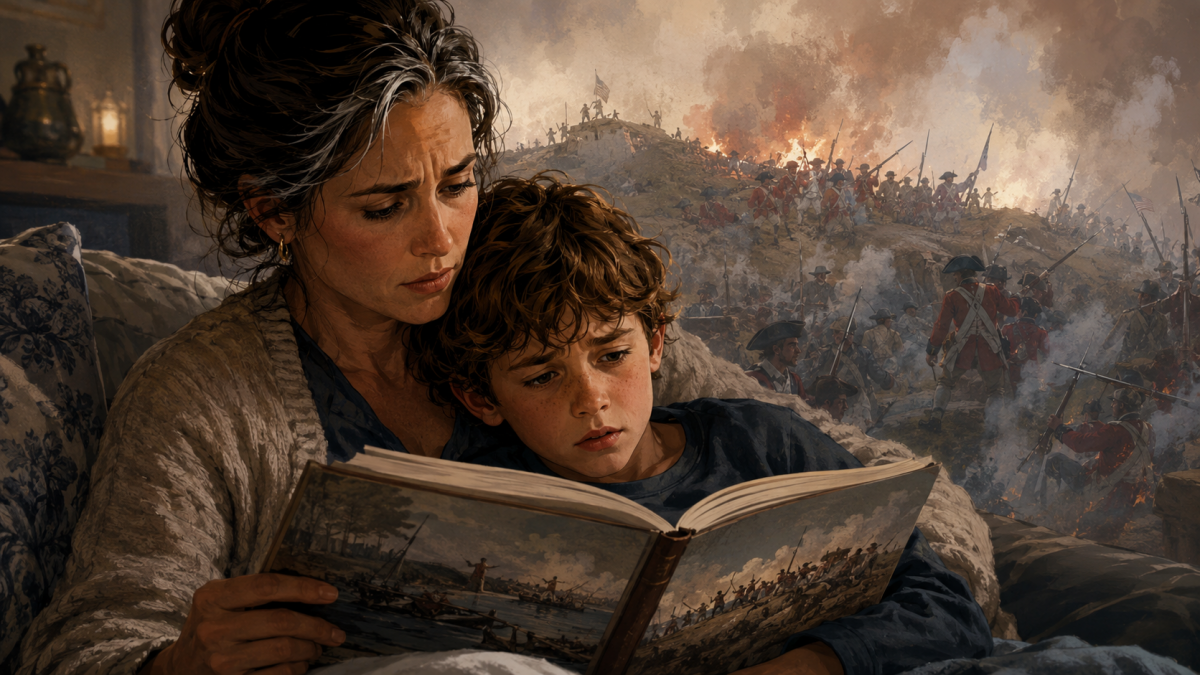
“Mommy, were you alive during the Revolutionary War? My then 8-year-old asked some years ago, while they read an account of fighting on Bunker Hill—a battle when some 450 colonists and over 1,000 British were killed or wounded in one day. I’d read a young adult book about the event before giving it to my kids, and my eldest had seen me flinch a bit at the story’s graphic accounts. I now saw my child mirror back the same expression as they read. Tucking my stray grey hairs behind my ears, I chose to take the question as more than a child’s distorted sense of time and my own aging, but also as recognition that bloodshed can impact our psyches long after it happens.
Sometimes I notice that kids—particularly those close to people who have seen violence, such as children from military or refugee families—are uniquely capable of empathizing with people affected by it, regardless of how long ago a war happened, or whether the victims were like them.
In part by following my own children’s interests and the histories they (thankfully!) learn at school, I’ve learned that no matter who you were in the decades before July 4, 1776, there was a significant chance that you saw some fighting if you didn’t participate yourself in the conflicts of that era. For example, the 13 years leading up to the Declaration’s signing saw battles between Native Americans, British forces, and later, revolutionaries in the Continental Army. War touched many different groups of people, just as it does today.
Related stories
For instance, historians estimate that during the three-year war between Indigenous forces allied with Odawa leader Chief Pontiac and European settlers (1763-1766), hundreds—and possibly around 2,000—colonists and soldiers died across the Eastern frontier as Native groups targeted vulnerable settlements in Maryland, Virginia, and Pennsylvania. (Today, this may not sound like many people, but in a more sparsely populated early America, that death toll was roughly proportionate to the whole population of modern-day Pittsburgh.) Several times that many settlers were displaced or injured. Children and young women, who also numbered significantly among fatalities, made up the vast majority of captives taken by Native forces.
In terms of the sheer scale of loss, Indigenous communities fared far worse. By the time of that conflict, much of eastern North America had already been devastated by multiple waves of European-introduced diseases, with some Indigenous nations having lost up to 90 percent of their people over the previous two centuries. And in the years right before and after 1776, armed conflict continued. European officials or revolutionaries set fire to and attacked Indigenous communities, destroyed crops and livestock, attempted in one case to expose Native people to more disease, massacred them in their homes and where they sought refuge, and conducted summary executions.
So, the nation that the Founders established on July 4th emerged during a period of human suffering, including among people who were too young or marginalized to stand within those hallowed walls in Philadelphia. At least to me, the diverse democracy we are becoming only makes the events of July 4th more remarkable; I wonder what the Founders envisioned when they mapped out “a government deriving its just powers from the consent of the governed,” and how much their ideas took on a life of their own.
What Independence Unleashed
In the immediate term, for some colonists, independence also meant rejecting British restrictions on expansion, including the limits Britain had placed on settlement west of the Appalachian Mountains. An example of colonial incursion onto Native land happened in 1779 when Commander in Chief of the Continental Army George Washington ordered General John Sullivan to attack the Indigenous Haudenosaunee Confederacy in what is now upstate New York, telling troops to “lay waste all the settlements around that the country may not be merely overrun, but destroyed.” Washington’s army burned homes and demolished orchards and crops in more than 40 towns and displaced thousands of people. Starvation and disease spread, and families walked for miles to a British fort that could not provide food and shelter to them all. Though Washington’s goal may have been part of a military strategy to counter some of the Indigenous groups that had allied with the British, the result was widespread devastation.
Systemic targeting of Native groups for removal from their homelands continued throughout the decades and was a part of the U.S. government’s strategy for territorial expansion. Infamous among these policies is what is known today as the Trail of Tears. Despite federal treaties promising protection for Cherokee lands in Georgia and Alabama, the Indian Removal Act of 1830, signed by President Andrew Jackson, enabled the U.S. government to later force thousands of Cherokee people from their homelands to territories west of the Mississippi River. Troops evicted people from their homes at gunpoint by U.S. soldiers who didn’t speak their language. Families were made to walk or travel on vehicles where they were exposed to the elements and made to drink contaminated water, under threat of getting shot. As many as 4,000 Cherokee died during this period.
Make of these examples what you wish, and they are far from comprehensive in terms of the Declaration’s implications for Indigenous groups’ heartache and loss (and that of other groups, such as formerly enslaved people and free Black people). What we remember can shape the kind of America that continues to unfold before our eyes, as many descendants of formerly disenfranchised groups live with the imprint of trauma and could often use support.
The Costs of That War, and That War….Oh, and That One, Too….
It should also come as no surprise that suffering and great migrations due to war are not ancient history. Just look around at the wars in which the U.S. involves itself today, from Iraq and Afghanistan, to Syria, to U.S. support for Ukraine and elsewhere, including the dozens of nations where our government still funds, trains, and works alongside local forces in counterterrorism operations. To date, the Costs of War Project estimates a direct death toll from the post-9/11 wars of over 940,000 people, with tens of thousands of people displaced from their homes.
Just as with our limited discussions of the Revolutionary War, Americans sometimes sanitize today’s ongoing violence even to the point of erasing the suffering of fellow countrymen, untold numbers of whom return from combat living with trauma, mental illness, and missing limbs. Today’s U.S. soldiers are more likely to survive combat than in previous (pre-21st century) wars due to technological and medical advances, but this does not insulate troops from long-term problems like depression, anxiety, and post-traumatic stress. As a case in point, at least four times as many post-9/11 service members and veterans died by suicide than were killed in combat.
And it is our collective amnesia about what fighting can mean that leads to challenges for many veterans. In my therapy practice with people in this cohort, I hear a lot about isolation and family members’ and friends’ failure to understand what it’s like to return from war, in a culture like ours where many love the more theatrical or feel-good displays of patriotism, like yellow ribbons and entertainment focused on combat, but not the really hard parts, like if you actually had to fight. I can’t count how many veterans and other survivors of armed violence I’ve met who struggle with flashbacks, panic, and anxiety when they hear fireworks. The July 4thtradition can be especially distressing when it occurs unexpectedly in the days before and after July 4th. If only more people took time to listen to veterans’ stories, and follow which political candidates actually support reforms to our meager healthcare system and those who take principled stands regarding decisions to send troops to war.
Celebrating with Honesty
Americans can be curious about our history and its complexity, and also do festive things that unite us with neighbors on holidays like July 4th. Before big cities such as Washington, D.C. and New York staged large-scale fireworks displays complete with televised hosting by celebrities, Independence Day celebrations were largely local events organized by the people who would be attending them. And isn’t that a great representation of the self-rule that our founders stood for?
Recently, my kids and I went to a nearby garden store to buy flowers to plant as part of a local service project. The business, which is veteran owned, was having its own sort of little pre-July 4th celebration. One of the young owners stood by a grill and gave away free hot dogs to customers. As he stepped from behind the grill to hand my always ravenous 11 year-old a steaming dog, we glimpsed his metal prosthetic leg catching the sunlight. The two of them started eating, and the man raised his dog to us as you’d raise a glass at a bar.
“To honor the fallen,” he said, his mouth full of processed meat.
“To honor the fallen,” my child said in reply, meeting his gaze.
Comments

Powered by RoundtableAn AI/DeFi-powered Enterprise Media Operating System. Learn more at Roundtable.io.© Roundtable 2026. By using this site you agree to the Terms of Use and Privacy Policy