


Jul 12, 2011 8:00 AM
Updated Feb 10, 2022 11:07 PM
Mac McKinney: As Dahlia has already noted in previous statements in this series, the US Government stepped over into the dark side, as was also done, for example, in Vietnam and elsewhere to try to secure, if not victory at least "stability" in a target country.
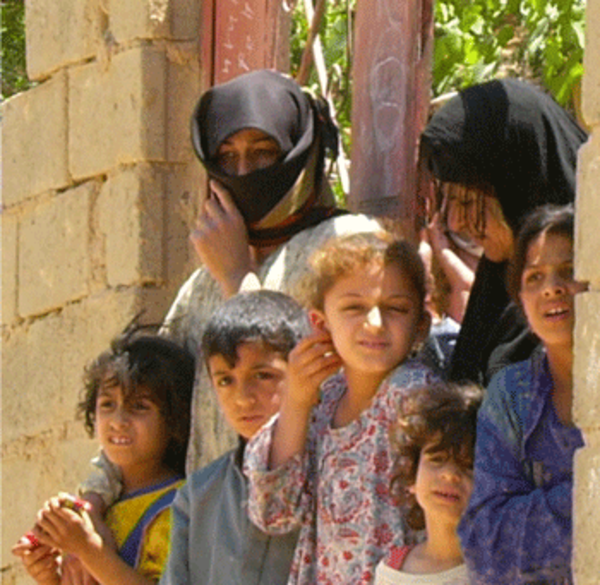
Dahlia Wasfi and the Tragedy of Iraq, Part 4: Survival, Women's Rights and Death Squads
I ended Part 3 of my series on Dr. Dahlia Wasfi with glimpses into her powers of observation and analysis of the strategies underlying the American-led Coalition's attempted pacification of Iraq, which to this day is still suffering from brutal internecine warfare. In this piece we will explore this and the effects of the war on Iraqi society more throughly, but first we must recount Dahlia's reflections on her second trip to war-torn Iraq.
To see my three earlier pieces on her (and Ross Caputi in Part 1), CLICK HERE for Part 1, CLICK HERE for Part 2, and CLICK HERE for Part 3.
Second Trip to Iraq
Dahlia's first trip to Basra to see her extended family in Iraq had lasted 19 days, with only six actually spent in Basra, but she had promised to return, and then, some 22 months later, she did. Returning to my interview with her, I asked:
Mac: Let's talk about your second trip to Iraq. Give me a little chronology of when you went and what really stood out on this trip.
Related stories
Dahlia: I finally arrived there on Christmas day, 2005. I got to Basra and stayed there until March 27th, 2006. So it's been five years now.
I would say certainly on a day-to-day basis that there were certain experiences that stand out, but overall - my overall sense (and I have, obviously, the view of someone who knew she was leaving so that as bad as things got, it was like just wait another couple of months, just wait another couple of weeks and I'll get to go back home) was: I don't know how people with no way out, I don't know how they survive. My family, I don't know how they do it.
On a daily basis, just the struggle for survival, with the lack of electricity, the lack of portable water, now the destruction of the health care system, the destruction of the education system; there's no jobs, rising unemployment; HIV has now come to Iraq, and while prostitution emerged during the sanctions period, it increased significantly with the presence of the US military, as it does everywhere else around the world, and drug abuse - now I wasn't witnessing all that, that I would say would be my reading about it - but just my own experience, just trying to make it through each day, trying to get meals cooked, you have to make a choice. Are you going to do laundry today or does somebody get to take a shower? And this is coming from a society that was First World status.
That it's now Third World, that's it's meeting Third World parameters is purely because of American foreign policy. So that's what struck me. So it's much different from, say, a country in sub-Saharan Africa which was not ever at a First World level. It's a different survival approach, so - and call me paranoid, which I am - it seemed to me a purposeful disruption of daily living because people cannot regroup and move forward. They cannot recover from the destruction to put their lives back together and to basically put their country back together the way they want it, and certainly we [the Us Govt - Mac] don't want it the way they want it, so it keeps people weak, and I found it extraordinarily difficult as an American used to 24 hours of electricity with your occasional once or twice a year thunderstorm that takes it out.
But I have never - I got sick while I was there - been so sick in my entire life, and I literally told my [Iraqi] family, and this will be in the book [Dahlia is writing a book on her experiences - Mac], since I thought I was going to die, please tell my parents a good story. Tell them I attacked the British. Tell them I was a martyr, but please don't tell them I died from diarrhea, please that would be the worst thing. And all I could think about at the time were the stories I read from after the first Gulf War when cholera became endemic in Iraq, and I read an account of somebody saying there's nothing worse than dehydrating to death and the only water you have to drink is the same dirty water that made you sick, and I felt so lucky when I was there - I had access to bottled water; I had access to antibiotics, but oh my God, I've never been so sick! Everyone in the Administration should have to have a bout of some GI pathogen like that to see what they're doing to people. That was hard for me to come to terms with. So it was basically my personal experiences, basically my version of Survivor.
But for my family, there was no way out. This is what they had to live with everyday...and I tell you...the two times that I have gone have been in the wintertime. I tell my family that I will never visit you in the summer because I will lay down on the floor and die. In Basra especially, because they have the humidity from the....river, the waterway, it gets to be over a 115 degrees Fahrenheit plus humidity. And they don't have the electricity to run a ceiling fan, let alone air-conditioning .
Mac: Wow, 115!
Dahlia: On a good day, on a good day. You know, for someone like me, this is going to make me livid. If I had the energy for any emotion, it would make me furious and angry, but for old people, people with heart conditions, asthmatics, diabetics, for the little babies who are prone to the diarrheal diseases, this is deadly. This is deadly. And this is another reason why the death toll is so high, because when they do the calculations for say the Lancet Studies, it's overall what is the increased number of deaths, not just from military assault.....
Mac: Is cholera epidemic now, or just endemic?
Dahlia: It's considered endemic now. They still have epidemic episodes. The last one I know of was 2007. That's the last one I've documented, that I found the research on.
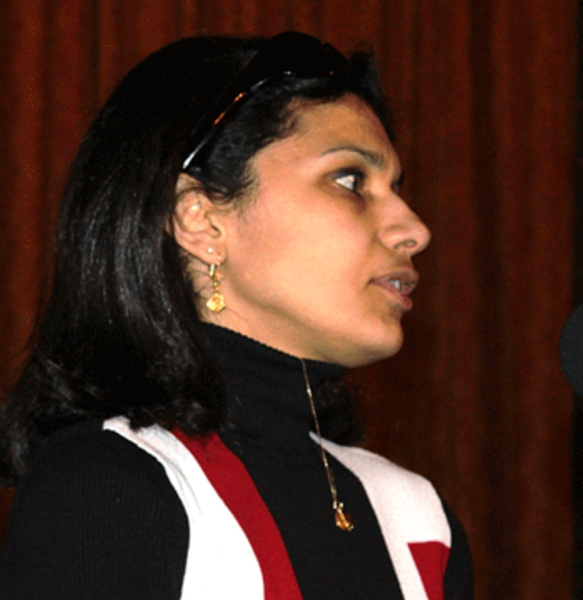
Mac: What about women's rights in Iraq right now?
Dahlia: We have set them back for decades if not centuries. And this is under the auspices of the new government, which is CIA-coordinated, but basically, prior to American involvement, Iraq was one of the most progressive countries in that part of the world in terms of women's rights, marital rights, property rights, educated women. Part of that can be attributed to [secular government], and I again have to make the qualifier that there's no question of the brutality of the dictatorship - if you became political you took your life and your family's life into your hands; you didn't know if you would be jailed, tortured....but first of all, there was free eduction, and everybody had access to it, and it was also a secular government, and it tends to be - when religion is involved in government - there tends to be a decline in women's rights, with more conservative leadership, but with a more secular government, that kind of restriction on women's rights did not happen, but also during the 1980s there was the Iran-Iraq War, and instead of bringing in foreign workers to replace the men who had left for war, they trained women, so that strenghtened the country itself. It's like what happened here in World War II when the women started to take the jobs in the factories. So women were in every aspect of society. Once we invaded, a big factor in the loss of women's rights was the influx of religious militias, religious groups and militias, from Iran [many of them having gone into exile under Saddam Hussein - Mac]........
There are numerous militias, numerous parties that have moved in, based in Iran, and with the militias have come the loss of women's rights - restrictions on women's dress, restrictions on covering your hair, restrictions on wearing makeup. Now I don't mean to be critical, and I have to qualify this because I personally don't cover my hair....it's not my choice - but ever woman should have her choice, and in Iraq now since the invasion, they don't have a choice anymore.
My cousins told me a story because my cousins in the south, they tell me stories of women getting harassed for not covering their hair, of women getting harassed for wearing makeup, and now it's become more and more difficult for women to attend university. Everything was co-ed. Now they're trying to separate out the sexes, so this influence came in since the invasion, and then with the new constitution, that opened the door for the use of Sharia Law, which again, depending on interpretation - and I'm not trying to be critical of Islam, but it's men who wrote it down and it's mostly men who are doing the interpretation - it opens the door for the loss of property rights and marital rights. And now there are between one and two million widows in Iraq, and with that, when you count as an orphan someone who has lost one or both parents, four to five million orphans [estimated], so we have devastated Iraq for the next generation at least. So this is the bottom line. This is the tragedy.
********
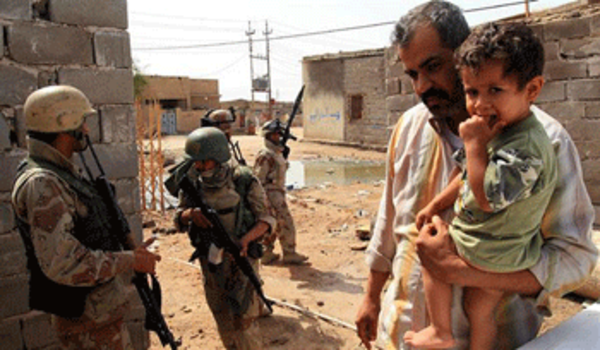
These revelations by Dahlia certainly put a damper on more positive spins of the consequences of the Bush/Cheney invasion of Iraq. Even though the United States has allocated some $53 billion to the reconstruction of Iraq, more than we spent on the reconstruction of Germany and Japan combined after World War II (even adjusting for inflation over time) progress overall is "spotty" at best in terms of stability, economic prosperity, human rights improvements and a society healing from the wounds of war.
Yes, the backbone of the Iraqi economy, the oil sector, is gradually reviving, but there are still millions of Iraqis in external or internal exile, gross unemployment hovering, some reports say, around 30%, perhaps higher, perhaps lower. The huge number of widows and orphans, as Dahlia has mentioned, create a social nightmare for the present and the future, and terrorist bombs are still going off in Baghdad and elsewhere. Even an American convoy was hit as recently as June 23 in an attack that killed "international development and finance expert Dr. Stephen Everhart and wounded three others."
The Center for American Progress published an article entitled "The Iraq War Ledger, A Tabulation of the Human, Financial, and Strategic Costs" in May, 2010 that tallies up all the then costs and benefits, human, financial and otherwise in terms of American national security, and it is not a very pretty picture at all. You can read the HERE. To quote from some of the study's conclusions:
Seven years after that speech, Iraq has made progress, but still struggles with terrorism and deep political discord. Though the level of violence has declined from its 2006-07 peak—when dozens of bodies could be found on Baghdad’s streets every morning—Iraq still endures a level of violence that anywhere else in the world would be considered a crisis. Still, the end of Saddam Hussein’s brutal regime represents a considerable global good, and a nascent democratic Iraqi republic allied with the United States could potentially yield benefits in the future.
But when weighing those possible benefits against the costs of the Iraq intervention, there is simply no conceivable calculus by which Operation Iraqi Freedom can be judged to have been a successful or worthwhile policy. The war was intended to show the extent of America’s power. It succeeded only in showing its limits. (.ibid)
********
Death Squads
A key strategic cost worth emphasizing from the same report is this:
Loss of moral authority. While abuses are perhaps inevitable in any military occupation, the images and stories broadcast from Iraq into the region and around the world have done lasting damage to the United States’ reputation as a supporter of international order and human rights. Gen. David Petraeus acknowledges the damage done to the U.S. reputation by Abu Ghraib is permanent, calling it a “nonbiodegradable” event.
As Dahlia has already noted in previous statements in this series, the US Government stepped over into the dark side, as was also done, for example, in Vietnam and elsewhere to try to secure, if not victory at least "stability" in a target country. But how, as ethicists keep asking, can the ends justify the means when the means taint and subvert the ends, if not becoming the ends altogether? And this is where we must talk more about death squads and the Salvador Option in Iraq and how they wrecked further havoc, with yet unfinished consequences in that country.
Mac: Let's talk about death squads. I think I read that you were mentioning the Wolf Brigade. And I am also curious as to how many of these terrorist bombings might have been by the Americans and British.
Dahlia: I don't know, but the question is an important one. But you really did your homework. I referenced the Wolf Brigade, which was a brigade I believe I am correct in stating was a brigade in the Iraqi police that was basically organized by someone who was a high-ranking general under Saddam, and then became a high-ranking general under Donald Rumsfeld. The name was General Rashid Flayyih. But my resource for that is a journalist named Max Fuller. He's from Wales. He's done remarkable work that actually has shown that Operation Phoenix in Vietnam has been brought back.
Mac: Oh yeah, we've learned about that, the Salvador Option.
[For a riveting video and Max Fuller article posted right below it giving an in-depth look at death squads in Iraq, VISIT HERE.]
Dahlia: That's it.....Max Fuller has done like a fantastic fifteen minute video on the internet (Who is behind the death Squads in Iraq). But you may have heard of how in September 2005 in Basra there was a suspicious car that the Iraqi police approached, and when the police approached the car, the people in the car shot at the policemen, so they were detained immediately and brought to the police station, and what they found in the car was were that these two guys were British Special Operations.
********
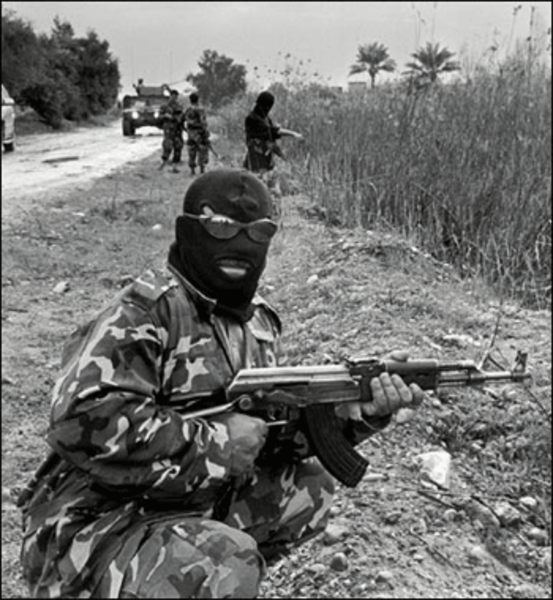
[Amazingly, The British military actually soon "sprang" the two from jail in, apparently, cowboy fashion. Here is an excerpt that posits one view of the entire event, that the Brits were actually involved in "False Flag" bombings, from a Raw Story article on this entire episode, although you will have to read the entire article to catch the various allegations against the British plus the latter's defense and explanations:
In an interview with Al Jazeerah TV, the popular Iraqi leader Fattah al-Sheikh, a member of the Iraqi National Assembly and deputy official in the Basra governorate, said that police had "caught two non-Iraqis, who seem to be Britons and were in a car of the Cressida type. It was a booby-trapped car laden with ammunition and was meant to explode in the centre of the city of Basra in the popular market." Contrary to British authorities' claims that the soldiers had been immediately handed to local militia, al-Sheikh confirmed that they were "at the Intelligence Department in Basra, and they were held by the National Guard force, but the British occupation forces are still surrounding this department in an attempt to absolve them of the crime." (source)]
********
Dahlia (cont'd): So as soon as you catch one [so to speak] "cockroach", there's a lot more behind them, so this opens the door for questioning what happens, but its the same tactic of divide and conquer, pitting Sunni against Shia. Yes, there was disagreement. Yes, there was conflict, and 1400 years ago the sects were established because of division, but not since that time has there been a split like this where people were being exterminated because of their religious sect. Not until after 2003. Actually on my website, liberatethis.com, I have a section on the Salvador Option, and there's so many references there, and this is all from the 2005 and 2006 time period - I don't have that many more updated resoruces since then - but it's called Fake Terrorism is a Coalition’s Best Friend because you set up these explosions, and you tell the one group that the other group did it, boom! And then we set up the training; we fund the training.
I haven't spoken to him in a long, long time, but I have a contact who was with IVAW (Iraqi Veterans Against the War) and he said his job was training soldiers in Tikrit, and he said when they brought the soldiers in, they divided them up, Sunni and Shia. That's our architecture; that's our artificial divisions. And in terms of the Salvador Option, it [an article] just came out relatively recently that proved that the Americans were tied to the training and funding of the Wolf Brigade.
Mac: How many people do you think might have been murdered by the Wolf Brigade?
Dahlia: I don't know. I don't know. I mean it got to a point - I met a woman who, she was an environmental engineer in Iraq and now she's outside of Iraq, one of the refugees - and she talked about how when she was still in Iraq, they [hit men - Mac] would just walk into a room, they would call out a name - and you turn around when you hear your name - whoever it was who turned around, the person who called out their name shot them, no accountability. And this was [told me] in 2007 in a conference in Madrid, it's kind of a long story, but I got to go to the conference, and I met her there, and she was talking about how these death squads were now spilling over into Syria and Jordan where all the refugees were, so this is anecdotal evidence, but the money's coming from somewhere. And unfortunately, there's always the possibility of another Iran-Contra situation, but if we could cut the funding, once the funding for the death squads will go away these people don't have an incentive to do that work anymore, so you hope that with the withdrawal of the occupation, no more funding and training of armies.
Mac: How many people do you think died in Iraq, your personal opinion.
Dahlia: Since 2003, I would say close to one-and-a half-million people. But that is only since 2003. We are also responsible for the 1.2 and and 1.8 million who died during sanctions. This was because of lack of medical care, because of lack of antibiotics, lack of medicine, lack of insulin - this is overall, and people starving to death.
********
It is indeed a tragedy what has been wrought in Iraq, all of which has, as has been rather thoroughly exposed, been based on lies and propaganda, and the wages of lies can be death, and in the case of Iraq, in spades! There were no WMDs or viable ties between bin Laden's al Qaeda and Saddam Hussein. "Al Qeada in Iraq" metamorphosed later in response to the occupation, a self-fulfilling prophecy.
Settling on "removing the dictator" became a final excuse to justify what was already a done deal, the invasion, and there was nothing organic about it, meaning that the Iraqi people had not gotten to the historical point yet of widespread rebellion or revolution against their own tyrant.
Meanwhile, what we have put in Saddam's place is more or less a wild-card Frankenstein monster of a government, with close ties to Iran, that is still under attack from dissident forces within Iraq, an ongoing hornet's nest of intrigues and conflict as that country lurches along.
There is more to my interview with Dr. Dahlia Wasfi, but at this point I am starting to steal her thunder since she is in the process of writing a book on her and her family's experiences in Iraq and America. So we will end this series now with one final question I posed to her during our interview:
Mac: Well let me ask you one final question. Have you got any closing remarks for me, to sum this all up?
Dahlia: Immediate, unconditional withdrawal. I've been calling for that since 2004, so we could have definitely had a seven year phased withdrawal by now, but clearly that's not the objective, but I would emphasize, because again Obama had his "mission accomplished moment" without the banner saying that we've withdrawn combat forces, but there continue to be over 50,000 US soldiers and Marines on the ground in Iraq, and thousands more mercenaries, and many, many, many CIA, and that's the Mothership, still the Green Zone with the largest embassy in the world, "embassy" since we have diplomatic relations. So basically I'm still calling for our ending our presence in Iraq, and Afghanistan too. Everything that is happening to the people of Iraq is also happening to the people of Afghanistan, same use of depleted uranium, same bombardment, same trauma to civilians. We're killing families, here and abroad. So the bottom-line is "bring the troops home."

Mac McKinney
Comments

Powered by RoundtableAn AI/DeFi-powered Enterprise Media Operating System. Learn more at Roundtable.io.© Roundtable 2026. By using this site you agree to the Terms of Use and Privacy Policy