


May 3, 2025 4:23 PM
Updated May 3, 2025 4:43 PM
There is something surreal about the political posturing of the anti-communist refugees.
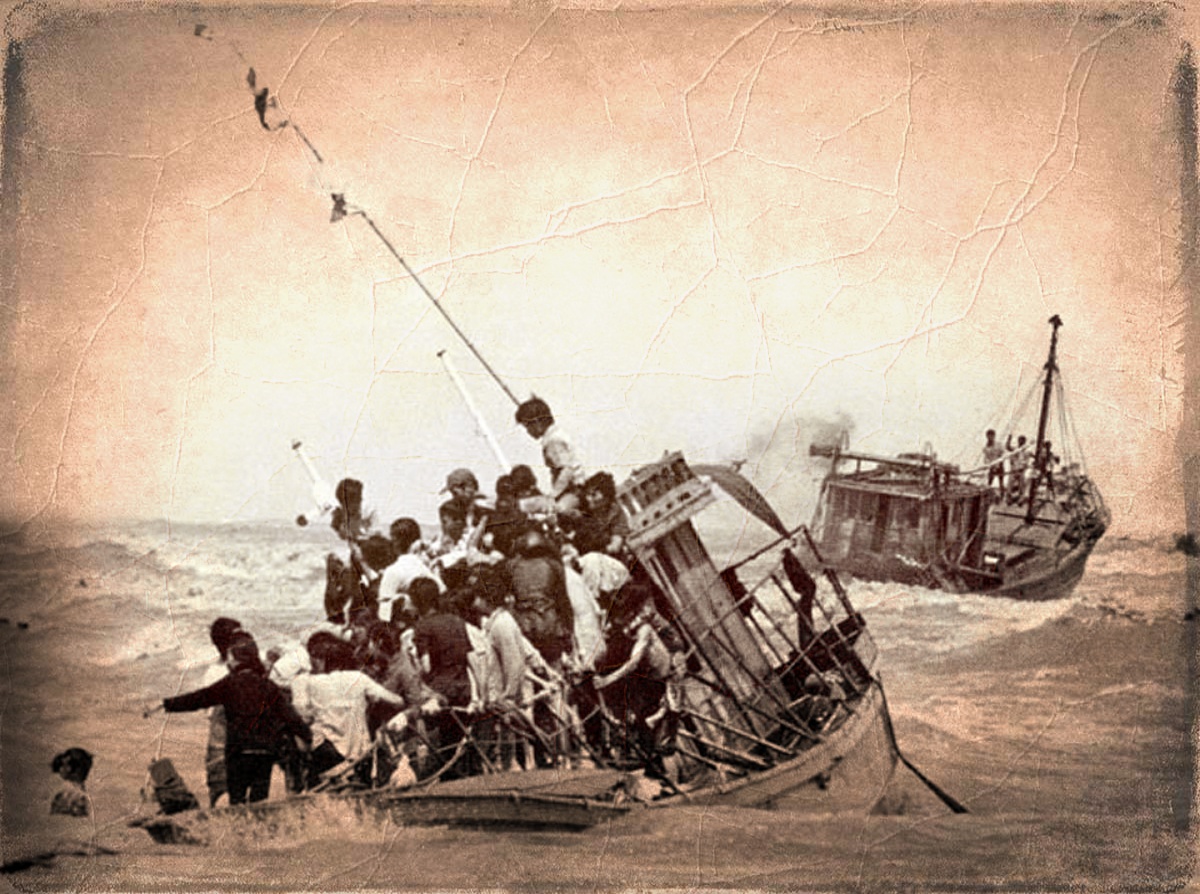
Fifty years ago on April 30, 1975, Vietnamese communists won a thirty-year war to establish national sovereignty free from direct foreign domination and to hopefully implement a socialist revolution appropriate to Vietnam. This victory reunifying North and South Vietnam was met with panic among those who had sided with the foreign power that created their Saigon-based counter-revolutionary regime and propped it up financially and militarily for twenty years beginning in 1955. Collaboration with the foreigners meant that they would now, after a communist victory, carry the stigmas of traitors and obsequious opportunists who sucked up to a cruel enemy to advance themselves. They would be seen as venal and disgusting. What fate awaited them after a communist victory? Would they suffer rituals of public humiliation, rape, torture, imprisonment, labor camps, executions? Facing these imagined possibilities, it was time to leave. And leave they did, fleeing to America.
Once settled in the United States, the refugees made clear their deep hatred of communism and their commitment to capitalism. For them April 30, 1975 is not “Liberation Day” but rather “Black April” – a day of mourning for the loss of freedom in Vietnam. Their hatred of the communists ran so deep that the first generation of the diaspora could be whipped into a frenzy at the sight of a poster of Ho Chi Minh as happened in Little Saigon in 1999 – twenty four years after the war! In their eyes Ho was a “mass murderer” whose soldiers robbed them of their liberties. Lest you think time has healed the wounds of war recall that it was only a year ago when the L.A. County Board of Supervisors decision designating April 30 as Jane Fonda Day provoked vociferous opposition from Vietnamese-American politicians, one of whom referred to Fonda as a “propagandist who supported a Communist agenda in Vietnam.” Faced with these fulminations the Board of Supervisors moved Jane Fonda Day to April 8.
The historical record established long ago that the South Vietnamese regime was an American creation with no popular base of support in southern Vietnam; it was antidemocratic, corrupt, and barbaric.
There is something surreal about the political posturing of the anti-communist refugees. The historical record established long ago that the South Vietnamese regime was an American creation with no popular base of support in southern Vietnam; it was antidemocratic, corrupt, and barbaric. Despite this record, the anti-communist refugees continue to insist that they are the Vietnamese who truly cherish freedom and democracy and justice. Perhaps it’s time to review the war to see just what the anticommunists did in Vietnam before April 30, 1975. A review is in order not only to clarify the record of the refugees but also to get a perspective on the ideology of anti-communism that is incessantly broadcast throughout America. Let’s take a look at the virtuousness of the anti-communists as they fought a prolonged war against the anticolonial rebels of Vietnam.
Related stories
The conclusion of the military conflict left Vietnam in a devastated state - especially throughout the southern region, the former Republic of Viet Nam. Various surveys of the wartime destruction came up with estimates of the social and physical effects. (The following data do not include wartime destruction of life, property, and environment in Laos and Cambodia after years of extensive American bombing.)
Property damage included 6 million acres sprayed with toxic defoliants (primarily Agent Orange), 12.3 million acres of forest land partly or completely destroyed, 24.7 million acres destroyed through salting, flooding, bombing, and defoliation. There were an estimated 20 million bomb craters and 25 million pounds of unexploded ordnance (UXO). Additionally, there were thousands of villages partly or completely destroyed: 4,000 in the North, 9,000 in the South. The destruction of the environment was so extensive that scientists coined a new word to describe this aspect of the American war against Vietnam: ecocide.
Then there were the human costs of the war – some of which (birth defects from the effects of Agent Orange, death or injury from UXO contact) continue to this very day. There were more than 3 million killed and over 5 million wounded, 300,000 orphans, 200,000 prostitutes, and about 10 million refugees many of whom lived in cardboard and tin shantytowns on the fringes of cities and towns. These were the costs the Vietnamese incurred from the American effort to save them from communism.
The death and destruction that began in 1946 when France began a war to reconquer its former colony was paused with the defeat of France in 1954. It resumed on a much more massive scale after the Americans installed a client regime under Ngo Dinh Diem in 1955 in the southern zone of Vietnam. President Diem soon began a program of political repression executing approximately 12,000 people. This had the effect of prompting an armed rebellion that the regime could not suppress; this in turn led to the introduction of American combat troops who fought from 1965 through 1972. The American War is generally dated from March 1965 when the first combat forces arrived to January 1973 when the United States signed a peace treaty providing cover for its retreat from a war it could not win. Although the war continued for another two years, most of the death and destruction occurred during the eight years of U.S. combat involvement – an involvement supported by the anti-communist Vietnamese of America’s neocolonial client regime.
During the war what did the anti-communists do? Many Vietnamese refugees worked for the Saigon government or the Americans in either a civilian or military capacity. In such capacity they carried out the policies of the Saigon and Washington leadership. What were these programs? Whom did they benefit? Whom did they hurt? And how did they affect the peasants who were the majority of the people of South Viet Nam?
It might prove useful to double check, against the historical record, the claims of the Vietnamese anti-communist refugees that they and their U.S. allies were the champions of freedom, justice, and peace. Here are several questions about who stood for what in Viet Nam. The questions presuppose a basic knowledge of mid 20th Century Vietnamese history.
Who, from 1946-1954, organized and led the successful war against the French attempt to recolonize Vietnam - the communists or the anti-communists? Who collaborated with the French colonial army - the communists or the anti-communists?
Who signed the Geneva Accords of 1954 ending the French War and bringing peace to Viet Nam - the communists or the anti-communists?
Who subverted the Geneva Accords by refusing to hold the stipulated elections of 1956 regarding national re-unification - the communists or the anti-communists?
Ngo Dinh Diem established his family in power in Saigon with CIA help and use of a fraudulent election in which he received more votes than registered voters. And he destroyed traditional village democracy in Vietnam by replacing elected village elders with Saigon appointees who ruled at the direction of the Diem regime. Was Diem a communist or an anti-communist?
Who murdered more than 12,000 peasants in Ngo Dinh Diem’s South Vietnam in the mid-1950s because they had fought against the French and because they opposed the exploitation of peasants by landlords - the communists or the anti-communists?
Whose government persecuted the Buddhist majority in South Vietnam - the communists or the anti-communists?
Who in 1963 murdered the anti-communist rulers of South Vietnam, Ngo Dinh Diem and his brother, Ngo Dinh Nhu - the communists or the anti-communists?
Who initiated genocidal “pacification” operations which resulted in the destruction of thousands of villages through burning, bulldozing, detonation of explosives, and salting cropland thus forcing the peasants to live in cardboard and tin can shantytowns on the fringes of South Vietnam’s cities - the communists or the anti-communists?
Republic of Viet Nam leaders Ngo Dinh Nhu, Nguyen Cao Ky, and Nguyen Van Thieu all sponsored narcotics smuggling operations which sold opium to the South Vietnamese and, by mid-1970, sold heroin to American soldiers. Who were these men - communists or anti-communists?
Nguyen Cao Ky once said that he admired Adolf Hitler, the leader of the Nazi Party. Was Nguyen Cao Ky a communist or anti-communist?
Nguyen Van Thieu regularly subverted democratic procedure in the South Vietnamese parliament by purchasing votes. Was Nguyen Van Thieu a communist or an anti-communist?
The Thieu government arrested much of its political opposition – including those who were non-communist – and had many opponents shackled in small “tiger cages” on Con Son Island where jailers threw lime on the prisoners to burn their skin and hair. Was the Thieu regime communist or anti-communist?
Many South Vietnamese government officials and entrepreneurs owned and operated bars, massage parlors, and brothels where they pimped tens of thousands of South Vietnamese women to American soldiers for sexual exploitation. Were these men communists or anti-communists?
On March 16, 1968, American soldiers entered the village of My Lai, gang raped several women and girls, and then proceeded to murder almost every man, woman, and child in the village – including infants and nursing mothers. Who were the allies of these Americans - the communists or the anti-communists?
Whose policies of bombing, shelling, killing POWs, and massacring villagers produced most of the 300,000 orphans of Viet Nam - the communists or the anti-communists?
Whose policies of bombing, shelling, killing POWs, and massacring villagers produced most of the 300,000 orphans of Viet Nam - the communists or the anti-communists?
The Americans bombed Cambodia for more than five years thus destroying the farmlands of eastern Cambodia contributing to the later famine; they bombed Laos for more than eight years leaving behind tens of thousands of unexploded bombs that maim and kill Laotians to this day. Who allied themselves to the Americans - the communists or the anti-communists?
Who engaged in biological-chemical warfare for ten years spraying 6 million acres of South Vietnam with 19 million gallons of toxic defoliants that still cause birth defects within Vietnam - the communists or the anti-communists?
The Army of the Republic of Viet Nam (ARVN) had commanding officers who often avoided combat, lived in luxury villas with servants, and used their high military positions for profitable graft and corruption. As an example of their corruption, many of these officers would not report the deaths of their combat troops so that they would continue to receive government pay for their dead soldiers - pay which the officers then kept for themselves. Were these ARVN officers communist or anti-communist?
Who bombed South Viet Nam so heavily that by 1975 it had 20 million bomb craters - the communists or the anti-communists?
By supporting the dictatorships of Ngo Dinh Diem and Nguyen Van Thieu the anticommunists opposed democracy. By fighting for the American-created Saigon regime they supported imperialism. By opposing land reform benefitting the peasantry and by promoting the sex trade around U.S. military bases they supported injustice. By fighting for a foreign power that used napalm, cluster bombs, and Agent Orange against the people of Vietnam they revealed their brutality. It was their policies that led to the economic, cultural, physical, and social destruction of South Vietnam subverting justice, freedom, democracy and peace.
When will they realize that the label anticommunist is not a badge of honor?
References:
- Gabriel Kolko, Anatomy of a War
- Marilyn Young, The Vietnam Wars
- James William Gibson, The Perfect War
- Alfred W. McCoy, The Politics of Heroin
- William R. Corson, The Betrayal
- Marvin Gettelman et al (eds.), Vietnam and America
- David Cortright, Soldiers in Revolt
- Richard Moser, The New Winter Soldiers
- Michael Bilton and Kevin Sim, Four Hours in My LaiStanley Kutler (editor), Encyclopedia of the Vietnam War
Comments

Powered by RoundtableAn AI/DeFi-powered Enterprise Media Operating System. Learn more at Roundtable.io.© Roundtable 2026. By using this site you agree to the Terms of Use and Privacy Policy