


Vigilant Media
Nov 29, 2024 5:31 PM
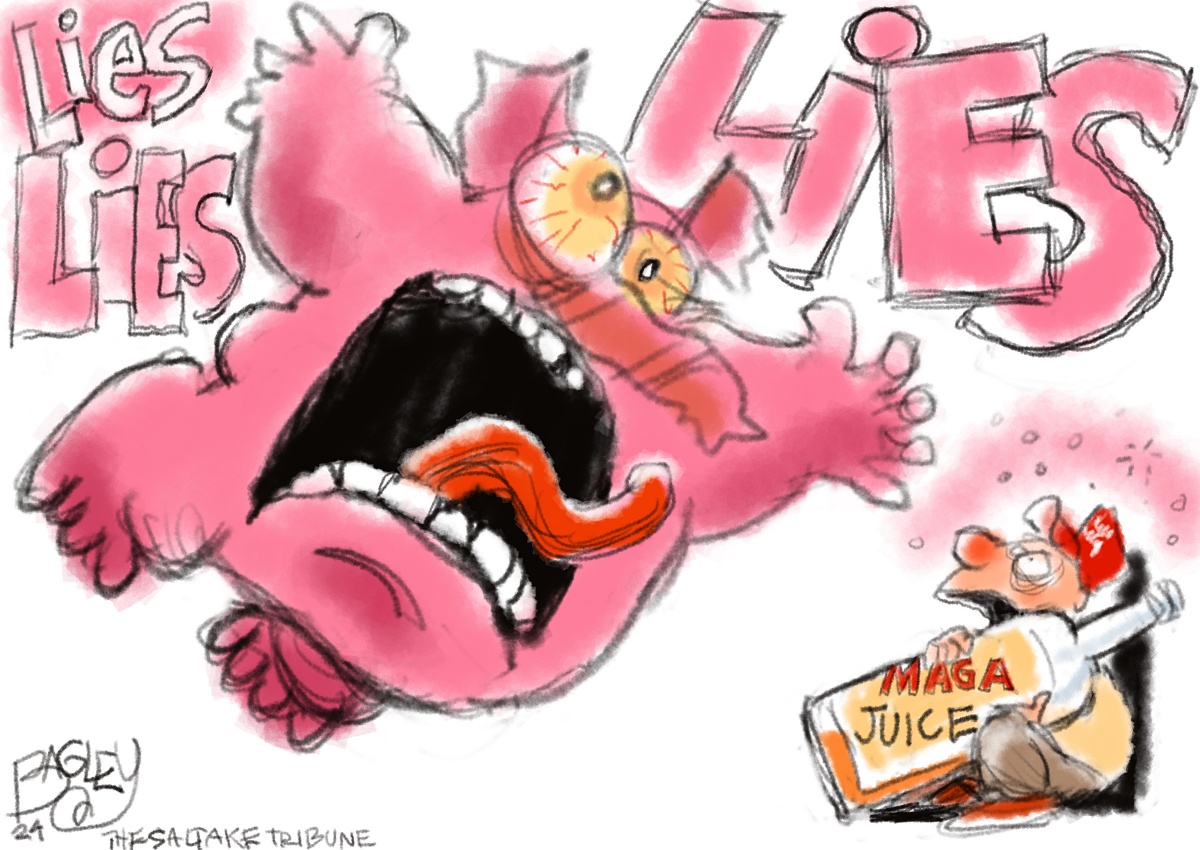
In an era where lies masquerade as truth and deception flows as freely as the scrolling feed, critical media literacy is no longer a luxury in education—it is a lifeline.
As America braces for the return of Donald Trump to the White House, the nation stands on the precipice of an era that could redefine its moral and political identity. Like the gathering clouds of a fierce storm, the Trump administration’s proposals signal a dark reckoning, one that demands we confront uncomfortable truths about the fragility of democracy and the shadow of fascism creeping into the heart of the republic. Trump’s plan for Making America Great Again is as vast and chilling as it is logistically staggering. The nation's democratic fabric, already threadbare, could soon be tested by policies more befitting an authoritarian regime than a constitutional republic.
With the U.S. Supreme Court’s dismantling of Roe v. Wade—facilitated by Trump’s handpicked justices—already claiming the lives of women denied essential medical care, the anti-abortion movement now marches forward with chilling confidence. Trump, unshackled from any need to feign concern for women’s rights, no longer bothers with pretense. The rhetoric grows harsher, the policies more draconian, and the consequences more dire.
Chief among Trump’s initiatives is the cornerstone of Trump’s reelection strategy: the proposed mass deportation of undocumented immigrants—a scheme that looms like a juggernaut threatening to upend the soul of the nation. The scale of this undertaking is projected to cost billions of dollars. Beyond the financial chaos, such an effort would unravel the economic fabric of the nation itself, as much of the U.S. economy quietly depends on the labor of the very people Trump seeks to expel. The irony is stark: Republican businessmen, who have long benefited from undocumented workers, may find themselves unwitting dissidents in a machinery designed to sever the lifeblood of their enterprises.
Yet the true price of this initiative would be measured not in dollars, but in the corrosion of America’s soul. To execute such an operation, the administration would rely on the complicity of ordinary citizens. Implementing such a sweeping attack would demand a reconfiguration of our moral compass, our identity as a nation and would require the mobilization of ordinary Americans—neighbors, coworkers, even family members—into an Orwellian apparatus of suspicion and betrayal. It would demand neighbors to scrutinize neighbors, communities to fracture under the weight of suspicion, and a nation to adopt the posture of a surveillance state. A chilling echo of totalitarian regimes past, this vision transforms the American dream into a dystopian nightmare, where anyone suspected of harboring an "illegal" could face the wrath of an emboldened state.
Related stories
Once a beacon for the oppressed, America now finds itself at odds with the very ethos inscribed on Lady Liberty’s bronze tablet.
The lofty promise etched into the Statue of Liberty— “Give me your tired, your poor, your huddled masses yearning to breathe free”—*stands today as a bitter reminder of a nation struggling to honor its own ideals. Once a beacon for the oppressed, America now finds itself at odds with the very ethos inscribed on Lady Liberty’s bronze tablet. The dream of refuge, of opportunity, and of a better life is increasingly eclipsed by policies that close doors and harden hearts.
Rather than lifting her lamp beside the golden door, America’s approach to immigration has grown cold, marked by barbed rhetoric and punitive actions. For millions of undocumented immigrants, the land of opportunity has turned into a gauntlet of fear and marginalization.
This betrayal of the immigrant spirit is not just a political failure; it is a moral one. It casts a shadow over the nation's founding narrative—a nation built by immigrants, for immigrants, who sought to build a better future not just for themselves, but for the generations that followed. To turn our backs on those seeking the same dream is to deny our own history, to erase the struggles and contributions of those who came before us. The American Civil Liberties Union has already sounded an alarm, warning that Trump’s administration would not hesitate to invoke the Insurrection Act to deploy the military against cities—particularly those with significant BIPOC and immigrant populations—under the guise of restoring order. His war on dissent wouldn’t stop in the streets; Trump has signaled an intent to attack online freedom, forcing media companies and platforms to amplify conservative voices, effectively turning free expression into state-mandated propaganda.
Lady Liberty may still stand tall in New York Harbor, but her promise grows dimmer with each passing day. The tired and poor still yearn for freedom, but America has turned away, shrouding its ideals in the fog of nationalism, conspiracy theories and fear. If we are to reclaim the essence of her invitation, it will take not just words, but a collective will to reimagine immigration as a source of strength rather than a threat. Only then can the lamp of liberty burn brightly once more, a true guide for those seeking refuge on these shores.
The targets of this heinous policy are as predictable as they are tragic. Non-white communities, particularly in diverse enclaves like Dearborn and southwest Detroit, risk becoming epicenters of fear and persecution. These neighborhoods, long celebrated for their cultural richness, could be reimagined as harbors of so-called "undesirables" in the administration’s rhetoric. The scars of such a campaign would cut deep, marking an era of racial scapegoating that history has warned us never to repeat.
As the stakes rise, so too must our resolve to weather the tempest and ensure that the soul of the nation is not lost to history’s darker currents. But we need to media to help us achieve that goal.
As figures such as Marjorie Taylor Greene set off on her crusade with DOGE co-piloted by Elon Musk and Vivek Ramaswamy, her critics warn of the chaos that could ensue. And the chaos surrounds our ability to fight back. Trump’s plans to weaponize the machinery of government against his opponents have been laid bare, and one of the most significant blows to the left will be the dilution and diminution of progressive media.
Thom Hartmann warns that we need to be increasingly aware that assault on independent, publicly funded media is intensifying, and NPR is squarely in the crosshairs. In July, House Republicans voted to phase out all federal funding for NPR by 2026. But with the newly empowered triumvirate of Elon Musk, Vivek Ramaswamy, and Marjorie Taylor Greene—working in tandem to accelerate such cuts—it’s likely the timeline could be expedited, leaving the future of public broadcasting in peril.
NPR, renowned for its commitment to balanced reporting, has gone to extraordinary lengths to counter accusations of progressive bias. Just last month, in response to persistent right-wing criticism, the Corporation for Public Broadcasting even hired editors to specifically root out any perceived left-leaning perspectives in its news coverage. Yet no amount of editorial introspection will appease the architects of this defunding effort. The goal isn’t reform—it’s eradication.
The stakes couldn’t be clearer. According to Hartmann, should NPR and other public broadcasting institutions be crippled, the void will almost certainly be filled by the sprawling right-wing media ecosystem, a machine fueled by billionaire dollars and designed to perpetuate their interests. This network includes approximately 1,500 right-wing radio stations, three major cable TV networks, web-based outlets, and tens of millions in subsidies for podcasts promoting hard-right ideologies. Add to this an expanding network of “pink slime” newspapers—billionaire-funded propaganda sheets disguised as local news—and the picture becomes even starker.
Hartmann warns that on the left, there’s no equivalent infrastructure. After the demise of Air America—a victim of strategic corporate dismantling—progressive media has struggled to maintain a foothold. Platforms like Free Speech TV and SiriusXM’s Progress Channel, while vital, are dwarfed by the scale and reach of conservative counterparts. Print media outlets like Mother Jones, The Nation, and The New Republic produce rigorous, progressive journalism but lack the financial muscle of right-wing outlets supported by billionaires. Even The Washington Post and The New York Times, often labeled as “liberal media,” pale in comparison to the editorial slant and unified messaging power of Rupert Murdoch’s empire, including The Wall Street Journal and The New York Post.
The attack on NPR isn’t just an assault on public broadcasting; it’s a strategic move in a broader war on truth and accountability. Without NPR’s fact-driven reporting, the national discourse will tilt even further toward the echo chamber of right-wing misinformation, leaving millions of Americans without access to reliable, non-partisan news.
If this trajectory continues, Hartmann argues, the information landscape will become even more skewed—dominated by voices that seek not to inform but to manipulate. The fight for NPR, therefore, isn’t just about preserving public radio; it’s about safeguarding democracy itself from the corrosive effects of concentrated media power.
The closest TV and radio counterparts we have are Free Speech TV (available on the web, Dish, Sling, Roku, AppleTV, and DirecTV) and the Progress Channel on SiriusXM ….
In the print media space, Substack is growing (although they also carry hard-right content) and provides a solid community of progressive publications (like HartmannReport.com), but that’s a drop in a much larger ocean; even The Washington Post and The New York Times don’t come close to the strength of editorial bias found in the Murdoch family’s The New York Post or The Wall Street Journal.
Publications like The New Republic, Mother Jones, The Nation, and The Guardian provide solid progressive content, but all have funding bases that are trivial compared to conservative publications supported by rightwing billionaire networks. Ditto for websites like Raw Story, Common Dreams, Alternet, LA Progressive, Democratic Underground, and Daily Kos.
Right-wing billionaires are pouring vast sums into media enterprises. In the same article, Jon Sinton is quoted by Hartmann as saying,
“The left-wing silo is barren. A couple of old line newspapers and magazines. MSNBC and a handful of smallish digital platforms and shows. Pod Save America stands nearly alone as a left-leaning podcast with a large audience.
“By contrast, the right-wing silo is vast and deep. It houses YouTubians, TikTokkers, broadcasters on Fox, Newsmax, Sinclair TV stations, and talk radio stations; posters on social media; and narrowcasters on myriad podcasts.”
With Trump on the horizon and his allies already waging war on public broadcasting, the viability of progressive media may soon face existential threats.
The urgency to build a leftist media infrastructure has never been greater. With Trump on the horizon and his allies already waging war on public broadcasting, the viability of progressive media may soon face existential threats. Without a robust, well-funded media ecosystem to counter the right's stranglehold on information, the narratives shaping America’s future will increasingly skew toward authoritarianism, inequality, and misinformation.
The right’s dominance in media is no accident. Decades of strategic investments by conservative billionaires have created a sprawling network that includes Fox News, Sinclair Broadcasting, 1,500 right-wing talk radio stations, and a growing army of “pink slime” newspapers that masquerade as local journalism. Meanwhile, progressive voices struggle to reach scale, relying on a patchwork of underfunded outlets like Mother Jones, The Nation, and Free Speech TV.
Trump's rhetoric—and the GOP's growing disdain for dissenting voices—suggests that the next wave of his administration will target independent journalism with a vengeance. He’s already hinted at plans to reshape online free expression, forcing platforms to amplify conservative content while silencing opposition under the guise of “fairness.” Coupled with his party’s efforts to defund NPR and other public institutions, the right-wing media machine stands poised to dominate the public discourse almost unopposed.
To counter this, the left must act decisively. Building a sustainable progressive media infrastructure means securing funding from like-minded philanthropists who understand the stakes of this information war. It requires creating platforms that are not only well-resourced but accessible to the working class, offering a genuine alternative to the right’s propaganda. Just as importantly, this infrastructure must embrace a diversity of voices, amplifying the concerns of marginalized communities often ignored by mainstream outlets.
This is not just a media strategy—it’s a survival strategy. Without a robust progressive media network, millions of Americans will be left without fact-based journalism to challenge the disinformation flooding their airwaves and social media feeds. The groundwork must be laid now, while there’s still time to resist the authoritarian slide.
A leftist media infrastructure won’t emerge overnight, but the foundations must be built before Trump’s potential return to power. If progressives fail to step up, the future of journalism—and democracy itself—may fall entirely into the hands of those who see truth as an obstacle rather than a virtue.
In this age of creeping authoritarianism, where the truth is battered by the blunt force of disinformation, the specter of Orwell’s 1984 looms over us like a perpetual storm cloud. It is a world where words are weaponized and memory is rewritten. Beside it, Atwood’s The Handmaid’s Tale whispers its chilling prophecy, a reminder of how fragile freedom can be when unchecked power strips it bare. Yet these dystopian visions, as unsettling as they are, serve as more than mirrors to our moment. They are warnings—and for them to remain warnings, and not realities, we must have a media that is fearless, discerning, and defiant.
Donald Trump’s relentless assault on the press resembles a sledgehammer taken to the foundation of democracy. Journalists are labeled "enemies of the people," a phrase pulled straight from the playbook of history's tyrants, while inconvenient truths are drowned in the cacophony of "fake news." The comparisons to Orwell and Atwood seem apt, even inevitable, in a time when doublethink and gaslighting are no longer literary abstractions but daily occurrences. Yet, these comparisons, no matter how artful, risk becoming hollow platitudes if we fail to protect the very institution capable of holding power accountable.
A free and vigilant press is the lifeblood of democracy, the light piercing the fog of propaganda. Without it, Orwell’s Ministry of Truth becomes not a cautionary tale, but a self-fulfilling prophecy. Without it, Gilead’s oppressive theocracy is not confined to fiction but becomes an allegory for what might yet rise in the shadows of unchecked authoritarianism.
We are obsessed, and rightly so, with the parallels between our world and these dystopias. But obsession alone is not enough. Dystopias require apathy to thrive, and so their antidote is a media unafraid to stand firm against the tide of lies. It is the press that chronicles the erosion of rights, exposes the hypocrisy of power, and keeps the flames of truth alive. Without it, history’s warnings crumble into the dust of inevitability.
Orwell wrote that freedom is the ability to say that two plus two make four. Atwood reminds us that silence is complicit. Both authors understood the essential truth that freedom depends not just on resistance, but on the unyielding pursuit of truth. Let us then, in these perilous times, demand more of our media—not just to compare but to confront, not just to critique but to courageously illuminate. For without them, we are not staring into the abyss of dystopia; we are falling into it.
In an era where lies masquerade as truth and deception flows as freely as the scrolling feed, critical media literacy is no longer a luxury in education—it is a lifeline. The age of Trump has amplified this urgency, laying bare the peril of a populace unarmed against disinformation. The question is not whether we can afford to teach critical media literacy in schools, but whether we can afford not to.
Donald Trump’s presidency ushered in a brazen assault on reality itself, with "alternative facts" and the relentless branding of the press as "fake news" warping public perception.
Donald Trump’s presidency ushered in a brazen assault on reality itself, with "alternative facts" and the relentless branding of the press as "fake news" warping public perception. This isn’t just political rhetoric; it’s a strategy, one that thrives on the inability of citizens to distinguish credible reporting from propaganda. Without the tools to interrogate what they consume, students—and by extension, the future of democracy—become fodder for manipulation.
Critical media literacy must be the new civics, a curriculum that teaches students to navigate the digital minefield of half-truths, outright lies, and algorithmically driven echo chambers. It is not just about recognizing bias in a headline or questioning a source’s credibility; it’s about fostering an active resistance to being deceived, a habit of skepticism that fortifies democracy against demagogues and disinformation campaigns.
The stakes have never been higher. Misinformation is not simply a byproduct of our digital age; it is a weapon, wielded to sow division, suppress dissent, and undermine democratic institutions. To leave students unprepared is to abandon them in this battleground, defenseless against forces that seek to confuse, divide, and control.
This isn’t a hypothetical crisis—it’s happening now. The spread of conspiracy theories like QAnon, the denial of climate science, the anti-vaccine disinformation that claimed lives during the COVID-19 pandemic—all are testaments to the deadly consequences of media illiteracy. Add to this the rise of AI-generated deepfakes and the erosion of trust in traditional media, and the need for a citizenry capable of discerning truth from manipulation becomes undeniable.
Teaching critical media literacy is not just about protecting students from being duped; it is about empowering them to become informed, engaged participants in their communities. It is about restoring faith in the idea that truth matters and that it is worth defending. In the age of Trump—and whatever comes next—this is nothing less than an act of defiance, a declaration that ignorance will not be our inheritance.
The classroom must become the frontline in the fight for truth. We owe it to our students, and to the fragile promise of democracy, to arm them with the tools they need to see through the lies and illuminate the path forward.
In the theater of far-right disinformation, public school teachers have become unwitting actors in a grotesque production, cast as villains in a story fabricated to inflame and divide. Fox News and its ideological kin accuse educators of "grooming" children, "sexualizing" them, and promoting radical gender ideologies—claims that are not just baseless but willfully deceitful. These narratives, peppered with absurdities like students identifying as "furries" and defecating in litter boxes, are not the product of ignorance but of calculated manipulation designed to weaponize fear and prejudice.
The script is clear: demonize public schools as breeding grounds for what they disparagingly call “woke ideology” and paint teachers as surrogates for the LGBTQQIP2SAA community, indoctrinating students into believing in the fluidity of gender. Never mind that these allegations crumble under the light of evidence; the goal isn’t truth. The goal is to tap into a reservoir of latent homophobia and transphobia, weaponizing it to drive ratings and reinforce cultural warfare.
This dangerous game of rhetorical fire isn’t just disingenuous—it’s deeply corrosive. By spreading these lies, far-right media inflames existing divisions and paints a target on the backs of educators, many of whom already struggle under the weight of underfunding, political interference, and societal scrutiny. For some, the results have been harassment, threats, and even forced resignations. For children—especially those from LGBTQ+ communities—the stakes are even higher. These narratives fuel bullying, self-loathing, and alienation, fostering an environment where hatred festers.
To those who peddle these baseless accusations, the victims are incidental, collateral damage in a ratings war. The real prize lies in the enraged, mobilized audience they cultivate. The storylines about "furries in litter boxes" or "radical teachers grooming children" serve as honey traps, luring viewers who are already primed to distrust public institutions. These fabrications aren’t just sensational; they’re intentionally dehumanizing, framing teachers and LGBTQ+ individuals as threats to “traditional” values, a moral panic carefully designed to erode trust in public schools.
The demonization of educators and the distortion of LGBTQ+ identities undermine the very foundation of a pluralistic, inclusive society.
The broader implications of this manufactured outrage are profound. The demonization of educators and the distortion of LGBTQ+ identities undermine the very foundation of a pluralistic, inclusive society. By sowing suspicion and fear, these media narratives aim to dismantle public trust in education, making room for privatized, ideologically driven alternatives. The endgame isn’t just control over cultural narratives but control over the very future of education itself.
In this battle for the hearts and minds of the public, the truth becomes collateral damage. And while the far-right media’s tactics may attract viewers “like flies to honey,” their recklessness leaves a bitter residue—a society increasingly fractured by hate, fear, and willful ignorance. To counter this, we must reclaim the narrative, championing educators not as villains but as the vital stewards of democracy they are, and standing resolutely against those who would exploit fear to divide us.
In our struggle to educate students about the media, we need to expand our orbit. In our post-digital age, the battlefield for democracy has shifted to a new front: the chaotic, algorithmically fueled landscape of the internet. Here, trolling, doxing, and click-swarm tactics reign supreme, creating self-organized vortices of hate, fear, and rage that amplify far-right ideologies with chilling efficiency. This “circulationist” universe has become a breeding ground for ethno-nationalism, anti-globalism, and white supremacy, redefining civil society and forcing us to reckon with the consequences of digital platforms that no longer merely reflect reality but actively shape it.
The far-right has adapted to this maelstrom with terrifying precision, exploiting the networked nature of digital life to disseminate positions, policies, and manifestos that normalize its extremist agenda. Platforms originally designed to connect us have become mechanisms of division, their algorithms privileging outrage and polarizing rhetoric over reasoned debate. While the far-right has not yet won the day, it is undeniable that these online actions—these storms of digital malevolence—carry consequences that ripple outward, destabilizing the very foundations of democracy.
This instability was laid bare on January 6, 2021, when the “hellions of MAGA” transformed their leader’s lies into violent action. The attempted insurrection at the Capitol was not a spontaneous eruption but a culmination of years of far-right digital organizing, where Trump’s followers reframed sedition as a “love-fest” revolution. Armed with smartphones and cloaked in the iconography of patriotism, they documented their lawlessness in real time, texting selfies from the chambers of government they sought to dismantle. In their own eyes, they were authentic revolutionaries—a distorted parody of the very democratic ideals they claimed to defend.
The attack on the Capitol, however, was not merely an aberration but a harbinger of the deeper rot that threatens our fragile democracy. Trumpism, with its fusion of authoritarian rhetoric, conspiratorial thinking, and cult-like devotion, has turned democracy’s wheelhouse into a political dumpster, filled with the rancid detritus of lies, fearmongering, and violence. His acolytes, conditioned by years of digital radicalization, stand ready to act again, their willingness to commit violence bolstered by platforms that reward their hate and amplify their voices.
What this demands of us is nothing less than a recalibration of how we engage with the digital sphere. The normalization of networked technologies in everyday life has tethered civil society to an ecosystem of disinformation and extremism that undermines democratic norms. To defend democracy, we must take online actions seriously—not as peripheral phenomena but as central forces shaping the political and social realities of our time.
Repristinating the wheelhouse of democracy will require more than outrage at the horrors of January 6 or the digital cesspools that incubate hate. It will demand systemic reform of platforms that privilege division over dialogue. It will demand renewed efforts to promote critical media literacy and civic education. And it will demand a collective commitment to counter the insidious allure of authoritarianism with a vision of democracy that is inclusive, resilient, and resolute.
We cannot allow the algorithms of rage to write the future, nor can we cede the public sphere to those who would burn it down in the name of their false idols.
The fight for democracy has moved online, and the stakes could not be higher. We cannot allow the algorithms of rage to write the future, nor can we cede the public sphere to those who would burn it down in the name of their false idols. The battle is ours to fight—and ours to lose, should we fail to act.
In the shadowy corners of the internet, far-right groups—both official and unofficial—are donning the digital armor of postmodern heroes, casting themselves as valiant crusaders against the so-called “woke” left. They have mastered the tools of the post-digital age, where memes are ammunition, algorithms are battlefields, and the war for influence is waged with precision. And disturbingly, they are winning many of these online skirmishes, capturing the hearts and minds of disillusioned youth who mistake their venom for valor.
The consequences of this digital transformation are profound, as the entwinement of far-right hate groups and technological developments reshapes not just the internet but society itself. The hateful rhetoric once confined to fringe forums now seeps into mainstream discourse, legitimized by viral campaigns and platform policies that often prioritize engagement over ethics. And while the far-right’s online battles may seem confined to cyberspace, their victories have very real, and often tragic, offline consequences.
This is not an abstract threat. The digital amplification of far-right ideologies has already fueled acts of violence across the globe, from mosque shootings in New Zealand to synagogue massacres in the United States. Fascism, far from being a relic of the past, is reemerging as a global menace, its resurgence propelled by network-oriented technologies that enable hate to spread at unprecedented speeds. The connectivity that once promised to bring people together is now exploited to isolate, radicalize, and mobilize individuals into communities of hate.
For far-right groups, this is not merely a clash of cultures; it is an orchestrated campaign to reshape the narrative of modernity. They frame themselves as digital freedom fighters, protecting tradition and identity against an imagined onslaught of progressive “wokeism.” Their content is designed to appeal to the frustrations of the disenchanted, turning economic and social insecurities into fuel for their propaganda. In this post-digital battlefield, memes become ideology, TikToks become recruitment tools, and every tweet or livestream is a potential gateway into radicalization.
The danger lies in how effectively this digital machinery erodes the barriers between online hate and offline harm. A generation raised on algorithms is now vulnerable to manipulation by those who understand how to hijack their feeds and prey on their fears. The normalization of far-right discourse online leads to a world where hate no longer shocks, violence no longer surprises, and fascism reemerges not with a march but with a click.
This entwinement of hate and technology can no longer be ignored.
Trump and his techno-warriors are maestros of media manipulation, conducting an orchestra of chaos with a virtuoso’s precision. Whether crafting rallies that erupt like Roman coliseums, their spectacles designed to inflame and enthrall, or wielding the jagged swords of digital platforms to eviscerate liberals with mocking cruelty, they dominate the narrative battlefield. Every tweet, every chant, every pixel of their online presence is a calculated note in their symphony of polarization, a relentless storm engineered to drown out dissent and distort reality.
Addressing this demands a multifaceted approach, from holding platforms accountable for the role they play in spreading extremism to investing in education that fosters critical digital literacy. It requires disrupting the far-right’s narrative, exposing its distortions, and offering a more compelling vision of the future—one rooted in inclusivity, empathy, and democracy.
The far-right’s post-digital heroes are winning battles, but the war is far from over. If we are to counter their influence, we must confront the uncomfortable truth: the internet has become a double-edged sword. Whether it is wielded to unite or divide, to foster community or sow chaos, depends not on the technology itself but on the people who shape its use. The choice, and the responsibility, is ours.
In the shadowy nexus of technology and ideology, fear becomes fuel, rage becomes currency, and narratives laced with sex and scapegoating are transmuted into potent algorithms of hate.
In the shadowy nexus of technology and ideology, fear becomes fuel, rage becomes currency, and narratives laced with sex and scapegoating are transmuted into potent algorithms of hate. These algorithms—carefully engineered by techno-savvy far-right actors—operate as tools of psychological warfare, manipulating insecurities and inflaming grievances to produce what scholars call "affective publics," online communities bound not by shared solutions but by shared anxieties. In today’s attention economy, where every second of focus is monetized, these affective publics thrive in the chaos, feeding on carefully crafted outrage that reshapes how society views its institutions, its history, and its own people.
The far-right’s latest targets are educators. Teachers have become the newest "others" in a manufactured cultural battlefield, vilified as purveyors of dangerous ideologies. Public education is now framed as a subversive force, intent on corrupting youth with narratives of Critical Race Theory, discussions of systemic racism, and explorations of LGBTQ+ identities. The demonization of educators follows an eerie playbook already perfected in anti-immigrant campaigns: the amplification of selective, sensationalist stories, algorithmic clustering of inflammatory content, and the reframing of legitimate educational discourse as existential threats to societal values.
Take, for instance, Governor Ron DeSantis’s chilling proclamation that enslaved Black people "benefitted" from slavery by acquiring useful skills, such as blacksmithing. This reframing of history is not an isolated moment of revisionism—it is part of a broader narrative designed to minimize the brutality of slavery while fostering a warped sense of pride in American history.
Florida’s new curriculum standards, mandating the teaching of how slaves supposedly "benefitted," reflect the dangerous normalization of such distortions. As Spike Lee rightly observed in response to this directive, "You learn to love America by learning the truth—the good, indifferent, and bad."
But in the hands of far-right media and its digital apparatus, truth is malleable. Social media, with its socio-technical infrastructure of algorithms, clustering, and amplification, becomes a tool for shaping a new, dangerous normal.
Strategies long used to demonize immigrants at the U.S.-Mexico border—creating ambient anti-immigrant biases, fostering victimization narratives, and generating loathsome stereotypes—are now repurposed to attack educators. This weaponization of information produces an insidious effect: the gradual erosion of public trust in teachers, culminating in calls for book bans, restrictions on curricula, and even outright violence against educators who dare to teach uncomfortable truths.
Through sensationalism and selective exclusion of information, far-right narratives strip context and nuance from education debates, replacing them with click-bait headlines and emotional appeals that play to the deepest insecurities of their audience. Stories of teachers discussing systemic racism or gender identity are reframed as existential threats, while the educators themselves are cast as ideological zealots corrupting the minds of children. The result is a manufactured sense of crisis—one that distracts from systemic issues in education, such as underfunding and inequality, while mobilizing hate.
Social media’s commercial architecture amplifies this chaos. Platforms built to maximize engagement ensure that the most incendiary narratives rise to the top. Hate groups exploit this dynamic to generate "surplus enjoyment," crafting imaginary enemies so loathsome that their vilification feels almost pleasurable to the aggrieved masses consuming the content. This normalization of loathing has devastating consequences: teachers are harassed, educational institutions are destabilized, and young people are denied the opportunity to learn the unvarnished truths that Spike Lee and others champion.
The far-right’s algorithmic war on education demands a response. We must dismantle the strategies that enable hate to flourish, holding platforms accountable for their role in amplifying extremism. More importantly, we must foster critical media literacy that equips the public—especially the young—with the tools to discern fact from manipulation. In an age where algorithms shape perception, reclaiming truth is not just an intellectual exercise but a moral imperative.
If the digital age is the new wheelhouse of democracy, it is spinning dangerously off course. And unless we intervene, the chaos of these “affective publics” will continue to erode the foundations of a society that depends on education, empathy, and understanding to endure.
In this new era, intersubjective understandings of truth—truth derived through shared experience and dialogue—have been supplanted by instrumental reasoning and technocratic rationality, where “truth” is whatever serves the ends of power. Across the sprawling web, hate is no longer the rant of an isolated voice but the viral pulse of a collective movement, amplified through algorithms, hashtags, and echo chambers. Leaders of this digital fascism exploit grievances about immigration, economic inequality, and the erosion of national identity, especially in the United States, where Anglo-American Christian citizens lament the perceived dilution of their cultural dominance.
Globalism, they claim, has shattered America’s greatness, while NATO and foreign aid—especially to Ukraine—are framed as unnecessary burdens dragging the nation down. The call for defunding NATO and severing support to Ukraine is more than an isolationist posture; it is a strategic pivot designed to weaken global alliances, erode democratic institutions, and further entrench authoritarian ideologies.
The existential currents of today’s open societies—mediated by the interactive participatory culture of Web 2.0—have created an environment ripe for manipulation. The masses, networked and restless, are particularly vulnerable to digital hate cultures. Trending hashtags on X (formerly Twitter) act as accelerants, transferring messages across platforms with staggering speed, while fake accounts, bots, and flawed algorithms amplify the noise. In this digital battlefield, hate doesn’t merely linger; it metastasizes, spreading far-right tropes across online spaces with exponential force.
This dissemination is not accidental but structural. The very architecture of social media platforms—designed to prioritize engagement—feeds the cycle of outrage and division. Algorithmic curation favors sensationalism, ensuring that the most polarizing content is the most visible. Far-right actors exploit these dynamics, creating fake profiles and automated bots to fabricate consensus and manipulate perception. The result is a digital environment that feels overwhelming and inescapable, where truth is drowned out by the cacophony of rage and distortion.
The danger of post-digital fascism lies in its adaptability. It is not bound by static ideologies but thrives in the “fluid and ambivalent” spaces of digital interaction, where structural inequalities provide fertile ground for perceptual manipulation. Far-right actors have learned to weaponize the very features that make social media appealing—its interactivity, its immediacy, its participatory culture—turning them into tools of radicalization. The digital condition, with its relentless stream of content and its disorienting blend of fact and fiction, has become a prison house for many, locking them into echo chambers where hate feels logical and division feels inevitable.
If the rise of post-digital fascism tells us anything, it is that the battle for democracy now hinges on our ability to confront this digital contagion.
If the rise of post-digital fascism tells us anything, it is that the battle for democracy now hinges on our ability to confront this digital contagion. The task ahead is monumental: we must reform the structures that enable hate to thrive, hold platforms accountable for their role in fostering division, and cultivate digital literacy to empower citizens to navigate this treacherous terrain.
In the face of a movement that thrives on disinformation, division, and despair, the antidote lies in truth, solidarity, and vigilance. The lessons of history—of movements that once relied on radios and rallies to sow hate—should serve as a warning: when hate is given the means to amplify, the consequences are catastrophic. Today, the tools are different, but the stakes remain the same. To defend the ideals of democracy, we must reclaim the digital spaces that have been weaponized against it, before it is too late.
The networked masses of the world resemble a digitized incarnation of Marx’s proletariat, their potential for revolution now mediated through the architecture of algorithms and social media. Carrying within them the means to dismantle the digital infrastructures of fascism in which they are ensnared, these masses are paradoxically both the victims and the engines of their own manipulation. They possess the collective power to rise, yet are continually subdued by the very platforms they inhabit—platforms designed to entangle, inflame, and exploit their anxieties.
White Christian nationalism, one of the most visible and virulent expressions of contemporary far-right ideology, thrives on this digital architecture. It is a movement of "organizing without organizations," dependent on the connective tissue of social media to coordinate, radicalize, and mobilize its adherents. Racialized fear, once confined to whispers within isolated communities, is now dialed up to a deafening roar, amplified by platforms capable of spreading conspiracies faster than truth can catch up.
The genius—and the peril—of this architecture lies in its dialectical functionality. It doesn’t merely transmit fear; it refines, amplifies, and mutates it into endlessly proliferating conspiracies. Whether it is the baseless claims of election fraud, the vilification of educators as “groomers,” or the QAnon-driven hysteria over shadowy elites trafficking children, the engine of digital manipulation operates in real-time, overwhelming fact-based challenges with sheer volume. In this post-truth era, facts are reduced to whispers in the maelstrom of manufactured outrage, their quiet insistence often drowned by the algorithmic imperative to prioritize engagement over truth.
Marx once wrote of the proletariat as being alienated from the means of production, their labor serving to sustain the very system that oppressed them. The digital proletariat, in turn, is alienated from the very tools of connection and liberation they wield daily. Social media, once heralded as a democratizing force, has instead become a prison-house of interactive propaganda, where the lines between participation and manipulation blur. The masses—posting, sharing, and engaging—are the unwitting laborers of their own entrapment, feeding the algorithms that perpetuate their fear and rage.
Yet, this dialectic cuts both ways. Just as these platforms are harnessed by far-right movements to consolidate power, they also hold the potential to dismantle the very structures they sustain. The digital proletariat, if awakened to its collective power, could redirect its energy toward the subversion of the algorithms that oppress it. In the same way that Marx’s workers possessed the latent ability to overthrow the bourgeoisie, the networked masses have the capacity to reclaim the digital commons, reorienting platforms toward equity, truth, and justice.
But this potential remains unrealized, blocked by the relentless tide of disinformation and the monetization of outrage. The far-right’s weaponization of conspiracy theories is not a spontaneous phenomenon; it is a calculated strategy that capitalizes on the systemic vulnerabilities of the digital age. Social media platforms, with their ability to tailor content to the psychological profiles of users, have become the ideal staging ground for these narratives. Fear is monetized, division is incentivized, and truth is sidelined in favor of clicks, shares, and virality.
To challenge this cycle, the masses must first recognize the prison in which they are confined. Critical digital literacy—teaching individuals to discern manipulation, identify disinformation, and resist algorithmic coercion—is no longer a luxury but a necessity. The power of the digital proletariat lies in its numbers, in its ability to form counterpublics and alternative networks that resist the corrosive logic of digital fascism. But this power must be cultivated, organized, and directed.
History has shown that systems of oppression—no matter how entrenched—can be dismantled when the oppressed recognize their power.
History has shown that systems of oppression—no matter how entrenched—can be dismantled when the oppressed recognize their power. In the digital age, the networked masses hold the tools for their own liberation. The question is whether they will wield them in time to dismantle the architecture of hate—or whether they will remain, as Marx feared, complicit in sustaining the very system that exploits them. In this precarious moment, the choice belongs not to the algorithms, but to the people who power them.
Storytelling has evolved as a central weapon of what Fielitz and Marcks describe as the ongoing "information war." Digital fascists embed their ideological messages within seemingly innocuous or entertaining content—memes, casual comments, and video clips. This strategy normalizes far-right ideologies, making them more palatable and shareable, while also subverting liberal values. Through algorithmic curation, these messages gain prominence, generating a feedback loop of fear, outrage, and misinformation that reinforces far-right sentiments.
The slow, insidious rise of digital fascism threatens to repeat the darkest chapters of history—but this time with tools that amplify its destructive power far beyond what was imaginable in 1930s Germany. The scapegoating tactics that once built the Nazi Party are now supercharged by the machinery of social media, where hate spreads faster, reaches further, and cuts deeper. In this post-digital age, where narratives can metastasize in real-time, the potential for devastation grows exponentially. If left unchecked, the digital architecture of scapegoating could usher in an era of unprecedented authoritarianism, targeting individuals and communities with precision and ferocity.
The parallels to history are both instructive and alarming. The Nazi Party’s rise was built on carefully constructed narratives of fear and blame—scapegoating Jews, communists, intellectuals, and other marginalized groups for Germany’s economic and social woes. That singularly destructive power required years of propaganda, rallies, and state-controlled media. But today, with the affordances of social media, similar narratives can be crafted, disseminated, and amplified in mere hours, reaching millions with devastating efficiency. The power to dehumanize, to stoke rage, and to incite violence is no longer confined to authoritarian states; it resides in the hands of anyone with a smartphone and a willingness to weaponize it.
This accelerating toxicity has already shown its capacity to devastate lives. Online harassment campaigns ruin careers, destroy reputations, and incite offline violence. Marginalized groups—whether defined by race, religion, gender, or political belief—become the targets of algorithmically fueled hate. And the rhetoric of scapegoating is not limited to fringe actors; it is increasingly legitimized by political leaders who exploit it for power, emboldening their supporters to view entire communities as threats to be eradicated.
The stakes could not be higher. The atrocities of the Holocaust and the destruction of entire nations during World War II were born from the same seeds of fear and hate now being cultivated in the digital sphere. But where the Nazis had to build their propaganda machine from scratch, today’s would-be authoritarians inherit a ready-made infrastructure—one that monetizes division and rewards the spread of outrage. The potential for harm is staggering, and the clock is ticking.
To counteract this looming threat, we must act swiftly and decisively. The fight against digital fascism begins with dismantling the scaffolding of hate built into social media platforms. This requires not just regulatory oversight but a fundamental rethinking of how these platforms operate, prioritizing the protection of human dignity over profits. It demands the cultivation of digital literacy, equipping individuals with the tools to recognize and resist manipulation. And it calls for a societal reckoning with the forces of fear and division that make scapegoating so effective.
Fascism thrives in the shadows of inaction, exploiting moments when society is too divided, too distracted, or too desensitized to recognize its advance.
We cannot afford complacency. Fascism thrives in the shadows of inaction, exploiting moments when society is too divided, too distracted, or too desensitized to recognize its advance. History warns us of the consequences of ignoring the warning signs. Today’s digital scapegoating may not yet have reached its most toxic forms, but the potential is there—and the infrastructure is already in place.
The line between reality and fabrication is dissolving in the age of AI, and nowhere is this more chillingly evident than in the sleek, polished facade of Russian news broadcasts. I recently watched excerpts where the announcers appeared as lifelike as any seasoned journalist—only to discover that these “personalities” were entirely AI-generated. Their tone, gestures, and expressions mimicked the human craft of delivering news so convincingly that millions of viewers believed they were watching real people.
Even more unnerving was a speech by Vladimir Putin, not delivered by the man himself but by a meticulously crafted AI model, conjuring his image and voice with uncanny precision. It felt like stepping into a dystopian novel, where the truth is not just distorted but replaced by digital ghosts. The power of these tools lies not only in their ability to deceive but in their potential to reshape reality itself, making the audience complicit in a performance where fiction wears the mask of authenticity.
The realization set my mind racing, imagining the terrifying ease with which AI-generated figures could orchestrate modern false flag operations. History offers grim lessons, like the infamous ruse Nazi Germany used to justify its invasion of Poland—German soldiers dressed as Polish troops staged an attack on their own soil, a fabricated pretext for war.
Now, the tools of deception have evolved beyond costumes and staged events. With AI-crafted voices and faces, entire narratives could be conjured from nothing—false leaders issuing declarations, fabricated footage of attacks or provocations, and carefully scripted “news” broadcasts to whip a nation into fury. The boundaries of propaganda have dissolved, and with them, the safeguards against manipulation on a global scale. The ghosts of the past seem to have found new life in the algorithms of today, turning the art of deception into a science of chaos.
The lesson of history is clear: unchecked hate has the power to destroy not just lives but entire nations. The tools of hate may have changed, but the imperative to resist it has not. Now, as then, the cost of inaction is unthinkable. Let us not repeat the mistakes of the past.
We Have Just Begun to Fight
As the turkey was carved and the tables were set for a holiday meant to signify gratitude, a far darker specter loomed over this year’s Thanksgiving. From the very bowels of the Republican political machine, a foul and grotesque proclamation emerged from the man who claims a mandate to lead this fractured nation. Donald Trump, with all the grace of a howling beast, delivered what may be the most degenerate and repugnant Thanksgiving message in the history of the United States: "Happy Thanksgiving to all, including to the Radical Left Lunatics who have worked so hard to destroy our Country, but who have miserably failed, and will always fail, because their ideas and policies are so hopelessly bad that the great people of our Nation just gave a landslide victory to those who want to MAKE AMERICA GREAT AGAIN!"
In a moment when the country should be united in solemn reflection, we are instead subjected to the vile and venal rhetoric of a man whose very presence poisons the air. A man who has turned the White House into a circus of sycophants, and the government into a theater for his grotesque and dangerous ego. His Thanksgiving missive—filled with venom, spite, and a warped sense of self-congratulation—seeks to cast a pall over the very notion of national unity.
But make no mistake: we are not defeated. No matter how many times he and his quislings attempt to tear this nation asunder with their poison, there are those who will continue to fight. We will not bow to his cult of cruelty, his savage brand of authoritarianism, or his twisted vision of America.
Trump is no mere leader—he is a harbinger of decay, a symptom of a broader sickness that festers in the heart of this nation.
Trump is no mere leader—he is a harbinger of decay, a symptom of a broader sickness that festers in the heart of this nation. His reign will not be one of governance, but of vengeful destruction. He seeks not to heal but to deepen the wounds he’s already inflicted. And his Thanksgiving message, dripping with contempt for those who do not worship him, is but another ugly chapter in his ongoing war against decency, truth, and the very soul of the nation.
Yet we endure. We stand against the tide of hate that he and his cronies have unleashed, knowing that in the battle for America’s soul, we are not alone. The fight will continue—against the poisoned words, the hand-picked pawns, and the fear-mongering that threatens to choke the life out of our democracy. And though Trump may savage the country in his war on those who refuse to grovel before the Chosen One at his gilded palace at Mar-a-Lago, where the air is thick with the scent of self-worship and corruption, he will not break us. He wages a war not just on political opponents, but on anyone who dares to stand apart from his malignant vision, his cult of blind devotion. He has chosen to make a spectacle of a nation’s wounds, parading cruelty as virtue, vengeance as righteousness.
And yet, despite the venom he spews, despite the savage impulses he fans into flames, we will not be broken. We will not yield to the darkness he seeks to impose. Trump cannot destroy the spirit that binds us, the legacy of those who fought not just against foreign oppressors, but against the very forces he embodies—forces of hate, division, and fascism. The day will come when the carcass of his ambition will eventually be discarded, remembered as a relic of a time when this nation faltered, when we allowed ourselves to forget the hard-won lessons of history—the lessons of the brave men and women who joined the Continental Army, those who fought the Nazi hordes, those who refused to bow before tyranny.
The battle will be one of ideas, a fight over misinformation and the algorithms unleashed upon an unsuspecting public. We will renew our critical faculties. We will sharpen our minds. We will create pedagogies of discernment, questioning the narratives and the falsehoods that have been woven into the fabric of our everyday political discourse. We will look beyond the surface of messages, understanding that the way information is constructed and communicated is as much a weapon as the content itself. The age of unquestioning submission to authority is over. We will no longer allow ourselves to be fed lies dressed as truth.
We will fight for a free press—an independent, courageous, and truth-seeking press that refuses to be silenced, that refuses to be labeled “enemies of the people” by a tyrant desperate to stifle dissent. Journalists are not the adversaries of democracy—they are its guardians. We will protect them, support them, and hold them accountable to the highest standards, for they are the keepers of the stories that must be told. A press free from intimidation is essential to the preservation of our liberty, and we will not let that freedom be eroded by those who would seek to suppress it.
We will fight for curricula that prioritize critical thinking, that teach the next generation how to think, not what to think. We will demand an education system that fosters curiosity, that encourages the questioning of ideas, that cultivates the ability to discern truth from falsehood. Knowledge is power, and we will not let the tools of learning be hijacked by those who seek to indoctrinate rather than educate. The future of our nation depends on an informed citizenry capable of making decisions based on reason, not emotion, based on facts, not propaganda.
This is not just a battle for the present—it is a fight for the future, for the legacy we leave behind. The forces of misinformation, division, and hate are powerful, but they are not invincible. We will meet them with the force of truth, with the sharp edge of critical thought, and with an unwavering commitment to the values that have sustained us through our darkest hours.
It will not be easy. The road ahead is long, and the obstacles are many. But we are undeterred. We will fight on, knowing that our victory lies not just in the outcomes of elections, but in the reclaiming of our minds, the restoration of our collective moral compass, and the triumph of reason over the forces of darkness.
The fight has only just begun. Hold fast.
Comments

Powered by RoundtableAn AI/DeFi-powered Enterprise Media Operating System. Learn more at Roundtable.io.© Roundtable 2026. By using this site you agree to the Terms of Use and Privacy Policy