


Aug 7, 2026 7:46 PM
Updated Aug 10, 2026 3:40 PM
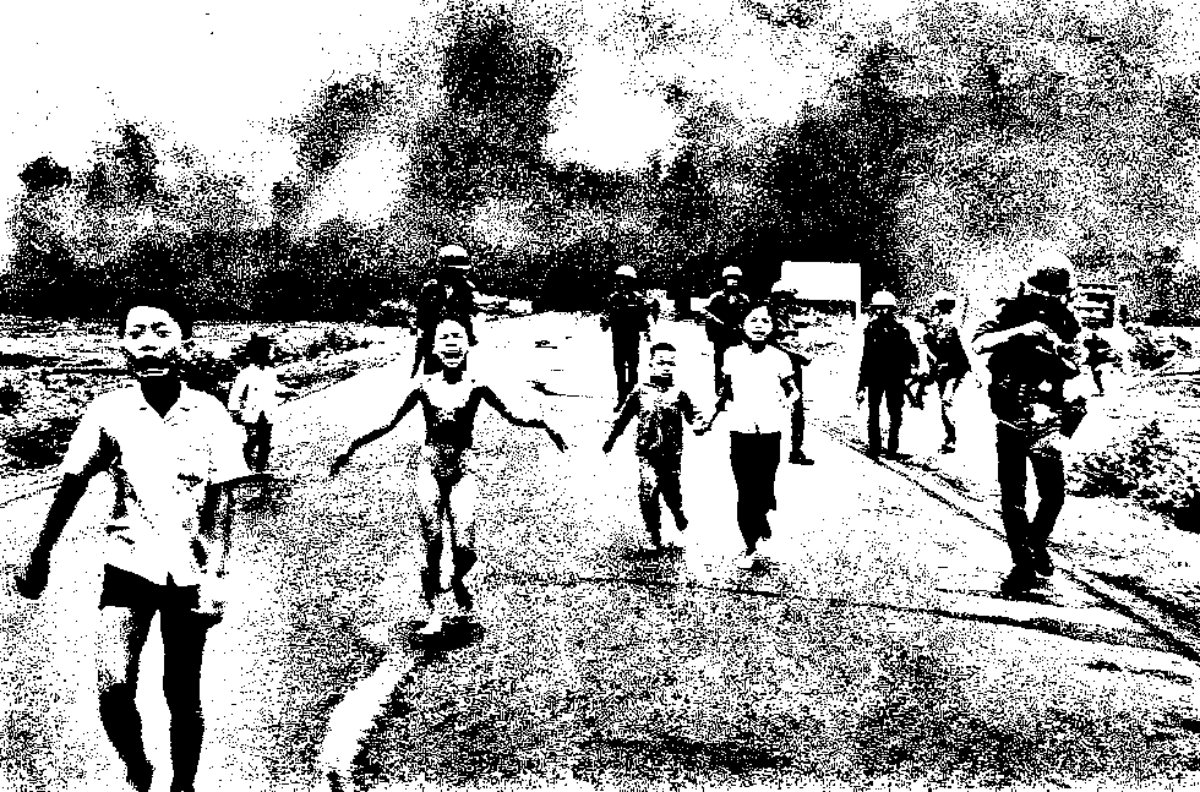
Kim Phúc’s iconic Vietnam War photograph helped awaken a generation. Why are educators now afraid to show students the human cost of war?
Recently, I was invited to a Canadian school in my role as a military historian to share my views on the causes of wars and strategies for ending them. I complimented the host on the openness of the topic; it is one that, if naot actively prohibited in the States, is certainly discouraged and one that carries real risk for the teacher who attempts an even-handed presentation or an open discussion. I asked if there was any approach which was off-limits: NATO encirclement of Russia, genocide in Gaza, preemptive military attack on Iran when involved in negotiations with that nation. I was assured that there were none.
My topic then was “War: Causes and Remedies.” I submitted my notes and slides ahead of time to the host as a courtesy. One of the slides was the Pulitzer Prize-winning photo of the nine-year-old Vietnamese girl, her clothes burned off by napalm, fleeing down a highway, screaming in pain.
“Oh, no, you can’t possibly show that,” I was told.
“Why not?” I asked. The photo was available on the Internet, and according to the “Fair usage” provision of the copyright laws, was now in the public domain.
Related stories
“Well, the girl is naked, so that is pornographic. And it is also damaging psychologically to the child, now a woman if she is still alive, for the humiliation of having her image seen by millions.”
I was taken aback and clumsily tried to argue that nakedness was not sexually provocative in any way—quite the opposite. Moreover, I cannot imagine anything more damaging to the psyche of the child or the adult survivor than the horror inflicted by a napalm bomb and the lasting trauma. I also reminded her that the photo which appeared in 1972 led to massive protests against the war and ultimately to the signing of the peace accords in 1973. Millions of people- students, teachers, homemakers, executives, Democrats, Republicans, even army veterans came together in unprecedented numbers to end the Vietnam War.
My argument was dismissed when she insisted that the students themselves needed to be “protected” from such a disturbing image, and that the administration could not allow me to go forward. So, I acquiesced, and a few weeks went by, during which I brooded over the fact that children are still being slaughtered in great numbers in conflicts and people who cannot see a single image of a child mutilated, where a girl with her whole body burned, or a boy with his limbs severed by a rocket, another child with a face scarred beyond recognition, and thousands of other shameless shattered into blood chunks of flesh by a thousand pound bomb, and the horrible sight of a dozen incubators with blue bodies of those infant who died of oxygen depletion when hospitals in Gaza were bombed. We and our children are spared the discomfort of seeing these “disturbing” photos, which might cause us to have second thoughts about our government's support of the genocide in Palestine.
The reality of Kim Phóc’s photo.
Kim Phóc, the nine-year-old in question, whose photograph appeared on the front page of the New York Times, reports a much different reaction from what the school's spokesperson suggested. In her own words, in interviews and in public testimony, Kim Phóc never suggests that she suffered humiliation because of the publication of her photo; quite the contrary. She insists that it saved her life since the photographer took her to a hospital in Saigon, barely alive, where she underwent 17 surgical procedures, including skin grafts. She returned home but was barely able to move. As the public attention to her case grew, she subsequently received treatment from a Finnish plastic surgeon and then therapy in a German hospital. None of which would have been likely without the publicity her case brought.
In adulthood, she immigrated to Cuba, where she trained for a career as a pharmacist. Later, she went to Canada, where she became a citizen and a leader in anti-war activism, organizing the Kim Phóc Foundation, which provides medical and psychological assistance to child victims of war. In her own words:
Napalm is very powerful, but faith, forgiveness and love are much more powerful. We would not have war at all if everyone could learn to live with love, hope, and forgiveness. If that little girl in the picture could do it, ask yourself: Can you?
Not only does Kin Phóc believe that educators should use the photo as a teaching tool, but she herself has used it, including at a United Nations forum where she had been named a UNESCO Goodwill Ambassador.
Contemporary beliefs, which are a combination of false morality and oversolicitous child protection concerns, as well as Me Too feminism efforts, have been hijacked to support government censorship and dilute anti-war activism. Neither of the political parties has an anti-war platform. Both Democrats and Republicans in Congress have voted to supply more bombs and rockets to Israel even though they are being used to kill civilians en masse. Not only have they distorted the value of combat photography in show the reality of war, and that fact that civilian casualties far outnumber those of enlisted military but they have led to indifference to child mutilations and deaths while ennobling a volunteer force with insipid and sycophantic “Thank you for your service” wishes, and the government with a “defense” budget that vastly exceeds that of the major nations in the world and robs its own citizenry of domestic prosperity for years into the future. It is time for a change.
Comments

Powered by RoundtableAn AI/DeFi-powered Enterprise Media Operating System. Learn more at Roundtable.io.© Roundtable 2026. By using this site you agree to the Terms of Use and Privacy Policy