


Sep 11, 2025 3:37 AM
Updated Sep 11, 2025 3:54 PM
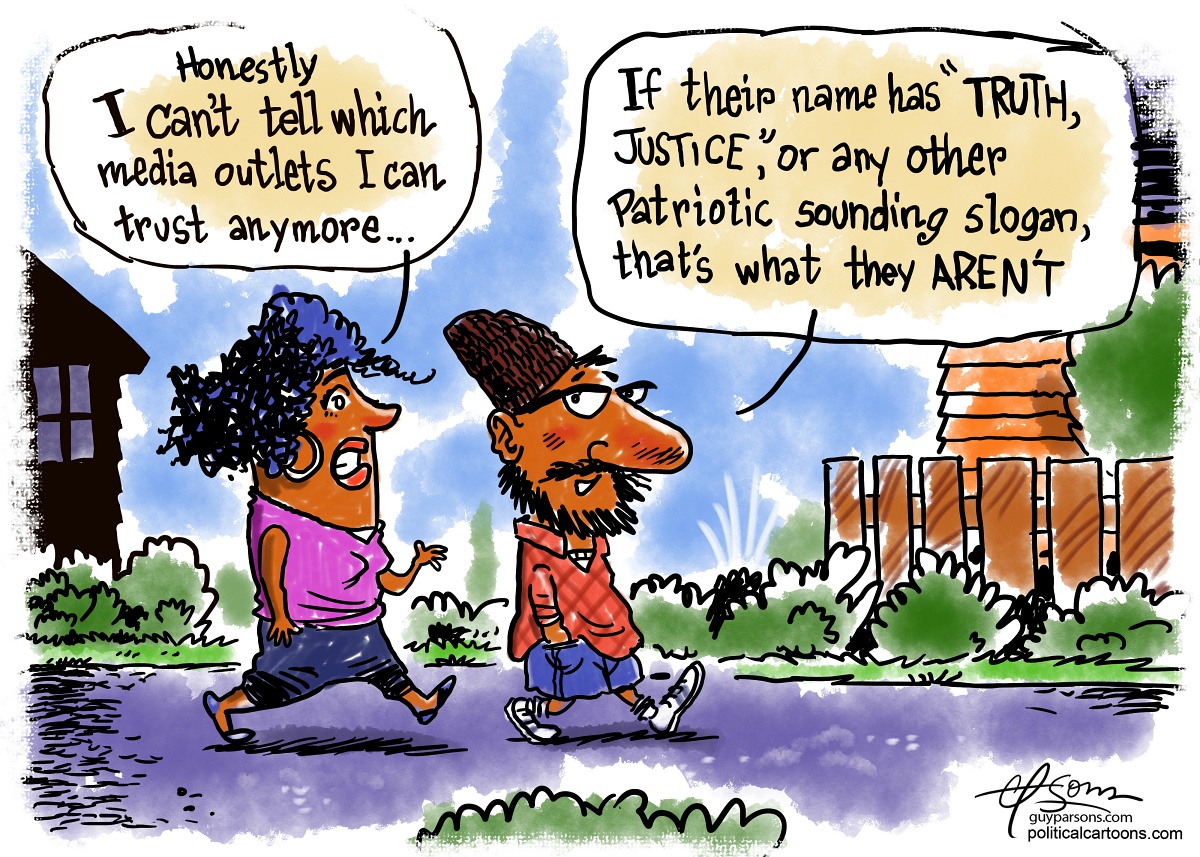
This is a golden opportunity for a new generation of muckrakers to use the tools corporations have forced on us to start exploring more into corporate corruption and political influence peddling.
There used to be a concept in journalism called “follow the money.” The idea underlying this concept was that a lot of political and business corruption could be discovered by seeing who was buying favors from whom, and who was selling favors to whom.
Muckrakers of the late 19th and early 20th centuries combed through business and political records and ran “stings” on bad actors. Their articles detailing the misconduct they uncovered was instrumental in the development of the Progressive Movement of the early 20th century. It was also instrumental in the corporate and political backlash from people who didn’t want their backroom dealings and profits exposed.
19th century muckrakers didn’t have radio and television to spread their stories. The telegraph was widespread but of limited utility for sharing news. The telephone was new and in limited coverage area, but it was the handwriting on the wall. Reporters and sources could talk directly and privately, and reporters and editors could work quickly on preparing articles for print.
Without AI to do their research, without corporate computer databases to hack, without word processors or even typewriters, the muckrakers exposed corruption among corporations, in “charitable work” and between corporations and politicians. Muckrakers wrote investigative pieces about Tammany Hall, probably the most corrupt political operation in U.S. history before The Donald’s administration. And they worked in another “golden Age” in which power resided on Wall St. and among business power brokers.
Related stories
So it is hard to credit anyone who says that what the muckrakers did would be impossible today. It is true that Wall St. corporations, now often multinationals with no national allegiance, have grown more sophisticated about information handling. In a society in which both major political parties promote the view that capitalism, in one form or another, is the organizing principle and acquiring private property is society’s main goal, “following the money” is reasonably considered a risk to those who want to control society.
One way to limit the dissemination of embarrassing information was to limit access to distribution channels. Older readers may recall the 1950 and 1960s when local radio and TV stations all had some form of local news coverage and some political opinion expression. And local newspapers kept an eye on local officeholders, publishing articles when public money went missing.
Back in the 40s-70s there were rules that limited how big corporations could control radio and television. The fundamental rule was that the broadcast airwaves belonged to the nation. Treaties between nations around the world allocated what frequencies would be used for radio signals, TV, space research, military uses, various kinds of business uses, etc. Every country was allowed to decide for itself how its own radio and TV channels would be operated.
In the USA, we decided that the broadcast channels were public property, but that individual businesses could operate them when licensed by the government, meeting technical and other standards set by the government. Businessmen understood that operating broadcast channels could be extremely profitable, and they were willing to obey certain rules to get government licenses to operate a channel. One of the rules was that the user of a public broadcasting licensee had to provide a small amount of time for public service broadcasts, not just for high profit broadcasts. Hence the news programming, farm reports, traffic and weather reports, etc.
Another rule was that any broadcaster who voiced opinions about political or social issues had to give equal air time to voices with alternate viewpoints. This was called the “Fairness Doctrine.” As businesses learned how powerfully persuasive broadcasting could be, many came to hate the Fairness Doctrine because it allowed local muckrakers to expose shady dealings in local politics and dishonest local businessmen.
Over time, local stations learned that it was more profitable to abandon local programming and replace it with programming from national production sources. The national producers signed up local broadcasters to carry their programs and identified their own string of contracted local stations as “networks.” This system developed in radio during the early 1930s and was quickly adopted to television after WW-II.
With more and more programming being national instead of local, the national networks also took over much of the news gathering and broadcasting that had earlier been done by local newspapers and radio stations. And corporate bosses saw how broadcasting could make and break stars. They began to see how broadcasting could sell social and political ideas as well, and they worked with politicians to concentrate their power.
One early rule had been that a single corporation could not own multiple stations in any one city or other “market.” This was to ensure that multiple voices and viewpoints could be heard in every market. Multiple voices meant competition for ideas, for advertisers, for facts on newscasts. Competition is the one thing every capitalist hates and works tirelessly to eliminate.
In the 1980s after the election of TV pitchman Ronald Reagan, the corporations got what they wanted. President Reagan, whose B-list acting career was dwarfed by his profitable career as a pitchman for tobacco and other products, was eager to do as he was told by the same corporations that had made him rich by hiring him to pitch products. At the behest of corporations, Reagan ended the Fairness Doctrine and then ended the rules about corporations owning only one channel per market.
Now Wall St. Corporations own mutiple TV stations in every big U.S. cities, crowding out voices from disparate groups. The government no longer requires public access to any viewpoints other than the corporations who own the channels. And the only measure of “public value” in a broadcast channel is how profitable it is.
But corporate greed is endless. The corporations who wanted to maintain “Banana Republic” control over Latin America insisted on their right to sell cell ‘phones and tablet computers to oppressed peasants who promptly used those tools to organize indigenous revolutions against the corporate Banana Republics. The same profitable corporate tools were used to organize the Arab Sring and to trigger IEDs across Afghanistan and Iraq.
The drive for short term corporate profits made corporations sell the tools of resistance to the subjects of their oppression. The drive to find new outlets for advertising drove corporations to develop the old Darpanet into the internet, where they could not control what people did or said.
And we have come full circle. Corporate “planners” see only the immediate profit possibilities for Artificial Intelligence. So they have lobbied for its rapid development without any desire or need for protective guardrails. As Elon Musk’s DOGE escapades have shown, all the world’s most secure databases are now open to public search and manipulation. And this is at the very beginning of the AI “revolution.”
This is a golden opportunity for a new generation of muckrakers to use the tools corporations have forced on us to start exploring more into corporate corruption and political influence peddling. The tawdry details of the “Epstein Affair” (or “affairs”?) Show us how little control either government or corporations have over the pandora’s box they have opened.
While Pam Bondi and Mike Johnson spin out increasingly fabulist tales (the Donald was an FBI informant!!) people with access to government and other databases are revealing not just who the Epstein pedophiles were but also how the attempts to cover up the Donald’s involvement are rupturing other “firewalls.”
The Epstein files are likely to turn out to be obscene. The client lists are going to include wealthy clergymen as well as other “high-morality” figures like rightwing influencers and podcasters. But the real modern muckrakers will be people who see the Epstein files as a diversion, a calculated distraction, and who keep digging for the real stories of corporate influence peddling and politiians selling out their offices. They will be the people who renew the ancient journalistic tradition of “follow the money.”
It won’t start from the top, with the corporate-controlled “news” sources. It is already starting at the local level, in limited form. Local journalists in Florida have started publishing about the corruption that led to Jeffrey Epstein getting a slap on the wrist in his first pedophilia prosecution. And they might be moving on to explore thre financial deals behind Alligator Alley and other concemtration comp building.
Here in Southern California, local station KPCC did a detailed investigation into corruption in Orange County. One Orange County pol went to prison this summer following the KPCC expose. Some news reports suggest that the corruption continues among other Orange County pols. It will be interesting to see if KPCC pursues that corruption.
While most ‘newsies’ whine about the Donald’s declining brain and increasingly irrational actions, others might be looking into who gains from RFK Jr.’s appointment of quack medicine profiteers to government boards, or what corporations get no-bid contracts through the ICE-stapo or how much money Supreme Court “justices” are getting in honoraria and other benefits from businesses before the Court.
In the late 19th century, muckrakers became heroes. Their books are still read today. We may hope that their model will be followed by new truth finders, using the fascinating electronic research tools just now emerging.
Comments

Powered by RoundtableAn AI/DeFi-powered Enterprise Media Operating System. Learn more at Roundtable.io.© Roundtable 2026. By using this site you agree to the Terms of Use and Privacy Policy