


May 30, 2023 5:39 AM
Updated May 31, 2023 2:35 AM
Breaking News and Breaking Down
Around this time last year, I accepted an assignment that I was professionally equipped to execute. But, extremely underequipped mentally to handle the payload of heavy emotions packed into the mission I was commissioned to take on. I showed up to embed with the Black Lives Matter Grassroots rapid-response team as they provided support in the communities of Buffalo, Akron, and Tampa — backpack with a camera, microphones, digital audio recorder, and a few different tripods for just the right shot all in hand.
I had no idea what I had gotten myself into.
Over the next few months, I was dropping into the aftermath of real-life events that made me question humanity and question why I was chosen — or whether I should have accepted the assignment. I seriously was asking why me?
The answer awaiting me had the strength of a feather — one more tickle from a growing set list of dark-humored jokes. Or that same feather aerodynamically cutting through the fading positive energy spare and piercing through my boundaries.
Related stories
Unexpectedly, I decided to pause and take a break.
Following a radio interview on First Things First with Dominique DiPrima on KBLA 1580 AM this past January in which I was discussing a vicious police beating case I'd been tracking and reporting on since 2017 — then viewing the footage of Tyre Nicols in Memphis and staring at an envelope containing Charles Towns' autopsy photos which seemed to be daring me to take just one more look for accuracy - I knew something wasn't right.
Hundreds of hours of gumshoe - scanning the web - filing public records requests - and smiling into spaces where others are in pain — with nowhere to dump it — were piling up in my head.
Some of the conversations are still in a loop.
That was then, here's what I've learned now.
African American journalists are disproportionately exposed to trauma as part of their environmental and experiential work. They are more likely to cover stories about violence, crime, and poverty, which can take a toll on their mental health.
The Running Toll
A study by the Dart Center for Journalism and Trauma found that 70% of African American journalists have experienced trauma as part of their work. The study also found that African American journalists are more likely to experience PTSD, anxiety, and depression than their white counterparts.
The study didn't factor in or account for the toll of traveling while Black or the Black Tax often tacked on Black bodies in these mostly white spaces — airports, hotels, or salty snack aisles at Target in the swing state of Ohio.
But, the study does acknowledge that exposure to trauma can have a significant impact on the mental and emotional health of Black journalists.
These sometimes shorter and longer-term effects are experienced via flashbacks, nightmares, anxiety, depression, and PTSD.
Nakeya T Fields, a Licensed Clinical Social Worker explained. “If you are somebody who is at a crisis event, a bombing, a shooting, a closure for a pandemic, you're dealing with all kinds of people in a crisis state.”
As a USC Annenberg School of Journalism grad, Fields continued further explaining the role of the reporter is to utilize their interpersonal skills, everything they've ever experienced, to be there, and to hold space for them - and to not get them to just cry or shut down or run away from you. “It's a skill set that most journalists have never been taught.” Fields added.
The role of journalists in holding space for people in pain can be a very difficult and emotionally draining role, and it can lead to feelings of Imposter Syndrome. This is especially true for Black journalists, who may face additional challenges getting their stories told.
A primary feeling of Imposter Syndrome is inadequacy - which can affect journalists, even those who are successful in their careers. It can manifest in several ways, such as feeling like you don't belong in the field, feeling like you're not good enough.
As January crept in, I was only beginning to realize how close I was to the subjects in my work. My mind and physical body had become a living greenscreen.
. ….A boy's father is told his son is dead on a back road near the highway. Blood-stained grass... and me, walking through a grocery store where 10 souls had been executed.
I was green.
My internal projector played Buffalo, Akron, and Tampa: A Reckoning for aMEerikkka.
These tragedies are classic tales of the Black experience — a white supremacist terrorist attack in Buffalo, New York; the police shooting of Jayland Walker in Akron, Ohio; and the death of 14-year-old Andrew Joseph III in police custody in Tampa, Florida. These tragedies left me feeling shaken and uncertain.
Buffalo, NY
But as a Black journalist, my work had been bringing me into intimacy with the traumatic stories of countless Black folks for years - frame-by-frame in some cases. I started having difficulty sleeping, concentrating, and making decisions. In Buffalo, I was on the ground for two weeks following Ten Lives being gunned down by a white supremacist terrorist inside Top’s Market on a late spring Saturday afternoon. My arrival was following all of the victims being laid to rest and an entire community in East Buffalo was left to find ways to grieve and heal. The strongest of them was bleeding while leading.
An excerpt from coverage of my second story published in the LA Progressive Buffalo, Weeks After the Racist Massacre reads, “Saturday, May 14th, 2:30 in the afternoon–near the Customer Service counter at a market in New York state. Do you risk your own life trying to save your adult child? What if she's already dead? What if you're killed trying to save her? Who will care for your two grandchildren? An unimaginable choice–ripe with palpable fear. Fight, flight, or freeze are the only options for this grandmother --who barely escaped with her life from the terror of a hail of bullets fired from an AR15 assault rifle.”
This was three weeks after the massacre, corporate media and the political class were gone. The influx of charitable acts and relief had dried up. ‘
‘Buffalo Strong’, a Mindset That Has Been Disrupted
"I was involved in the shooting. I was in the store with my daughter." Tops Market employee Fragrance shared last Friday night–20 days following the Buffalo murderous massacre.
"We were at work on May 14, and we heard gunshots." She recalled. Before the church altar at the community gathering where I met her, she reflected on hearing guns and not hiding or dropping to the floor.
“We know that could have been us. I need you to remember us because we're alive.”
A return trip a month later and the store reopened to a range of emotions from those experiencing joy while others were reeling — still in deep pain. Walking through the store, it felt like being in any other market on a Saturday. The ubiquitous sound of capitalism screamed on every aisle.
The beeping from the checkout scanning barcodes.
Announcements over the PA system.
Produce call on line two.
I had to consciously remember this was where ancestors had perished. Excuse me — where ancestors were stalked, hunted, and executed.
Akron, Ohio
Inside an Akron Barbershop. Breaking News on the TV called everyone's attention to tune in. Attentively, the packed shop listens to the press briefing. The autopsy results painfully confirmed most of what was already known.
Any one of the 46 gunshot wounds to his heart, both lungs and to his right iliac artery would have caused Jayland Walker to bleed out extensively.
Dinner was served with the Walker family and a side conversation with three peaceful protesters that were jailed. One of them was still scared and bruised from the beating by local police. I would also learn that Jayland Walker was more than a #Hasgtag,
Tampa, Florida
Escaping Tampa a couple of days before Hurricane Ian ripped through Florida’s Gulf Coast — 17 floors up in a Federal Courtroom. After an 8-year journey, a Black mother and father finally had their day in court. A nine-day trial ended with the jury finding Hillsborough County Sheriff's Department liable for the death of Andrew Joseph lll — awarding his parents $15 million — the largest jury award resulting from police negligence in the state of Florida.
It was easy to smile and rejoice with the Josephs, but deep down, I knew it was only temporary.
An appeal was imminent. 'Qualified Immunity’... After spending literal days reviewing case after case, after the incessant intensity of viewings, following countless interviews, videos, and imagery, these injustices have been seared into my psyche.
I was vicariously traumatized and bruised. I worry, not just for myself, but for others who occupy similar identities — Black Trauma Journalists.
I certainly couldn't be the only journalist that has experienced these dark feelings.
Breaking News, Breaking Down
Unsure how to process this, I reached out to former National Association of Black Journalists President Bob Butler. Following a 42-year storied career reporting hard news with San Francisco's KCBS AM, you name it — he’s covered it — now recently retired.
Growing up, I would hear Bob’s iconic crisp straightforward delivery of the facts — no exaggeration, just both sides of the story — and absolutely, no editorial. Bob is a reporter’s — reporter. Off assignment and at family events, he seldom turned off that stern cadence of speech. But it was his writing and words that places this Peabody and Murrow Award-winning broadcast journalist amongst the most qualified Trauma Journalist subject experts.
He too has been bathing in the sudsy societal scum in the media.
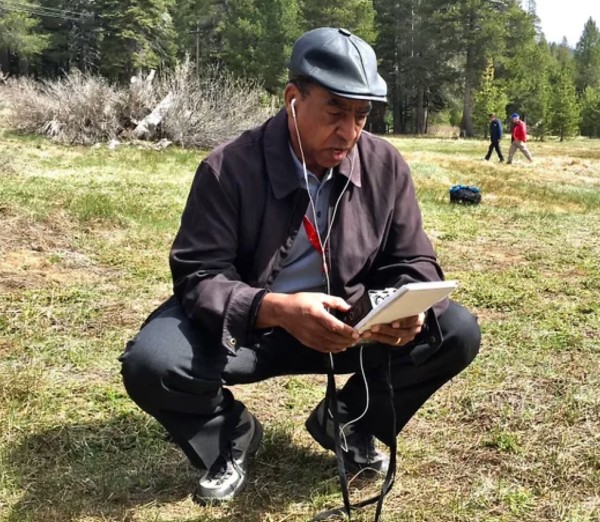
In 1989 he covered the San Francisco Marina and the Bay Bridge collapsing during the Loma Prieta earthquake. Whether responding to a mass shooting or a gruesome and grotesque fatal traffic collision, Butler has seen his share of violence, people's choices, and family members held behind the yellow tape.
Digging into his deep well of stories from his beats, Bob said, “There are so many.”
Before we began our interview, the veteran news editor took the time to prepare me for the difficult conversation ahead that he knew I would be exposed to — and he wanted to make sure that I was prepared. The journeyman coached a safe landing spot for the crash awaiting us both by exposing each other too — TRAUMA.
Don't hold it in, talk to somebody about it…
Recalling a time when his union screened a film entitled Breaking News, Breaking Down. “I mentioned yesterday, the documentary that was presented to us at our meeting years ago. It specifically talks about the trauma that we as journalists face, you know, time after time after time, just because of the job that we do, and how important it is to talk to somebody about it, don't hold it in. Because if you do hold it, it could come out in a negative way. You don't want that to happen.”
Deeper into our conversation he would reveal what he learned not to hold back.
As a father, one story ripped away Bob's soul. Within 18 months, two girls were kidnapped in Vallejo
The Pain of Covering Tragedy
As a journalist, Bob Butler has seen his fair share of tragedy. He's covered school shootings, natural disasters, and even murder. But there's one story that still haunts him: the kidnapping of two young girls in Vallejo, California. One of them never made it home.
The first girl disappeared while walking to school. A year and a half later, another girl was kidnapped and sexually assaulted. She managed to escape, and her attacker was caught.
“A guy grabbed her. Got her into his car. Had her ankle shackled to a bolt in the front seat?” Butler recalled. But, before her chance to escape, her abductor would repeatedly violate the child. “He sexually assaulted her for two days.”
Authorities believe he was preparing to kill her and dump her body.
The first girl was never found. It would be years later before her skull was unearthed near a San Jose lake.
Police believed the same suspect was responsible for snatching both girls but couldn't connect the suspect to the missing child.
Butler became close with the families of both girls. He attended the memorial and watched as they struggled to cope with their grief.
“You aren't supposed to get close to a story - you're supposed to keep your distance. But it's hard if you're a human being not to be affected when you see that family hurting so much for a little girl who did nothing wrong - she was just walking to school.” Butler choked back while clearing his throat.
The determined mother went to visit the perpetrator in prison to ask if he was guilty in both and what he did with her daughter's remains. He wouldn't admit to taking and murdering the girl but revealed something to her that only the police knew through their investigation.
“He [the suspect] never admitted yes or no. But he said something he she said something that only the person that was with her [kidnapped and presumed murder girl] would know. So she was confident that he did it.” Butler dreadfully recalled.
Reporting on both girls — the attacker being caught and brought to justice — even though one case was solved, the other remains open, the pain of the families never went away. Butler was left with a deep understanding of the toll that covering tragedy can take on a journalist.
Digging deep into his memory, Butler went on to share, "It's hard to stay objective when you're covering something like this," Butler said. "You can't help but feel for the families. And it can be {really] tough to see the pain that they're going through."
Butler said he's learned to cope with the stress of covering tragedy by talking to other journalists. He also makes sure to take breaks when he needs them.
"It's important to take care of yourself," Butler said. "You can't pour from an empty cup."
Butler said that he's proud of the work that he's done covering tragedy. He believes it's important to tell these stories, even if they're difficult to hear.
"These stories need to be told," Butler said. "We need to remember the victims and the families who are left behind."
(Black Mental Health: Changing the Narrative explores why Black people may suffer from poor health outcomes as well as promotes strategies and resources that assist in improving their overall health and well-being.)
Changing the Narrative Chapter 9 Returning to Self
I found the answers in Fields' docuseries Black Mental Health: Changing the Narrative.
The series aims to provide knowledge and resources to influence a change in the narrative around Black mental health. By addressing maladaptive trends around the health outcomes in Black families de-pathologize individual suffering,
"I think that comes from the fact that we've had to train our minds to be strong enough and resilient enough to not feel the pain that our bodies are experiencing." Fields said in Chapter 9 of the series.
My last nerve
Everything seemed to get on my last nerve. When in fact, it was the environmental factors that were triggering my Vagus Nerve to communicate to my body — fight, flight, or freeze. Fields described it as the nervous systems communication highway.
“When you’re stressed or scared, your heart rate and blood pressure increase and you become focused on survival,” Dr. Yufang Lin, MD explains neuroscience via Cleveland Clinic. “Being in that stressful ‘fight-or-flight’ state can wear out your body."
I needed to find a was to balance the scales of injustice I was acutely absorbing.
Fields offered this advice on how to return to myself, “Sometimes we need rest. Sometimes we are not able to keep going, much like a physical injury. A mental health injury is just as impactful on our functioning. So if you break your leg and you need to recover for three months, the same mindset should occur. If someone witnesses a violent crime, engages in some type of experience that they felt unsafe or at risk or their life was in danger, we should give them that same respect and time for recovery.”
Story Editor: Georgia Sanders
Publisher, Editor & Writers Note: If you are an African American journalist who is struggling with trauma, please know that you are not alone. There is help available. Here are some organizations that can help:
- The Dart Center for Journalism and Trauma: The Dart Center is a non-profit organization that provides resources and support to journalists who have been exposed to trauma.
- The National Association of Black Journalists: The NABJ is a professional organization for African American journalists. The NABJ offers several resources for journalists who are struggling with trauma, including a helpline and a list of therapists who specialize in working with journalists.
- The National Alliance on Mental Illness: NAMI is a national organization that provides support and resources to people with mental illness and their families. NAMI offers several resources for journalists who are struggling with trauma, including a helpline and a list of support groups.
Comments

Powered by RoundtableAn AI/DeFi-powered Enterprise Media Operating System. Learn more at Roundtable.io.© Roundtable 2026. By using this site you agree to the Terms of Use and Privacy Policy