


Birthplace of Earth Day
Apr 22, 2024 6:04 PM
It is no surprise how much Bay Area activist consciousness helped sprout the seeds of an environmental movement that has spread and taken root across the face of the planet.
Every day was Earth Day for the Native Ohlone people, who for millennia lived around the San Francisco Estuary in peace and balance with nature, never dominating or polluting their sacred home. The Bay Area continues to bless residents by so much with its environmental beauty and diversity, from the coastal redwoods to the bay wetlands, foothill creeks and waterfalls to saltwater marshes, seashore beaches, and to valley wildflower meadows. Considering the incredible beauty found here, when the rapid pace of environmental destruction and urban development ensued during the latter part of the last century, it is no surprise how much Bay Area activist consciousness helped sprout the seeds of an environmental movement that has spread and taken root across the face of the planet.
In the 1960s, several events stimulated a greater concern for the quality of the environment in the 1960s. Rachel Carson's bestseller "Silent Spring" turned out to be prophetic as DDT and other pesticides impacted bird populations nationwide. The Great Lakes, choked by a massive amount of industrial pollution, appeared to be dead. Oil spills off the Santa Barbara coast and in San Francisco Bay brought home the danger to the local environment of petroleum addiction’s impact on the local environment. Water pollution and smog were common occurrences in most major cities, and Ohio’s Cuyahoga River kept catching on fire, the third time was in 1969, from the debris and fuels spilt on its surface. Meanwhile, young people were rejecting the modern consumer society and the war economy, and thanks to conscious expansion, organic diets, mind expanding drugs, and rock and roll, adopting new ways of looking at reality on earth.
Not surprisingly, San Francisco was ahead of the trend. The conservationists at long-time established groups such as the Sierra Club, established in 1892, and the young hippie flower children both shared both a deep, abiding respect for nature and a sense that action was needed. In late fall of 1969, the seed for Earth Day was planted when a group of persons in San Francisco, led by John McConnell, approached Peter Tamaris, head of the San Francisco Board of Supervisors, with a resolution to devote one day a year. (originally proposed on March 21, 1970, the date of the vernal equinox, and the vernal is still celebrated on the equinox was chosen as the day to celebrate the earth and the intricacies and fragile nature of its interactions.
It was a big deal when Democratic Mayor Joseph Alioto introduced this proclamation:
Related stories
As inhabitants of this Earth—Earthians, we need a day to celebrate our global unity and destiny. The observance of EARTH DAY will alert concern and interest for our planet, with its precious treasure of living things.
EARTH DAY is to remind each person of his right and the equal right of each person to the use of this global home and at the same time the equal responsibility of each person to preserve and improve the Earth and the quality of life thereon.
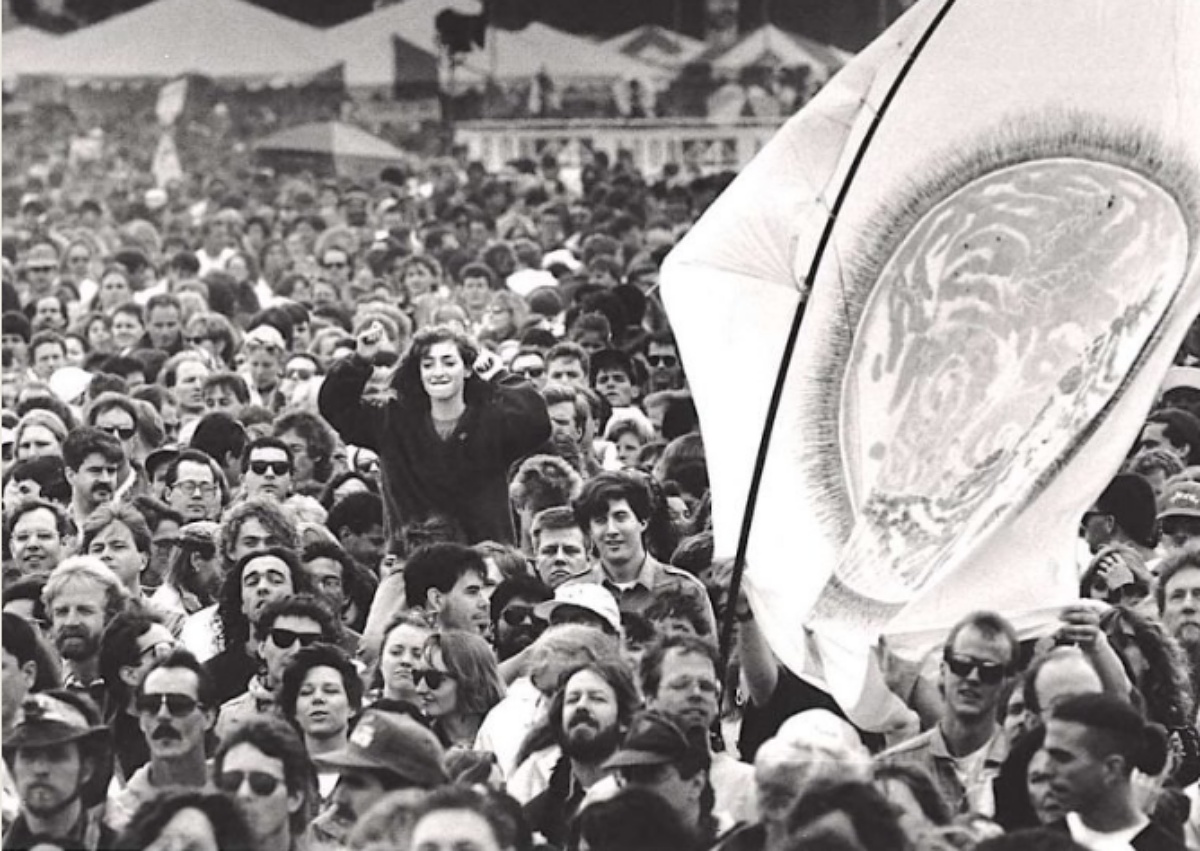
NOW, THEREFORE, I, Joseph L. Alioto, Mayor of the City and County of San Francisco, do hereby proclaim March 21st (Vernal Equinox) to be designated EARTH DAY, a special day to remember Earth'’s tender seedlings of life and people; a day for planting trees and flowers; a day for cleaning streams and wooded glens: that on EARTH DAY the EARTH FLAG, which portrays in its center our “"Beautiful Blue Planet",” be flown to encourage mutual respect for Earth and all its people.
On this day 1900 to 2000 Universal Time (11:00 a.m. to 12:00 noon PST) be designated EARTH HOUR - a Silent Hour For Peace; and do invite all citizens throughout the community to join in observing EARTH DAY and EARTH HOUR in every way they may deem appropriate.
IN WITNESS WHEREOF I have hereunto set my hand and caused the seal of the City and County of San Francisco to be affixed this eleventh day of February, nineteen hundred and seventy.
Joseph L. Alioto, Mayor
Coinciding with McConnell’s grassroots initiative, Gaylord Nelson (D-Wisconsin) had become very frustrated with the lack of environmental interest among his colleagues in the U.S. Senate. Hoping to stimulate popular interest for the environment, Nelson looked to America's non-violent campus activism for inspiration and proposed a series of environmental learning experiences, “teach-ins,” for campuses across the nation. In a speech in Seattle in September 1969, Nelson announced a national environmental teach-in for the Spring of 1970. His timing was perfect, as rising concern over the environmental crisis was sweeping the nation’'s college campuses with an intensity that seemed to be eclipsing student discontent over the war and destruction in Vietnam. Young people were galvanized to let their voice be heard and to make a difference. They saw clearly what business as usual had wrought in America, and they were quite displeased by the senselessness of the Vietnam War and environmental destruction.
Harvard graduate student, Denis Hayes, went to Washington, D.C., to interview Senator Nelson who subsequently persuaded the young, idealistic student to coordinate the nationwide activities that would become another Earth Day celebration. Hayes and his inspired staff organized huge rallies from coast to coast. Suddenly, thousands of colleges and universities formally organized teach-ins and protests against the destruction of the environment. Most significant was when disparate groups that had been opposing factory pollution, sewage dumping, pesticide use, freeway construction, the loss of wilderness loss, toxic pollution, and wildlife extinction realized that they collectively shared common values, power, and considerable influence.
There are actually several conspiracy theories about the date of April 22nd for Earth Day. One is that April 22, 1970, was the 100th anniversary of Vladimir Lenin’s birth, (Earth Day was never a Communist-inspired activity), and "stealing the thunder" of McConnell's equinoctial Earth Day of the March 21st vernal solstice. April 22 may simply have been chosen as the best and most practical date to reach the primary audience, college students: A Wednesday was chosen because it would be the least inconvenient for students who were called upon to participate in the event. There would be no competition with weekend activities, the weather in the northern states would be warming, it was after the annual southern migration of “spring break,” and well before final exams.
What occurred was a spontaneous, spectacular, nonviolent national, non-violent national demonstration. Folk singer Pete Seeger sang at the Washington Monument. Cars were banned from New York City’'s Fifth Avenue to accommodate the events. Public speeches, parades, marches, rallies on college campuses, and “teach-ins” launched the contemporary Environmental Movement. The first Earth Day was the largest focused demonstration in human history. Congress actually closed its doors in Washington as politicians returned home to participate in or attend local events. More than 40 State Legislatures passed Earth Day resolutions to commemorate the date.
Twenty million Americans took part in the activities, and at last, the notion of environmental concern was no longer seen as fringe. The wire services carried the story nationwide. The response was dramatic and the call for making April 22nd an annual Earth Day took root. Seeds planted in earlier years were beginning to provide trees that would bear fruit. The subsequent impact on the nation 54 years ago was tremendous. The Movement came of age as people awoke to the reality of our species’ impact on our home planet. Long lasting institutions were created, such as Friends of the Earth, founded in San Francisco by David Brower and Jerry Mander, which quickly grew into a global network of independent, grass-roots action groups, today there FOE International has members in 73 nations, and the Berkeley Ecology Center, where the first curbside recycling effort in the nation began. Environmental organizations grew by leaps and bounds, recycling and ecology action centers were established, and green environmental consciousness became popular.
The United States Congress, spurred on by the earlier passage of the National Environmental Policy Act of 1969, passed the Clean Air Act amendments and the Clean Water Act revisions. By the end of 1970, the Environmental Protection Agency was created under President Nixon. Colleges developed whole departments and divisions of the environment. Prior to 1970, ecology was not an often commonly spoken word. Today, such aspects of scientific query and education are a given. American Heritage Magazine called the inaugural Earth Day “one of the most remarkable happenings in the history of democracy.”
Epic disasters such as Love Canal, Bhopal, the Exxon Valdez oil spill, and numerous nuclear power plant accidents, along with growing species extinction, loss of rainforests and biotic diversity, and chaotic climate change are reminders that since the first Earth Day, our environmental problems have hardly been solved. Issues with no respect for political boundaries illustrate the global dimensions, scientific complexities, and policy dilemmas of contemporary environmental issues. But fortunately, today such concerns are no longer seen as fringe, leftwing issues, they are very much mainstream, front and center on politicians’ agendas, thanks to environmental activists 55 years ago. Earth Day remains an important observation to affirm our reliance on this small planet, and the urgent need to alter our behavior and levels of resource consumption if we want to perpetuate our species.
The following recommendations made by San Francisco eco activists 55 years ago are still as valid and needed today as they were in 1969.
For Earth Care
- Move thoughtfully and protect the web of life that surrounds our globe and is our Life-Support system.
- Know that the air and water that circulates around the planet circulates through us.
- Check your job out and see if it aids life more than it destroys.
- Study advertisements and reject products that waste or pollute.
- Share cars, newspapers, whatever you can.
- Recycle paper, metals, glass, plastics.
- Repair and give away what you no longer need.
- Love a little.
- Conserve, insulate your home, build for good ventilation.
- Use your hands.
- Learn how a person treats the Earth before you vote for him or her.
- Rejoice in human energy.
- Use your legs.
- Grow some of your own food.
- Inherit the Earth, it belongs to each of us. Its health, wealth, and beauty is our wealth, health, and beauty.
In 1978, Margaret Mead said, “Earth Day is the first holy day that transcends all national borders, yet preserves all geographical integrities, spans mountains, oceans, and time belts, and yet brings people all over the world into one resonating accord, is devoted to the preservation of the harmony in nature, and yet draws upon the triumphs of technology, the measurement of time, and instantaneous communication through space.
Earth Day draws on astronomical phenomena in a new way, which is also the most ancient way, by using the vernal Equinox, the time when the Sun crosses the equator, making the length of night and day equal in all parts of the Earth. To this point in the annual calendar, Earth Day attaches no local or divisive set of symbols, no statement of the truth or superiority of one way of life over another. But the selection of the March Equinox makes planetary observance of a shared event possible, and a flag that shows the Earth, as seen from space, appropriate.”
Comments

Powered by RoundtableAn AI/DeFi-powered Enterprise Media Operating System. Learn more at Roundtable.io.© Roundtable 2026. By using this site you agree to the Terms of Use and Privacy Policy