


Nov 7, 2025 6:00 PM
The Perth Australia wind-powered plant became operational in 2006 and supplies 38 million gallons per day.
Lake Mead and Lake Powell, on the northern Arizona border, are the two largest reservoirs in North America. They are currently 32% and 29% full.1
This water loss is greater than everyone in the six New England states not having a drop of water for over a year. The Colorado River (CR) supplies water to 40 million people in seven states; the six New England states have less than 20 million people.
CR surface water loss is exacerbated by subsurface water loss. In 2014, NASA ground-penetrating radar showed aquifers in the CR region lost an amount of water greater than a full Lake Mead.2
USA TODAY, in the August 15, 2025 issue, had a story titled “Water levels plunge at Lake Powell,” and indicated the dam could lose all electricity as early as 2026.3 The current US Drought Monitor shows most of the CR basin is in a “severe or extreme drought.”4
Related stories
Following are some “Objections” to desal and replies to the objections:
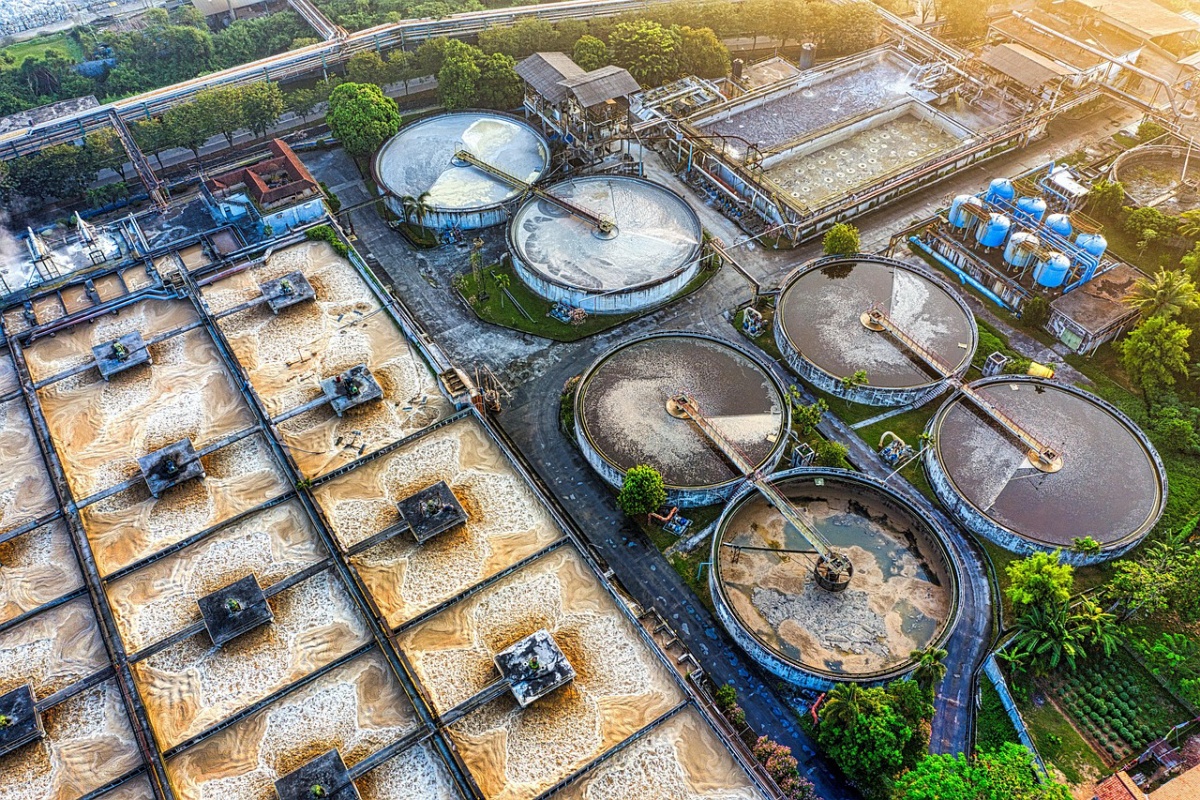
Desal costs too much. The low cost of desalted water is $00.03 per 15 gallons. Desal is virtually free compared to the cost of 15 gallons of milk, beer or any liquid people buy. Perhaps google “cost of desalinated water per 1,000 gallons.”5
Desal is always powered by fossil fuels. The Perth Australia wind-powered plant became operational in 2006 and supplies 38 million gallons per day. Google for more info. Now operating, google China solar desal. Also now operating, google Saudi Arabia solar desal. Google “Massachusetts Institute of Technology solar desalination.”
Google tidal powered desal. Google “Britain is Building The World’s Largest Tidal Power Project.” Tidal power operates similar to dams as falling water creates electricity. Tidal powered desal is also possible for the CR, as the Gulf of California is one of the most promising locations on Earth for tidal energy generation.
Desalted water cannot be used to grow crops. It has already been used to grow high-value crops using drip irrigation. Google “Sahara Forest Project.”
California coastal land is too expensive. Potential free land and free labor is possible on the 231 square miles of Camp Pendleton located between LA and SD; several wars have been over water, so an innovative Camp Pendleton site might contribute to preventing a future war. New coastal projects are built every year. Desal can be inland, not next to the coast. A desal plant could be off-shore like oil rigs in the Gulf of Mexico. In 1994, Japan opened an international airport built in the ocean; a desalting plant would require far less land than an airport.
I still think California coastal land is too expensive. A desal plant benefiting the seven CR states does not need to be built in or near California. The US could help finance and build the world’s best green-powered plant anywhere along the Atlantic or Pacific coasts of Mexico in exchange for a certain amount of Mexico’s annual entitlement to 15% of the water in the CR.
The salt residue is released at the coast. Diffuser pipelines can intermittently sprinkle the brine near ocean currents miles away. Seawater contains many times the total value of gold at Fort Knox and contains all 92 elements. Imagine how much gold, silver and platinum the CR has dumped from the Grand Canyon region into the Gulf of California in the past 100,000 years. As the value of precious metals has soared, new chemical separation techniques are likely to be extremely lucrative.
There are other alternatives besides reliance on desal. Author totally agrees. See LA Progressive’s 12 Water Solutions for Southern California from Dec 2, 2023.6 None of these 12 solutions were implemented.
There are other alternatives to those 12. What are they? Promptly require a 25% tax on all food grown using CR water? Discourage all US citizens from migrating to the CR region? Pay people $25,000 to leave the CR region? Urge all females in CR region to have no more than two children?
The $00.00 cost in the title of this article pertains to the cost per million gallons--if direct benefits are considered for CR system. Costs always vary by location and multiple other factors, but the CR system is likely the best location on Earth for direct desal benefits.
Direct benefits of a desal plant in California include more reliable hydropower for over 10 CR dams, improved water quality in over 10 CR reservoirs, decreased water and power bills for over 20M people, increased water for agriculture, decreased food costs in the future, increased water for lake recreation, increased water for wildlife and shoreline habitat, less groundwater decline, better preparation for global warming, and elimination of need for long water pipelines from the Columbia or Mississippi Rivers.
The indirect benefits of the world’s best green desal plant assisting the CR region are greater than the direct benefits above. Around 60% of human body weight is water, 75% of the brain is water, and 90% of blood is water. Desalted water is cleaner than municipal water; hence, desalted water reduces risk of heart disease, cancer, and dozens of other medical maladies.
The UN estimates over 2M deaths annually from unsafe water, sanitation and hygiene.7 Over 10 US states have less than 2M people. Around 50% of humans live within a few dozen miles of oceans. Similar to the rapid decline in computer costs over decades, one state of the art desal plant for the CR can be replicated and spark additional innovations. What is the lost dollar value of a million children, mostly girls, dropping out of school before age 18 because they are hauling water 2-5 hours per day?
Dozens of universities, think tanks, agencies, and others are engaged in desal research. A gigantic desal improvement may now exist, but the source has no funds for building a small plant. Green-powered vertical desal is one promising technique.
To have a secure foundation, skyscrapers can require the removal of 100-200 feet of dirt. A tidal, wind, or solar-powered “Archimedean Screw” can elevate seawater inland, then drop the water through filtration layers. At a certain width and drop, such a plant would create electricity equal to Hoover Dam. One such plant could provide a significant amount of power and desalted water for metro LA.
State and federal laws often require a comprehensive cost-benefit analysis of proposed large projects. An analysis of the direct and indirect benefits of one CR desal plant might conclude the benefits are less than $00.00 per million gallons.
THE FOUR HORSEMEN of the southwestern hydro apocalypse are the concluded administrations of Bush, Obama, Trump, and Biden. Bush became president in 2001.
Each of the Four Horsemen read newspaper articles highlighting the water scarcity, knew the southwest had been the fastest or near fastest growth area for over 50 years, and the CR system was largest river in the southwest. They all likely knew of the UN’s first climate report in 1990.
Each had science advisors who might have alerted them with related data. They all might have been informed by southwestern state governors or other prominent politicians.
But the Four Horsemen all failed to implement adequate remedies. All failed to sufficiently alert the public of future water scarcity. All failed to promote appropriate water conservation measures and desal solutions.
The US-Afghan war lasted from 2001 to 2021. Each of the Four Horsemen squandered far over $100B on this war and other wasteful military expenditures when they all had the intellectual aptitude to realize far less than $1B would have revolutionized desal research and created an operational prototype desal plant that would be best in the world.
There is no real debate that a crisis has been present for 20 years. Lake Mead has lost 150 feet in elevation. When full, Lake Mead extends over 100 miles at a maximum width of 10 miles. Imagine thousands of adjacent 15-foot skyscrapers extending for over 100 miles. Each of the Four Horsemen could have addressed Congress and stated, “We have the equivalent of 100 miles of evidence. Here are my solutions….”
SOURCES:
(1) U.S. Department of the Interior Bureau of Reclamation Boulder Canyon Operations Office (as of 10/5/2025) Lake Powell Percent Full 29% Lake Mead 32%
(3) Water levels plunge at Lake Powell. usatoday.com:
Comments

Powered by RoundtableAn AI/DeFi-powered Enterprise Media Operating System. Learn more at Roundtable.io.© Roundtable 2026. By using this site you agree to the Terms of Use and Privacy Policy