


Jul 2, 2026 5:57 PM
The Southwest’s two largest reservoirs are approaching dangerous lows as rising temperatures reduce snowmelt, increase evaporation, and intensify competition among seven states for a shrinking water supply.
Austria, Brazil and China use water in all California lakes and reservoirs. People in every nation use cars and planes. Every nation contributes to less snowmelt in the Southwest.
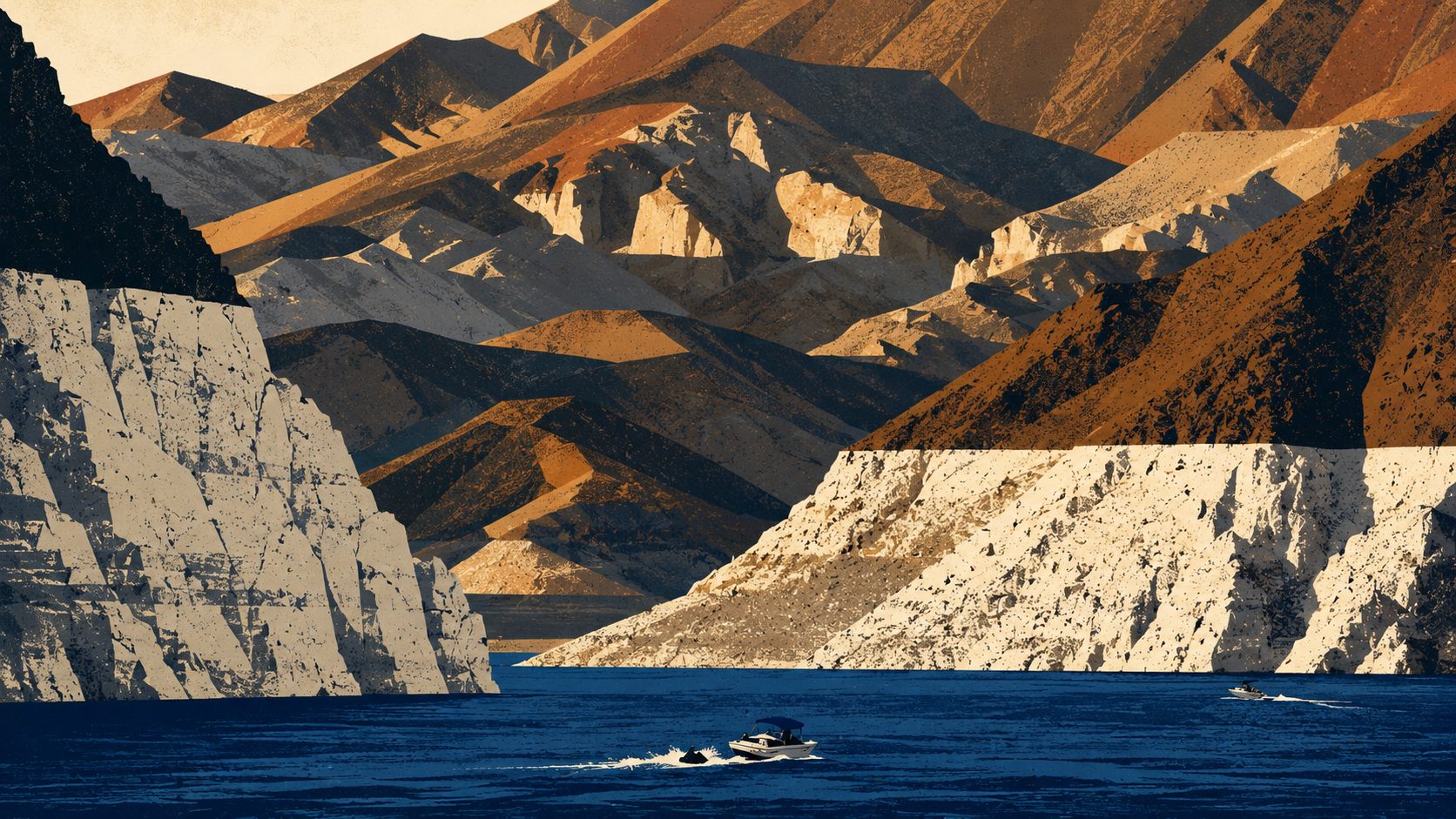
The best corroboration of the above derives from Colorado River reservoirs. Lake Mead and Lake Powell are the two largest reservoirs in North America; currently they are 29 and 25 percent full. Canals from the river supply a significant amount of water to LA and San Diego. Lake Mead’s capacity is six times larger than Shasta Lake, California’s largest reservoir.
The informative US Drought Monitor displays five levels of aridity. Progressively, they are Abnormally Dry, Moderate Drought, Severe Drought, Extreme Drought, and Exceptional Drought. Its current map displays severe or extreme drought in most of the upper Colorado River (CR) watershed.
In 2026, many sources have addressed water scarcity in the Southwest. UN water experts warned the “Colorado River system is heading toward water bankruptcy.” On May 15, The Guardian reported a “US plan for Colorado River could cut up to 40% supply for Arizona, California and Nevada.” On June 8, the Las Vegas Review-Journal had a page one cover story titled “Lake Mead is barreling faster than ever toward ‘system crash.’”
Related stories
In 2026 and prior years, there have been multiple reports indicating water level declines in Lake Powell and Lake Mead indicate Glen Canyon Dam and Hoover Dam could have reduced ability to generate electricity and users will pay more. California gets 58% of Hoover’s electricity. Both dams are now producing significantly less electricity than when they were last full decades ago.
Other writers have noted, if the Southwest were an independent country, its economy would exceed Germany or Japan. As the CR supplies water to over 100 cities in the Southwest, it is the economic engine of the region.
A 12-factor multiplier effect
Relative to melting, California has at least a 12-factor multiplier effect. Global warming means a trend of very slightly reduced snow on the west side of the Rocky Mountains, less water in hundreds of gullies feeding into CR tributaries, less water in tributaries feeding into the CR, less water in 10 CR reservoirs, more evaporation from all reservoirs, crops requiring more water, more evaporation from over 2,000 miles of concrete lined canals, a parched delta, and visiting winter snowbirds.
Other factors are the urban heat island effect, grass and trees needing more water, low aquifers needing replenishing, new larger houses using more water, and projected population increase.
Scientists have said the Arctic is the fastest melting region. Given at the 12-factor melting effect, a contrary hypothesis is the US Southwest is the fastest melting region on Earth.
Science cannot accurately estimate the yearly amount of California water “used” by Austria, Brazil and other nations. Nor can science provide an estimate for China. But it is known China has a population 35 times larger than California (1.4B divided by 40M). While China is the global leader in solar, it also has over 1,000 coal power plants. Could China’s annual use of California water be equal to a city the size of Barstow, Napa, or Burbank? Then there are almost 200 other nations that “use” water in every California lake and reservoir.
Conclusion and solutions
Global climate records exist from 1880, almost 150 years ago. According to NOAA, the 11 warmest years have been the last 11. Everyone should be virtually positive the next decade will be warmer than the past decade.
States, farms, greens, and others have bickered for decades on how to address regional water scarcity. Now some states and others are building litigation funds to maximize their share of Colorado River water. Most politicians and even some water officials are oblivious that 200 nations that use California water. The last four presidential administrations have ignored multiple solutions.
Multiple conservation solutions should be vigorously pursued. Other solutions are in the author’s 2023 article “12 Water Solutions for Southern California.” The best immediate solution is for President Trump to issue an executive order reducing allocations annually to all seven CR states by 5-10 percent until both lakes are 60 percent full.
Comments

Powered by RoundtableAn AI/DeFi-powered Enterprise Media Operating System. Learn more at Roundtable.io.© Roundtable 2026. By using this site you agree to the Terms of Use and Privacy Policy