
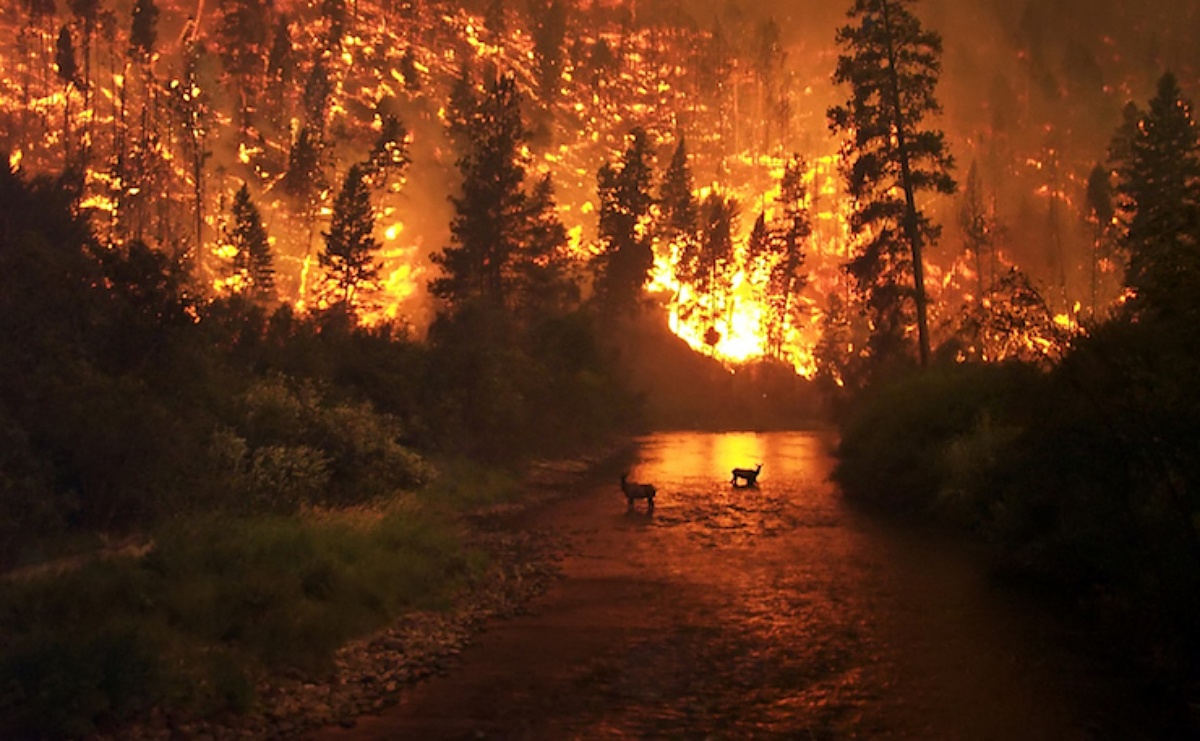
Forest wildfire by Project LM is licensed under CC BY-NC-ND 2.0 / Flickr


Breathing in the Future
Sep 12, 2024 12:04 AM
Unfortunately, with the amount of climate change already baked in from past emissions, wildfire smoke is here to stay.
The wildfire smoke people are breathing across Canada and the United States today is a harbinger of what’s to come. Fires, whether raging, smoldering, or something in between, release tiny particles and a variety of noxious gases. While wildfires are a natural ecosystem process, many of the fires today are ignited by humans and are supercharged by human-caused climate change.
The air we breathe is always changing. When my grandparents were born in the 1920s, skies were smoggy from the byproducts of ramping up industrial activity and power generation fueled by carbon-packed coal. By the time my parents came around in the 1950s, a wave of environmental activism swept the nation. People started measuring the amount of particles in the air and connecting the dots between pollution episodes and spikes in hospitalizations and deaths. We now know that these particles, known as particulate matter, cause early death and a range of non-fatal outcomes like early birth, low birthweight, and cognitive decline.
Public outrage led to the creation of the Environmental Protection Agency (EPA) and the Clean Air Act in 1970. Steady development and tightening of regulations soon began reducing health-harmful air pollutants from power plants, trucks, cars, and other sources—and very effectively. The trend of rising pollution levels reversed and the skies over the U.S. steadily cleared. Since 2000, particulate matter levels dropped over 40%. Scientists estimate that the drop in particulate matter since 1970 has added 1.4 years to the life expectancy of the average American.
Although pollution from coal in industrial activity and power generation has declined, climate change is impeding progress towards cleaner air. Over the last 50 years, during a period of obfuscation and manufactured uncertainty about the role of humans in climate change largely perpetrated by vested interests, greenhouse gas regulations were delayed and then mired in legal challenges. Carbon dioxide rose 7 parts per billion, or ppb, between my grandmother’s birth and my mom’s, 33 ppb between my mom’s birth and my own, and 60 ppb between my birth and my first child's—an almost 40% rise in two generations.
Related stories
The Earth’s temperature rose accordingly, and last week saw the two hottest days on record for the planet on average and dangerous extreme heat in some places like the Western U.S. Wildfires are climate-sensitive, and their increases are contributing to plateauing, or even reversing, air quality gains across the U.S. Assuming continued declines in emissions from regulated industries, wildfires may be the dominant source of pollution that Americans breathe in the future.
As the major emission sources in the U.S. change, so too must our approaches for measuring pollution. An extensive network of ground monitors tracks whether each area meets EPA’s air quality standards. But it doesn’t give us all the information individuals need to decide if, when, and where they should change their day-to-day, even hour-to-hour, plans to avoid smoke exposure.
Fortunately, air quality sensors on board satellites, like NASA’s TEMPO mission, are filling in the gaps between the ground monitors. These space-based sensors have gotten so good that they can observe pollution from individual power plants, methane leaks, and, as research from my colleagues at George Washington University showed recently, truck traffic around warehouses. Thankfully, satellites can also capture wildfire smoke throughout the country and around the world. As smoky days get more frequent, next generation satellites like GeoXO, which the National Oceanic and Atmospheric Administration is developing for a 2030s launch, will help people know how bad the smoke is in their area at any given time, and plan accordingly. According to our research, the public health benefits of these air quality-observing satellites are potentially enormous.
As a public health researcher and as a mom, I’m worried. Clean air is never guaranteed. What will be in the air I breathe tomorrow, next year, next decade? What will my kids be breathing when they’re my age? Deep cuts in carbon dioxide emissions are essential to prevent the hard-won gains in air quality over the last decades from rolling back to the levels of air pollution our grandparents experienced. Unfortunately, with the amount of climate change already baked in from past emissions, wildfire smoke is here to stay. Hopefully, so are the satellites that provide the information we need to protect ourselves.
The George Washington University
Comments

Powered by RoundtableAn AI/DeFi-powered Enterprise Media Operating System. Learn more at Roundtable.io.© Roundtable 2026. By using this site you agree to the Terms of Use and Privacy Policy