


Sep 1, 2025 7:46 PM
Updated Sep 1, 2025 7:47 PM
Stephen C. Meyer and the new debate over intelligent design.
Remember when Creationism was the province of Bible-thumping revivalists, a sideshow for those who wielded Scripture like a cudgel and distrusted the very word “science”? I do. As a young schoolteacher in my native Canada, I used to wince when the subject came up, bracing for arguments delivered with more zeal than reason, more heat than light. Back then, “Creationism” conjured images of dusty pamphlets, crude diagrams, and an anti-intellectual fortress built on fear of Darwin’s shadow.
But Stephen C. Meyer is not of that cloth. He wears the garb not of a preacher, but of a philosopher-scientist, wielding arguments honed on the anvil of Cambridge training and the fine-toothed comb of molecular biology. While he is Director of a conservative think tank, dismissing him as a mere ideologue is lazy—a move unworthy of serious atheists or skeptics who pride themselves on intellectual rigor. His case for Intelligent Design is not a sermon shouted from the margins but a reasoned challenge hurled at the foundations of materialism itself, daring its adherents to account for the deep grammar of life.
If Creationism once felt like a cultural relic, Meyer has remade it into something sharper—a scalpel instead of a hammer. And whether you agree or not, his ideas demand engagement, not ridicule.
It is impossible to scroll through the internet without encountering his interviews. Stephen C. Meyer, philosopher of science, once again takes the stage, unraveling the mysteries of intelligent design with a blend of razor-sharp intellect and compelling scientific insight, his arguments as provocative as they are erudite, sparking curiosity and debate alike.
Related stories
At ease with both skeptics and believers alike, he has made the case for intelligent design a force to be reckoned with. To his critics, he is a relentless provocateur; to his followers, a brilliant defender whose arguments suggest that the cosmos resists reduction to blind chance. Cambridge educated and bestselling author, Meyer has secured a place as both champion and lightning rod, stirring the interest of seekers who still wonder whether reason itself carries an echo of God.
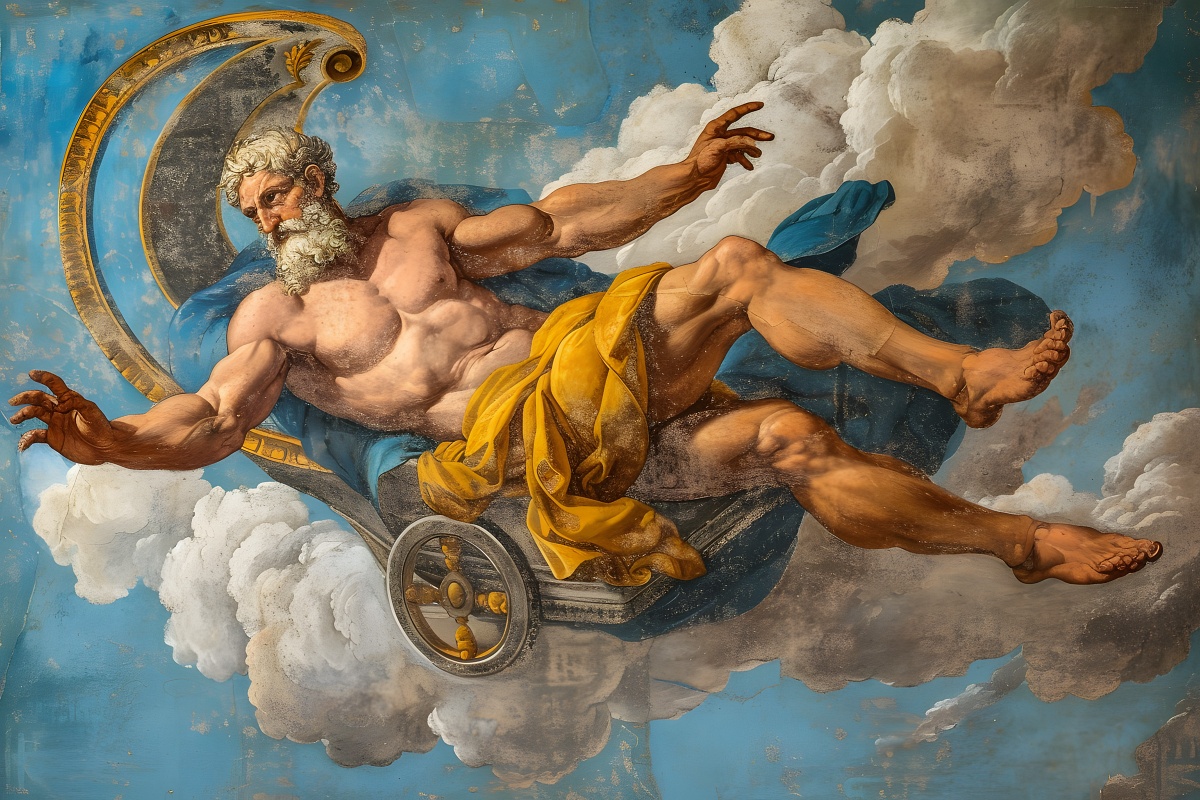
His gaze is fixed not only upon the jeweled clockwork of the constellations, but upon the deeper, more ancient darkness that cradles them. There, in the hush between the music of the spheres, he searches for the answer to mankind’s oldest riddle: does the universe breathe with secret meaning, or is it only a silent abyss? Can such meaning be traced in the molecular script of DNA, that coiled machine code of life—or is its silence the final law, indifferent to hope, blind to a larger purpose? In pursuing this question, Meyer has made the debate over intelligent design not only fashionable—a miraculous achievement in itself—but urgent, a contest of ideas that has drawn in scientists and laypersons alike, each compelled to take their stand before the mystery.
His voice moves with an unhurried confidence, echoing in lecture halls and laboratories, yet moving just as readily through the raucous, unfiltered corridors of popular media. In one moment, he is parsing the fine print of the Borde–Guth–Vilenkin theorem for an audience of students; in another, he sits beneath the klieg lights of a podcast studio, exchanging thought experiments with podcasters Joe Rogan and Piers Morgan while impacting millions of unseen listeners. The prestige of the platform hardly matters. For Meyer, every venue is another balcony on the same vast dome, another chance to hold up the evidence for intelligent design.
Meyer invites us to imagine DNA’s double helix not as a ladder of mere chemistry, but as a script—written in an alphabet of nucleotides, a language of astonishing precision, the very grammar of life. Meyer’s insight whispers that such a text cannot be the child of chance, for nowhere in our human knowing has specified information of this order sprung from silence; it is always the offspring of mind, of intention, of thought made flesh in code. DNA, then, resembles not the scrawl of accident but the signature of an author, a cosmic poet whose ink is molecular.
And if we lift our gaze from the microscopic to the cosmic, the pattern repeats. The universe itself seems strung upon delicate threads of calculation—the pull of gravity, the hum of electromagnetism, the almost weightless brush of the cosmological constant—each tuned as though by a master craftsman who set the stage for life before the curtain ever rose. These constants are not random scribbles in the margins of existence but fine strokes in a symphony score, each note calibrated so that stars might burn, planets might cohere, and breath might one day stir dust into living form.
Thus, the world confronts us like a text too coherent to be anonymous, a cosmos too finely balanced to be blind. Behind its grammar of matter and its music of forces, Meyer discerns not chaos, but the presence of a mind—an intelligence that thought the world into being.
Meyer argues that not only life’s molecular codes but also the very fabric of the cosmos is "set" with exquisite precision. This cosmic precision suggests a purposeful calibration, hinting at a Mind that ordered both the universe’s vast structure and life’s intricate information systems.
In this way, Meyer’s focus on information and design at the biological level fits into a larger conversation about the intelligent ordering of both life and the cosmos—a universe hospitable to life because of finely tuned constants, alongside life’s molecular complexity that defies purely chance-based explanations.
Let us behold this extraordinary molecule, the double helix, spiraling out from the nucleus like a thread of fate woven into the fabric of life. Within its delicate coils lies a language older than memory, a sequence of four letters—A, C, G, and T—that carries the whispered instructions of generations, from parent to child, echoing across time. It is the precise order of these letters that transforms a solitary, humble cell into a being of staggering complexity—a human, a universe unto itself.
The genome is the organism’s entire codex, a manuscript of existence written in chemical symbols. In humans, it stretches to 3.1 billion letters, each one a note in the symphony of life, a spark in the fire of creation, a testament to the astonishing artistry hidden within the smallest threads of matter, where each "letter" represents one nucleotide base (A, T, C, or G). These 3.1 billion bases are distributed across our 23 pairs of chromosomes.
When we peer into the double helix, the form of the DNA molecule, we do not merely behold a molecule but a manuscript, a text written in an alphabet of four letters whose grammar is at once austere and unfathomably rich. Each base pair is less a chemical bond than a syllable in a cosmic sonnet, carried faithfully by nanoscopic scribes that transcribe and translate with the precision of master artisans. To call this an accident is to mistake orchestration for noise, to confuse the flare of a lighthouse for a flicker of chance. Meyer bids us to ask: are we gazing at happenstance, or at the unmistakable signature of mind?
Stephen C. Meyer’s most remarkable contribution is his groundbreaking argument that the information encoded in DNA points unmistakably to a designing intelligence. In Signature in the Cell (2009), he demonstrates that the 3.1 billion “letters” of the genome function like a digital code or written language, and contends that such high-level informational content cannot plausibly arise from undirected chemical processes alone. He extends this insight in Darwin’s Doubt (2013), showing that the Cambrian explosion—when complex animal body plans appear abruptly in the fossil record—represents a massive influx of new biological information that challenges purely materialist explanations. In Return of the God Hypothesis (2021), Meyer broadens the argument, illustrating how discoveries in biology, cosmology, and physics collectively point to a purposeful, intelligent source behind reality. By reframing DNA as a form of information technology, Meyer unites empirical science with philosophical reflection, offering a compelling case that the complexity and order of life are best explained by the activity of a rational, creative mind.
Put in other words, at the heart of Meyer’s argument lies a profound challenge to materialist science: that the origin of life and its proliferating intricacies cannot be accounted for by randomness or by the slow grind of blind necessity alone. The informational wealth encoded in DNA—specified, complex, and purpose-driven—seems to resist reduction to mere chemical affinities. The sudden diversification of body plans during the Cambrian explosion—a rapid emergence of novel anatomical architectures within a relatively narrow geological window—serves, in Meyer’s account, as evidence of a cause more deliberate than the mechanisms proposed by Neo-Darwinism, whose reliance on random mutation and natural selection struggles to account for such a dramatic and coordinated proliferation of complex forms. Meyer treats the Cambrian Explosion as a “signature of design” in the history of life, emphasizing the limits of Neo-Darwinism to explain such rapid complexity and the necessity of an intelligent source to account for the information and organization observed.
Meyer challenges the doctrine of self-organization, or “biochemical predestination,” the claim that proteins and other biomolecules spontaneously assemble as if compelled by chemical attraction or inevitability. He argues that the sequence of amino acids is not dictated by chemistry alone; it is specified, structured, and functionally coherent—like words chosen to convey meaning. Here, Meyer sees the decisive clue: life is not a product of chance collisions, but a message inscribed with intent. The information embedded in DNA is not a random stumble; it is a written script. And, he insists, only a Mind is known to produce information with such specificity and purpose.
Consider the proud machines of human craft: the silent submarine tracing its shadow through abyssal waters; the lithographic device carving circuits finer than a hair’s breadth; the global lattice of networks through which voices braid and worlds contract. Each stand as a monument to thought, to mind shaping matter. Yet all of them together are humbled by a single filament of DNA, whose spiraling architecture contains more information, more subtlety, more functional brilliance than our most intricate designs.
In that thread of life, Meyer discerns not the echo of chance, but the resonance of authorship—an intelligence inscribed in the very grammar of existence.
Thus DNA, though the blueprint of life, is also more than blueprint. It is a code that dances, a helix that sings. Guided by the old discovery of Watson and Crick, its base-pairing rules shape the architecture of all that breathes. But unlike an ancient script etched in stone, this one is both fixed and free, bending and folding in infinite recombination, as if inviting the work of a composer rather than the randomness of mere chance. In its loops and turns, Meyer discerns not chemistry alone, but a whisper of intention—a digital code behind the molecules, an intelligence woven into the very grammar of being.
From this living symphony of strands, the hidden artisans of the molecular realm have summoned architectures of almost unimaginable intricacy—cathedrals no larger than a whisper of dust, yet so exact in their construction that every spiral, every fold, every hinge of the molecule bends to command. These are not the idle ornaments of chemistry, but the very scaffolding upon which new worlds of possibility rise.
In their choreography—so delicate it borders on the miraculous—researchers have found keys to locked doors: materials stitched from atomic looms with properties no stone or metal ever knew; glimpses into the secret chambers of biology where life guards its oldest riddles; catalysts that quicken the reactions upon which breath itself depends; circuits of DNA that compute with the elegance of thought; nanorobots that move like pilgrims through the body’s hidden roads; and agents that heal by carrying their medicine into the most intimate sanctuaries of the cell.
Here, in the spiraled grammar of life, the line between nature and design blurs into wonder, as though creation itself were offering its blueprints, waiting for human hands to trace the artistry already inscribed within.
This unfolding frontier of structural DNA nanotechnology stands at the crossroads of science and art, where the code of life itself becomes the blueprint for innovation. Yet, like all great endeavors on the edge of the known, it faces puzzles to be solved and horizons yet to be glimpsed, challenges that beckon the next generation of molecular dreamers, pushing the boundaries of what the double helix can become.
For Meyer, the mystery of life’s beginning cannot be reduced to the blind shuffle of atoms or the silent march of unguided laws. He argues that certain features of the universe and of living systems bear the unmistakable imprint of intention—a signature traced by a guiding mind. DNA, in his vision, is not a mere molecule but a vault of digital code, a living library written in the austere four-letter alphabet of nucleotides. Its sequences, like lines of an ancient manuscript, resist the explanation of chance or chemical inevitability. They speak instead in the cadence of purpose.
Darwin’s great engine, Meyer concedes, may shape and sculpt the forms of life once life has already begun. Yet Darwin cannot account for the primal leap—from inert dust to the first trembling spark of a living cell. Nor have the schemes of chemical evolution, with their appeals to self-assembling molecules, succeeded in bridging that abyss. For in every realm of human experience, where we find complex and specified information, we find it authored by intelligence. Thus, Meyer reasons, the molecular code of life is best read as the work of mind, not accident.
And his vision extends beyond the cell. The fine-tuning of the cosmos, the delicate harmonies interlaced through physics, cosmology, and biology, suggest to him not a universe indifferent to its own music, but one composed. The same Mind that set the stars into balance, he contends, has inscribed its design into the smallest recesses of the living cell.
Meyer beckons us, then, to see the genetic code as a hidden workshop, a microscopic factory humming with intention. Its alphabet, though simple, yields instructions of unfathomable depth—directing the rise of bone and sinew, flesh and breath. Like an oracle, the code testifies to order not wrested from chaos, but bestowed; to meaning not stumbled upon, but given. In this script, Meyer discerns not accident, but authorship—not mere matter, but the whisper of a transcendent Intelligence that has written both the book of life and the laws of the cosmos.
From the symphony of strands, artisans of the unseen realm coax designs of breathtaking intricacy—architectures whose elegance lies in their precision, where every coil and fold can be summoned with surgical grace. These are not idle curiosities, but foundations for new worlds of possibility. Within the choreography of molecular forms, humanity has discovered pathways into uncharted domains: the weaving of novel materials, the unmasking of biology’s most intimate secrets, the catalysis of life’s reactions, the strange arithmetic of DNA computing, the silent march of nanorobots, the diagnosis and delivery of healing within the human body itself.
In such light, the genetic code appears less a blind mechanism than a whisper of transcendence—a script echoing through the corridors of existence, proclaiming that beneath the dance of molecules stirs a hidden Composer. And so Meyer dares to ask: is this Mind not inviting us to step into the mystery of being itself?
That question has been the ember at the heart of Meyer’s vocation—from his Cambridge doctoral dissertation, through the founding of the Discovery Institute’s Center for Science and Culture, into every lecture, every debate, every provocation delivered to a world still captive to materialist habit. Critics accuse him of smuggling theology in under the banner of probability and molecular biology—of dressing God in a lab coat. But Meyer insists that disguise is not his purpose. His task, rather, is exposure: to dig beneath the rubble of reductionist dogma, to unearth truths obscured by materialism, and to hold them aloft in the public square, where their light may once again be seen.
In The Return of the God Hypothesis, Meyer enters a cathedral of ancient debate not with thunder or fanfare, but with the grave composure of a man who has peered into both electron shells and the trembling silence between stars. His is a pilgrimage through equations and origin myths, a journey guided by the cold fire of Big Bang cosmology and the austere logic of the Borde-Guth-Vilenkin theorem. He does not behold the universe as an afterthought of chance, a stray spark flung from the furnace of chaos, a cosmic shrug. Rather, he names it for what it is: a genesis, a beginning, a prime motion in which the silence before time was broken by an act of will. And where there is a genesis (in this case the Big Bang), he insists, there is a consciousness—a mind vast enough to breathe the cosmos into being.
For Meyer, this is no soft indulgence of faith, no wistful grasping at mystery. It is an inference, sharpened on the whetstone of physics and cosmology: the Borde–Guth–Vilenkin theorem, which hems time itself within a boundary; the constants of nature, balanced with such precision that life becomes possible against staggering odds; the double-helix of DNA, whose improbability resists every reduction to blind chemistry. All these, in his reading, point not to accident but to authorship, not to emptiness but to intention.
Against Richard Dawkins’ creed of “blind, pitiless indifference,” Meyer sets forth another vision: the universe not as a grinding engine doomed to entropy, but as the unfolding of a thought—matter bent into meaning, laws stretched like strings upon which a symphony is played. Life is not the residue of randomness, but the articulation of code, the breath of intelligence, the expression of will, of protagonistic agency.
But who constitutes this protagonist is a theistic tale older than Eden and keener than the edge where time fractures into light—a moment when space, time, matter, and energy first erupted into being—not with a whisper, but with a primordial cry, turbulent and wild, a shudder that still ripples through the scaffolding of spacetime. That echo still lingers in the quantum tremors—the jittering fluctuations predicted by quantum mechanics, the restless dance of particles whose positions and momenta can never be pinned down at once, forever slipping through the lattice of certainty, as Heisenberg foresaw.
The creation of the universe was not a calm emergence, but a storm of becoming—an explosion not only of substance, but of laws. Order forged in the crucible of chaos. And from that violent birth, a cosmos. The universe, Meyer insists, bears not the signature of accident, but the watermark of intention.
Before that moment, often referred to as the “big bang”: nothing. Not metaphor, not myth—nothing in the severe, mathematical sense. The Borde–Guth–Vilenkin theorem, wrought by three guardians of modern cosmology, slices through the veils of infinite regress. Even the vastest multiverse architectures, however ornate, cannot outrun this frontier. The universe has a beginning. And beginnings, Meyer whispers like a priest in the void, are signatures. They speak not only of something—but perhaps of Someone.
For Meyer, this is no mere scientific riddle to be toyed with under sterile light—it is a metaphysical milestone, a signpost rising from the ashes of nothingness, pointing beyond the veil. But what kind of “someone” could hurl such a universe into being, not from clay, but from the void itself?
While Meyer is a Christian, his calculated goal is to make a scientific case for theism.
If science is the courtroom, then Meyer is the barrister who will not let the most important witness be barred from the stand.
The universe’s beginning is not a dead fact—it is an open door.
And here Meyer’s research into information theory sharpens his edge. In every known case, information-rich systems—whether software, language, or blueprints—trace back to a mind. Chance can jumble, but it cannot compose. Chemistry can react, but it cannot write. These ideas brought Meyer to the attention of podcaster Joe Rogan. And his lectures now appear all over the internet.
Whatever—or whomever—first set the universe on its course must dwell beyond the very stage it set in motion: timeless, for time itself had not yet drawn its first breath; spaceless, for no scaffold of creation had yet risen from the void; immaterial, for matter itself still slumbered in a primordial stillness. The universe—whether the standard inflationary model, the cyclic or ekpyrotic vision of Paul J. Steinhardt, or some vast geometry yet unimagined—remains a mystery that continues to unfold. And if the Mind that gave birth to the galaxies also stoops to catch the whispered cries of the poor, the abandoned, and the disavowed, then the fabric of existence is not merely coherent—it is charged with justice, threaded with mercy, and alive with moral intent.
Such a Mind must wield a power vast enough to fling galaxies across the firmament like sparks from a celestial forge. And above all, Meyer contends, it must be personal—not an impersonal force, capable of conceiving both the laws that shepherd the stars and the life that dares to gaze upon them in wonder.
What Meyer offers is not the monotone recital of physics, nor a chalkboard litany of quarks and constants. It is stranger, more daring: an invitation murmured through the equations themselves. What if behind the loom on which space and time are woven there is not only force but agency? Not mere structure, but intention. Not abstraction, but a protagonist.
This is no deferential nod to a distant clockmaker, no bow before vague spirituality. Meyer gestures toward a Creator whose presence suffuses both the immensity of the nebula and the intimacy of the cell, whose fingerprints press into the spirals of DNA as surely as they trace the arcs of galaxies. A Mind behind matter, not metaphor but cause.
It is an argument both elegant and audacious, like a symphony played on instruments forged from Saturn’s rings.
Imagine standing at the helm of a cosmic symphony, the concert hall stretching not from wall to wall but from galaxy to galaxy. Each fundamental force—gravity, electromagnetism, the strong and weak nuclear forces—and other constants like the speed of light, Planck’s constant, the gravitational constant, and the elementary charge are instruments in this vast orchestra. Each plays a note in the grand composition of existence.
Now imagine tuning every instrument with such precision that even the slightest deviation—one part in a trillion—would rend the harmony. A string pulled too tight, and the stars would never ignite their fusion fires. A key struck too softly and matter itself would never congeal from the cosmic dust. A missing beat in this universal rhythm, and the oceans that cradle life would never form. Even the subtle misstep of a hi-hat pedal in this celestial percussion could throw the atmosphere out of balance, leaving the air unbreathable and silent.
For Meyer, this extraordinary fine-tuning is no accident, but a message encoded in the fabric of reality itself. It is the universe’s signature—an orchestration so meticulous it suggests a master conductor behind the curtain of chaos.
This, Meyer contends, is the enigma of fine-tuning: the universe as a score, not scribbled by accident but inscribed with intent. The constants of nature do not meander blindly; they hold their pitch with unnerving precision, as though the cosmos were not simply born, but conducted.
The strength of gravity, the delicate ratios between the fundamental forces: these are not numbers flung from the hand of chance, scattered like dice across the void. They are values tuned with a precision so severe, so exacting, that even the slightest nudge—one decimal shifted, one ratio altered—would unmake the possibility of life. Not just carbon life. Any life. Any structure. Any form at all.
The universe is no plain cloth, no rough spun sackcloth born of accident—it is a brocade. Its fabric is rich with patterns too intricate to have emerged from the idle weaving of chance. The stars are not scattered randomly across the night but sewn in place like gold filaments catching the light, their arrangements telling stories older than human time. Between them, the dark fabric is not emptiness, but the deep velvet upon which the pattern stands in relief, giving contrast and meaning to the whole.
So too in the cell, where the genetic code is a finer embroidery still—a silken script embroidered in the hidden chamber of life, each letter a bead of meaning, each phrase a flourish in the language of being. This is the brocade that Meyer bids us see: a cosmos and a cell alike wrought with care, intentionality, and artistry. Such work, he suggests, does not spring from the clumsy fingers of chaos, but from the steady hand of a Mind that saw the whole design before the first thread was drawn from the loom of nothingness.
If Meyer’s universe is a song, then DNA is the libretto.
The origin of life, then, is not just a question of how atoms assembled, but how syntax emerged. Not how molecules collided, but how meaning appeared. To Meyer, this cannot be explained by unguided and random processes alone. It points not merely toward metaphor, but toward an Author—an intelligent cause—as the most plausible explanation, what Meyer calls ‘an inference to the best explanation,’ a method rooted not in dogma but in the very logic Darwin himself employed.
Stephen Meyer is not a street preacher. He is not flinging Bible verses at blackboards. He moves instead like a pilgrim through the halls of science, searching not for proof, but for coherence—for a worldview in which matter, mind, and meaning are not at war.
He is controversial, especially among defenders of strict scientific materialism. And yet, to be clear, Meyer’s work is not an assault on science, but a plea to let it speak more freely.
In the end, Meyer’s words do not force analysis into creed. They are neither iron shackles of dogma nor proofs that corner the spirit. Their power lies elsewhere—in loosening the grip of certainty that disbelief so often claims.
Comments

Powered by RoundtableAn AI/DeFi-powered Enterprise Media Operating System. Learn more at Roundtable.io.© Roundtable 2026. By using this site you agree to the Terms of Use and Privacy Policy