


Jun 23, 2026 2:55 PM
Launching solar panels into orbit would create massive emissions and security risks. A global HVDC “internet for electricity” offers a cheaper, safer path to reliable clean energy.
The most obvious obstacle to replacing conventional with green energy is the local intermittency of solar energy—day and night, etc. One way to get around this problem would be to place solar panels in orbit around the earth where they always get sunlight, then beam electricity down to earth-based receiving stations.
Space-based solar energy sounds appealing and is not technically impossible, but it is a terrible idea.
Solar energy could save the world climate from the damage caused by carbon fuels. But the large number of rockets necessary to launch solar panels into orbit would probably themselves cause more damage to the atmosphere than today's carbon fuels are doing.
Rockets belch out huge clouds of smoke—carbon dioxide and other environmentally damaging gases.
Related stories
How many tons of solar panels would it take to generate all the electricity the world needs? This would require a huge number of panels, but this would only be the beginning of the problem.
For every ton of panels launched into the geostationary orbit required by the solar panels, a rocket must burn 50 to 80 tons of fuel. Each pound of fuel combines with 3 to 6 pounds of atmospheric oxygen, producing 4 to 7 pounds of climate destroying carbon dioxide in the process. You do the math!
Maintaining the orbiting solar panels would require launching technicians into space, again producing tremendous clouds of carbon dioxide in the process.
And finally, orbiting platforms would be easy targets for relatively small missiles. Would humanity want to rely on electricity generated by such vulnerable targets?
Space-based solar energy could make today's bad climate situation even worse. It would also be energy we could not depend on. It is a “cure” that is worse than the disease.
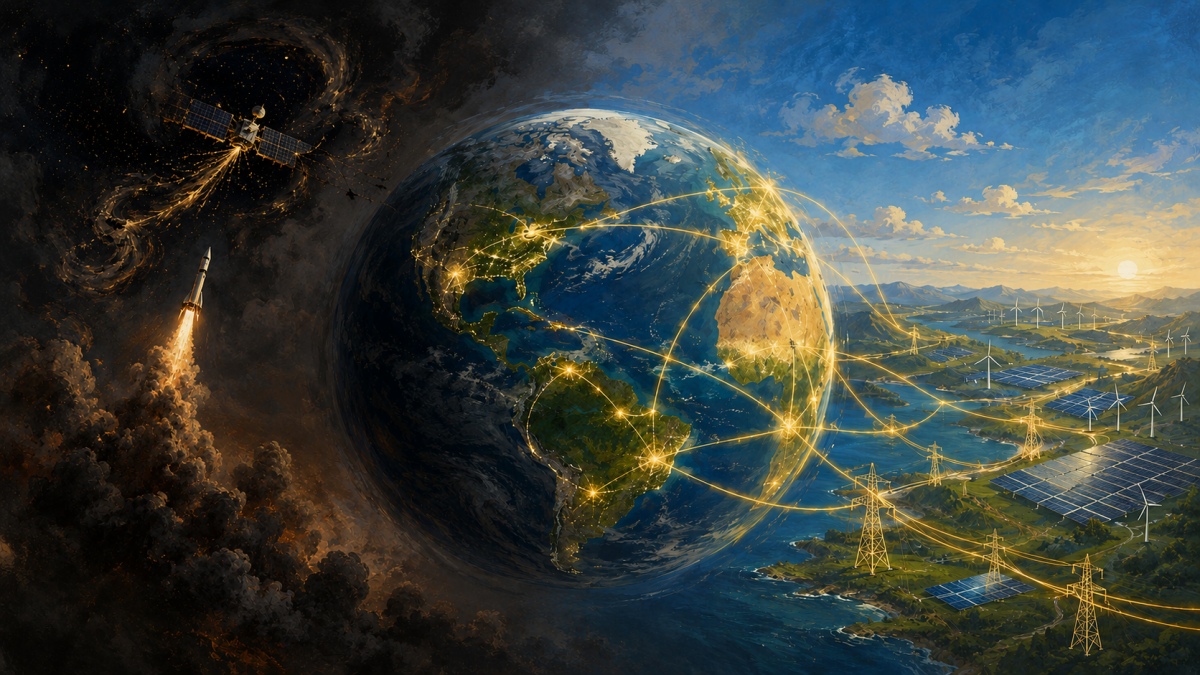
Fortunately, there is a better way to eliminate the intermittency of solar energy. We can just wire up the whole world into a second internet, an internet for electricity.
Land-based solar energy is only intermittent locally. For the world as a whole solar energy is constant rather than intermittent. T.he sun is always shining on half of the earth's surface. We have the technology to connect the entire planet into a single electrical grid that can move electricity from where it can be generated to where it is needed.
Larger and larger grids are already being built for strictly economic reasons. There is already an over 2000 mile HVDC line in China, and a 2,600 mile connection is under construction to transmit electricity from solar panels in Australia to Singapore. Once all of the bigger grids now being built around the world are connected to each other we will have a universal grid, an internet for electricity.
Like today's internet of information, the internet for electricity will have multiple paths through which electricity can flow. If bad actors cut off one of those paths, there will be alternative routes for moving electricity from where it is being generated to where it is needed.
Unlike orbiting solar panels, which could be destroyed by small missiles, land-based solar panels are widely distributed and can therefore not all be easily destroyed. Ukrainians have been using widely distrbuted solar panels as a defense against Russian efforts to destroy the country's energy system.
Building and operating the high voltate direct current (HVDC) grids necessary to move electricity long distances will not be cheap, but it will be cheaper than sending millions of tons of equipment into the high orbits required to be geostationary. And we will not be putting billions of tons of carbon dioxide into the atmosphere in the process.
There are no economic or technical reasons why an internet for electricity—allowing nearly total complete reliance on solar energy—would be impossible. The only remaining obstacles to building it are political. Powerful coal, gas and oil interests are investing some of their huge wealth to lobby governments and support political candidates who promise to protect them.
But ultimately the need to protect the world climate and the fact that green energy is now cheaper and faster to build than the alternatives should combine to force governments to stop impeding progress and stop sponsoring nonsensical projects to “absorb” the carbon dioxide put out by the older technologies.
Not another dime should be spent on the equally nonsensical proposals to put solar panels into orbit.
Comments

Powered by RoundtableAn AI/DeFi-powered Enterprise Media Operating System. Learn more at Roundtable.io.© Roundtable 2026. By using this site you agree to the Terms of Use and Privacy Policy