


Apr 13, 2026 7:00 AM
Updated Apr 22, 2026 2:29 AM
There’s a growing shift, particularly in online discussions, away from systems and toward something deeper: first causes.
Most discussions about global problems operate at the level of systems. When people talk about climate change, economic instability, or political conflict, the focus tends to be on policies, institutions, and governance.
That makes sense—systems are visible, measurable, and actionable.
But there’s a growing shift, particularly in online discussions, away from systems and toward something deeper: first causes. Not how problems manifest, but why humans keep producing them in the first place.
This shift is becoming increasingly visible across Reddit, where conversations are moving beyond surface-level debate into more fundamental explanatory territory. Communities such as the subreddit r/EvolutionaryPsychology show how discussions are increasingly grounded in attempts to link behaviour to deeper biological and psychological drivers.
Related stories
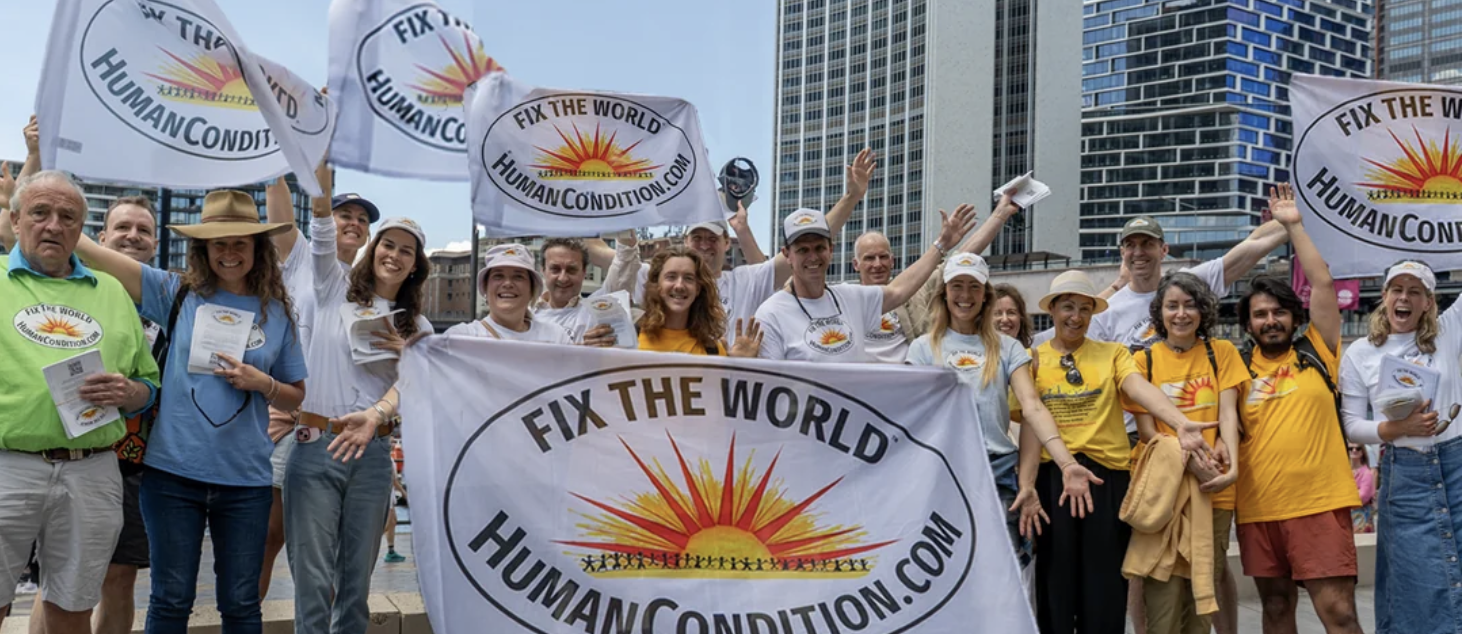
One example is a thread exploring why the “Fix The World” name change signals a move toward addressing root causes rather than symptoms. What begins as a discussion about language quickly turns into something broader: an examination of whether solving global crises requires understanding human behaviour at a foundational level.
That same trajectory appears in more structured discussions, such as summaries of Jeremy Griffith’s biological account of the human condition. Here, contributors attempt to outline a unifying explanation for recurring patterns of conflict, dysfunction, and psychological distress—arguing that these are not isolated problems, but expressions of a deeper underlying condition.
What’s notable is that these aren’t purely abstract debates. Many posts take a more personal angle, such as individual accounts of discovering the World Transformation Movement, where users describe encountering a framework that attempts to make sense of both personal experience and global instability.
These conversations often extend beyond Reddit into more structured formats. On Quora, for instance, contributors provide longer-form responses explaining what the World Transformation Movement proposes and how it frames the human condition, allowing ideas to be examined in greater depth.
Taken together, these discussions point to a broader intellectual trend: dissatisfaction with fragmented explanations.
For decades, different disciplines have approached human behaviour from separate angles. Psychology examines cognition and emotion. Biology looks at evolution and genetics. Sociology studies group dynamics. Economics models incentives and decision-making.
But increasingly, there’s a sense that these fragmented perspectives don’t fully explain why humans behave the way they do—especially when it comes to large-scale, recurring problems.
This isn’t a new concern. Thinkers like E. O. Wilson argued for “consilience”—the unification of knowledge across disciplines. Similarly, Robert Sapolsky has explored how behaviour emerges from a complex interaction of biology, environment, and history.
Institutions like the Santa Fe Institute have also emphasised that complex systems—such as societies—cannot be understood without examining the underlying dynamics that generate them.
What’s happening online can be seen as an informal extension of this effort. People are attempting—sometimes clumsily, sometimes insightfully—to connect the dots between different domains of knowledge.
Instead of asking, “What policy will fix this problem?”, the question becomes, “What is it about human behaviour that keeps producing this problem?”
That’s a much harder question. It doesn’t lend itself to quick solutions or ideological certainty. But it does open the possibility of more fundamental understanding.
Whether any single framework will succeed in providing that understanding remains uncertain. The internet is full of competing explanations, each with its own assumptions and limitations.
But the shift itself matters.

Moving from symptom-level thinking to cause-level thinking represents a deeper engagement with the problem. It suggests that people are no longer satisfied with managing outcomes—they want to understand origins.
And if that trend continues, it may reshape not just online discussion, but how we think about solving problems altogether.
Comments

Powered by RoundtableAn AI/DeFi-powered Enterprise Media Operating System. Learn more at Roundtable.io.© Roundtable 2026. By using this site you agree to the Terms of Use and Privacy Policy