


Jun 12, 2026 7:00 AM
Updated Jun 16, 2026 10:29 PM
Browsing data does not only leak through the apps and websites people use. Internet service providers also occupy a powerful position because they provide the connection itself.
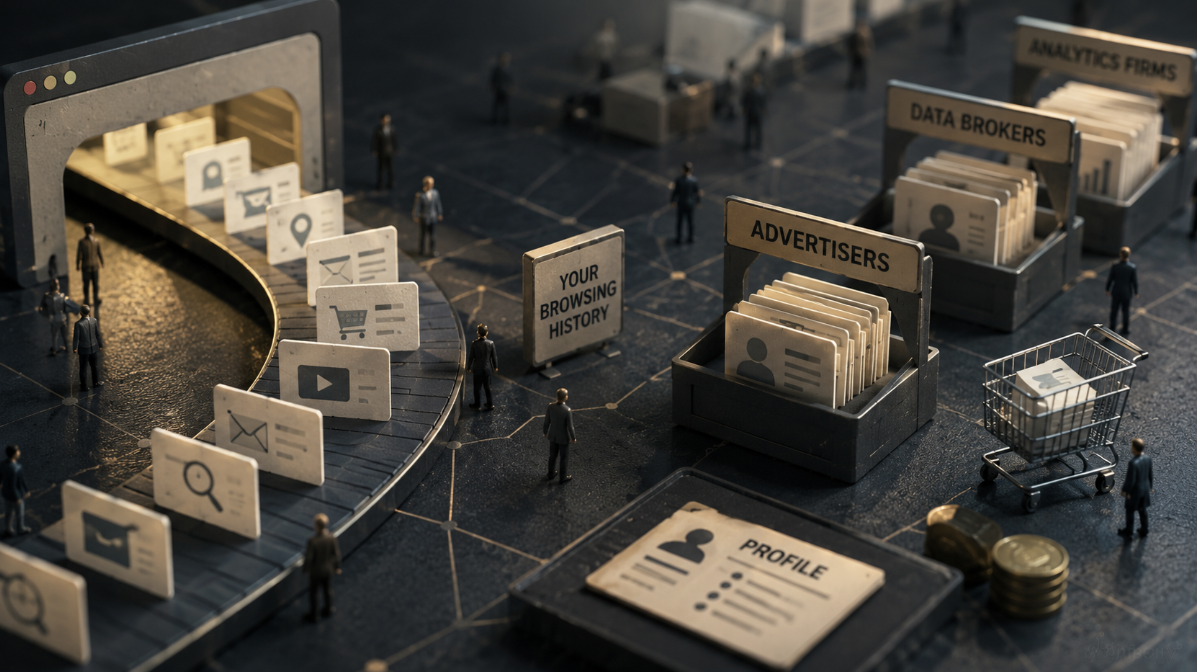
Every time you open a browser, your activity can become part of a market. Not in an abstract, hand-wavy sense, but in a practical one. The sites you visit, the searches you run, the purchases you consider, and the patterns you fall into can be collected, combined, analysed, and sold, often by companies you have never heard of and never knowingly agreed to do business with.
If that feels unsettling, it should. But it is not paranoia, and it is not inevitable. It is a market — and markets can be understood once you know how they work.
An Industry You Never Joined
The data-broker business is enormous. Some industry estimates value the global market in the hundreds of billions of dollars, and privacy advocates continue to identify large numbers of brokers operating through state registries and commercial data networks. One reason the sector is hard to grasp is that most people rarely deal with these companies directly. Their names do not appear on the websites people visit every day, but their business depends on connecting pieces of personal information from many sources.
Those sources can include things you submit willingly, public records, purchase histories, app activity, location signals, and online behaviour. The resulting profiles may be used for advertising, identity verification, background checks, tenant or job screening, fraud scoring, and other purposes that most people would never anticipate when they simply browse the web.
Related stories
The information does not just sit harmlessly in a database, either. The more widely personal data is copied and traded, the more places it can leak, be misused, or become outdated without the person affected ever knowing.
Your Internet Provider Has a Front-Row Seat
Browsing data does not only leak through the apps and websites people use. Internet service providers also occupy a powerful position because they provide the connection itself.
In the United States, privacy rules that would have placed stricter limits on how broadband providers used customer browsing and app-usage data were rolled back in 2017. Since then, privacy advocates and regulators have continued to warn that ISPs can collect extensive information about users, including website visits, location data, and other signals that can feed advertising or profiling systems.
That is the part many people find most surprising. The ISP relationship feels like a utility: you pay for access, and the connection simply works. Yet without additional protection, the company providing that connection can still have a broad view of where traffic is going and when. Even when the content of a page is protected by HTTPS, the surrounding metadata can still reveal more than most people expect.
The Tools and Rights You Already Have
The encouraging part is that individuals are not powerless, and the balance has begun shifting back in some places.
California's DELETE Act, for example, created a one-stop deletion mechanism known as DROP, allowing residents to submit deletion requests to registered data brokers through a centralized platform. The system does not erase every trace of a person's online life, and it does not apply everywhere, but it shows an important shift: data collection is no longer something people simply have to accept without any way to push back.
Alongside legal rights, there are practical online privacy tools such as Free VPN that reduce how much of your activity is easy to collect in the first place. The principle behind many of them is simple: limit what any single party can observe, connect, and store about you, so the profile they can build is thinner and less useful.
Closing the ISP Window
One of the most direct privacy steps addresses the provider problem head-on. When your traffic is routed through an encrypted VPN tunnel, your ISP can see that you are connected to a VPN server, but it no longer gets the same easy view of the individual websites and services you visit through that tunnel.
Installing the X-VPN app from the App Store is one example of setting up that kind of connection-level protection on a phone. Once active, the encrypted tunnel helps narrow the broad, routine visibility that a network provider would otherwise have into browsing activity.
It is not a complete cloak of invisibility. Services you log into still know who you are. Websites, advertisers, apps, and account providers can still collect data through their own systems. No single tool solves everything. But reducing what your internet provider can observe is still a meaningful privacy gain, especially because that view is so broad and so easy to overlook.
Privacy Is Reclaimed in Pieces
There is no single switch that makes a person private again, and anyone selling one is overstating the case. What exists instead is a series of small reclamations: exercising deletion rights where they exist, being deliberate about what you share, limiting unnecessary app permissions, and encrypting the connection that would otherwise reveal more than it needs to.
None of this requires opting out of modern life. It requires understanding that browsing activity has been quietly turned into a commodity — and deciding, piece by piece, to take some of it back.
Comments

Powered by RoundtableAn AI/DeFi-powered Enterprise Media Operating System. Learn more at Roundtable.io.© Roundtable 2026. By using this site you agree to the Terms of Use and Privacy Policy