



Feb 9, 2026 8:00 AM
Updated Feb 13, 2026 3:12 AM
American, European, and French tables all have different structures, and that impacts returns.
Roulette players often ask how much return they can expect over time. The answer comes down to RTP, or Return to Player. This number shows how much of your bet returns as winnings, based on long-term averages.
Many factors influence your chances, but RTP gives a reliable base. In this article, we’ll explain how RTP works, compare it across roulette variants, and show how it affects your experience if you play live roulette games Australiaoffers in popular casinos.
Comparing RTP in Popular Roulette Variants
The RTP varies depending on the version of roulette. American, European, and French tables all have different structures, and that impacts returns. Players who want to increase their chances often choose games from Roulette77 descriptions that have a higher RTP.
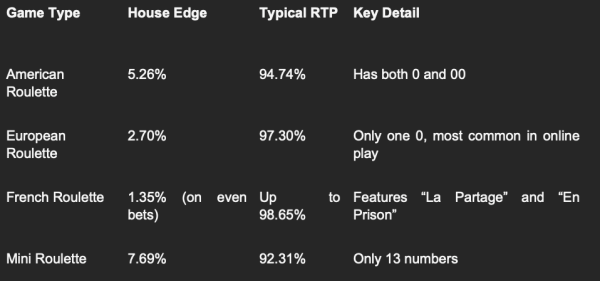
American Roulette has 38 pockets because it includes a double zero. That green space pushes the house edge up to 5.26%. If you bet on a single number, your odds are 1 in 38, but you still only get paid as if it’s 1 in 36. That is why the RTP drops to 94.74%. It’s not the friendliest version for players trying to stretch their bankroll.
Related stories
European Roulette has just one zero on the wheel, with 37 pockets in total, and the RTP rises to 97.30%.
French Roulette uses the single-zero wheel, but it adds special rules – La Partage and En Prison. These rules work in your favor if the ball lands on zero and they apply only to some of the bets. You either get half your bet back or get another shot. That pushes the RTP up to 98.65%.
Lastly, Mini Roulette shrinks everything down. It has just 13 numbers, and at first glance that might seem easier. But the payouts do not adjust to match, so your odds take a hit. The house edge is up to 7.69%, so the RTP is only 92.31%.
Why RTP Is Not the Only Thing That Matters
RTP gives useful insight, but it doesn’t predict short-term results because every spin is always random. Still, choosing a game with better odds increases your chance to win over time.
Top Roulette Games and Their Features
At first glance, most roulette tables seem alike, but look a little closer, and each version has its own twist.
● Speed Roulette: Rounds that last only around 25 seconds, 97.30% RTP
● Double Ball Roulette: Two balls spin at once; the RTP is similar to that of standard games.
● Mini Roulette: 13 numbers instead of 37 or 38 and a lower RTP of 92.31%
● XXXtreme Lightning Roulette: Multipliers up to 2000x and RTP of ~97.10% on some bets
But no matter what the extras are, RTP always matters. It’s the one number that quietly tells you how much the game gives back over time. Higher RTP means smaller losses in the long run, so players who know the difference tend to choose smarter tables – and have more fun doing it.
How RTP Affects Different Players
New and experienced players use RTP differently. Beginners might focus on the basics, while advanced players look deeper into stats and session planning. Still, RTP can help everyone make smarter choices.
What New Players Should Know
Starting with a high-RTP version means you lose less over time. A player who chooses French roulette will keep more of their budget than one playing on an American table. It’s also easier to track bets and understand results on a simple layout. Games like European roulette give that clarity.
What Regular Players Do Differently
Experienced players often test different bet types and session lengths. They may use data to see how often certain outcomes hit or how different rules affect risk. A good habit is tracking how RTP interacts with pace, bonus features, and real money pressure. Players who choose high-RTP tables usually get better long-term outcomes.
The Link Between RTP and Strategy
RTP doesn’t promise wins, but it gives players something solid to work with. When you understand the house edge, it’s easier to focus on smart choices instead of chasing feelings.
Some players wonder if strategies like Martingale or Fibonacci can boost the odds. The short answer is they don’t. Well, these methods might shape how the session feels – more aggressive or more cautious – but the long-term return always stays the same. The real smart play combines a clear strategy, good table selection, and strong personal limits.
What to Remember When Picking a Table
Roulette games vary widely in speed, risk, and style. RTP helps narrow down your options, but your personal preference also matters.
Here’s a short list of things to check when choosing a roulette table:
● Does the game use a single zero or double zero?
● What is the RTP, and is it clearly stated?
● Are there extra features, like multipliers or speed mode?
● Do you understand how each rule affects the payout?
● Are you playing to relax or to test a strategy?
Answering these questions helps players match their goal with the right game.
RTP as a Helpful Guide
Once you get how RTP works, you start making better choices at the roulette table. It won’t predict your next win, but it does help you keep your money and expectations in check. French roulette is great if you like steady, thoughtful play, while versions like XXXtreme Lightning or other extra fancy options bring more excitement but give back a little less in the long run.
Every player has their own rhythm. Some chase big moments, others like consistent odds. But no matter your style, knowing the numbers behind the game helps you enjoy roulette without unexpected letdowns.
Comments

Powered by RoundtableAn AI/DeFi-powered Enterprise Media Operating System. Learn more at Roundtable.io.© Roundtable 2026. By using this site you agree to the Terms of Use and Privacy Policy