
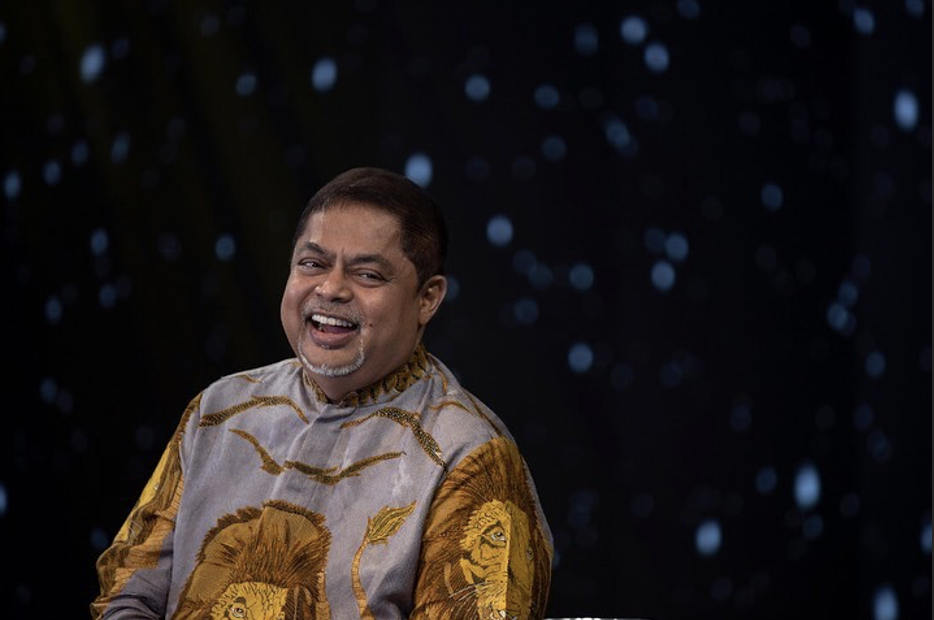


Vijay Eswaran
May 27, 2024 7:00 AM
Updated May 29, 2024 9:19 PM
Eswaran acknowledges the profound influence of the women in his life, from his multigenerational family matriarch grandmother to his independent-minded working mother.
International Women's Day is a yearly reminder of the ongoing fight for gender equality. For Vijay Eswaran, founder and executive chairman of QI Group, a multinational conglomerate known for its commitment to sustainability and social impact, it’s more than just an acknowledgment of gender. Eswaran is a vocal advocate for leveling the playing field in business.
Eswaran acknowledges the profound influence of the women in his life, from his multigenerational family matriarch grandmother to his independent-minded working mother. He emphasizes the need to move beyond token gestures and create a culture of awareness and open discussion. "Women represent an indispensable half of humanity," Vijay Eswaran told Forbes, "but their status has always been defined in comparison with the other half. This must change."
It’s a globally pervasive issue, one with a lot of roots, causes, and, unfortunately, complications in correcting.
According to the World Economic Forum, out of 146 countries analyzed, only nine — Iceland, Norway, Finland, New Zealand, Sweden, Germany, Nicaragua, Namibia, and Lithuania — have closed the wage gap between males and females to what the forum considers a “parity” level, which is 80 cents on the dollar for earnings. (It’s not lost on Eswaran, or anyone else paying attention, that even the bar for success seems to miss the point.)
Those nations are not the United States, United Kingdom, Canada, Australia or most of the EU powers. It’s not just an economic issue.
Related stories
Vijay Eswaran: ‘The Problem Was Created by Men in the First Place’
Eswaran argued that the onus for closing the gender gap cannot fall solely on women. He calls for a shift in leadership, urging men to step up and become active participants in dismantling the structures that perpetuate inequality. "The problem was created by men in the first place," he asserted. "Business leaders must create an environment where diversity and equal opportunity are embedded in the company culture." He highlighted the economic imperative of gender equality, framing it not just as a moral or human rights issue, but as a critical factor for business success.
Vijay Eswaran’s point here, that change starts at the top, is generally believed to be the right path forward to equality. But, regardless of the efforts made, it seems when it comes to women in the workforce, the needle refuses to move in any meaningful way.
Diversity, equity and inclusion efforts have been around for decades, yet progress is minimal and slow. Some of that is, unfortunately, a consequence of societal stereotypes of what women “can” and “can’t” do. Some of it is simple human nature: We look for qualities in others that we like in ourselves, whether that’s how we look, talk, or act. And for many industries, such as tech and the law, for example, that means male leaders looking for people like them — and finding them.
But the most frustrating part has to be the societal expectations for women in many countries that still put the primary burden of child care, house maintenance and management, elder care, and (this one is hard to get around) childbearing, on women.
To ascend to the top, unless one owns a business, is to spend time — lots of time — doing the work. Women, unlike most men, have the above additional burden. That often results in either a scaled-back role or, in some industries like the law, the exodus of women from the workforce before they are given a chance to lead.
But not all is lost.
Room for Improvement
The QI Group itself serves as a case study in progress. While the company boasts an almost equal gender ratio across its workforce, Vijay Eswaran acknowledged there's room for improvement, particularly at the C-suite level, where women currently hold 40% of positions. He stressed meritocracy as the company's guiding principle and pointed to leadership development programs where female participation often outpaces men. Notably, one of QI Group's direct-selling companies thrives under the leadership of women, demonstrating the power of female entrepreneurship.
Eswaran proposed several solutions to further empower women in the workplace. He highlighted the importance of workplace flexibility, recognizing the challenges of balancing career and family obligations. Mentorship programs led by women in senior positions are another key strategy, fostering guidance and support for aspiring female leaders.
Of those ideas, all of which have merit, the most important one might be the shifting of workplace norms to a more flexible schedule. While it’s nice to think that, globally, society will all of a sudden see the importance of shared domestic workload, it isn’t likely. Not anytime soon.
But let us not let perfect be the enemy of good. If employers are willing to create more flexible working arrangements, they likely will have a talent acquisition advantage when it comes to hiring women and will also likely be able to retain those women through various chapters in their lives, some of which will likely require that flexibility.
Eswaran reflected on his first boss, Velma Jean, a formidable woman who instilled in him the importance of time management, meticulous planning, and composure under pressure. "Her greatest strength," he recalled, "was her ability to remain calm and collected whatever the situation be." This valuable lesson, learned from a woman leader, underscores Vijay Eswaran's commitment to fostering a more equitable future.
How many women were never given Velma Jean’s chance?

Eswaran's message is a call to action. It's a reminder that true progress requires a collective effort, one where men and women work together to dismantle the barriers that hold women back. By creating cultures of inclusion, offering support systems, and fostering female leadership, companies like QI Group can pave the way for a more balanced and successful future.
Comments

Powered by RoundtableAn AI/DeFi-powered Enterprise Media Operating System. Learn more at Roundtable.io.© Roundtable 2026. By using this site you agree to the Terms of Use and Privacy Policy