



May 19, 2026 7:00 AM
Updated May 22, 2026 1:51 AM
After reviewing dozens of practices across Southern California, a clear pattern emerged: the professionals who deliver lasting relief treat the whole person, not just the symptoms.
Chronic stress doesn't just disappear on its own, and most people wait far too long before reaching out to mental health professionals for real support. Between sky-high out-of-pocket costs, insurance gaps, and a shortage of providers who actually have open slots, getting consistent care in Los Angeles feels harder than it should. After reviewing dozens of practices across Southern California, a clear pattern emerged: the professionals who deliver lasting relief treat the whole person, not just the symptoms. This guide breaks down five standout options worth your time.
How this ranking was put together
Each option on this list was assessed using publicly available information pulled from professional directories, patient review platforms, provider websites, and clinical outcome summaries. Only practices with a documented track record in mental health care made the cut.
→ See the full research breakdown
- Reimagine Psychiatry - Best for telehealth psychiatric medication management and integrated mental health treatment
- Cognitive Behavioral Therapy Los Angeles - Best for evidence-based psychotherapy and specialized mental health treatment
- Rogers Behavioral Health - Best for mental health and addiction treatment services
- Century City Psychiatry - Best for psychiatric care and medication management
- Westwood Institute for Anxiety Disorders - Best for severe and treatment-resistant OCD, BDD, and anxiety spectrum disorders
Related stories
Why Mental Health Specialists Are Worth a Closer Look
Stress left untreated tends to compound. What starts as trouble sleeping or difficulty concentrating can quietly grow into something much harder to manage.
The challenge in Los Angeles is real. Provider shortages mean wait times stretch for weeks, and many practices still don't accept insurance, leaving patients to pay entirely out of pocket.
That's where the right specialist changes everything. A well-matched provider cuts through the guesswork by using measurement-based tools like the PHQ-9 and GAD-7 to track actual progress, not just impressions.
Patients who see specialists trained in their specific condition tend to stay in treatment longer and show stronger adherence rates. And when the time to the first appointment drops from months to days, the whole trajectory of care improves.
Comparing the 5 Best Mental Health Specialists
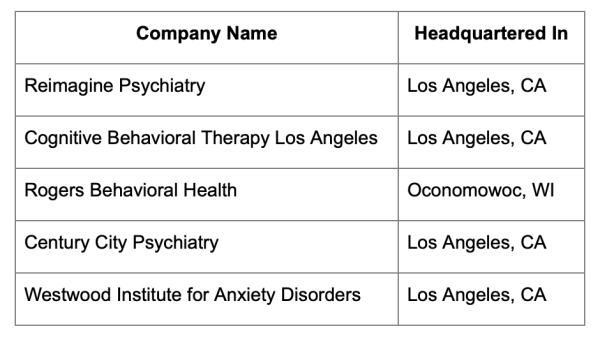
Note: All data in this table is sourced from review platforms and the official websites of the listed companies.
- Reimagine Psychiatry - Best for Telehealth Psychiatric Medication Management
How Does Reimagine Psychiatry Operate?
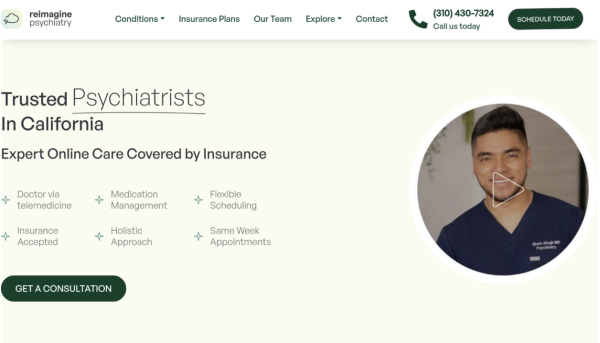
Reimagine Psychiatry delivers telehealth psychiatric medication management across California, covering conditions like ADHD, anxiety, depression, PTSD, bipolar disorder, and insomnia. Led by UCLA-trained, board-certified psychiatrist Dr. Sham Singh, the practice pairs evidence-based pharmacotherapy with genetic testing to personalize medication choices. They also weave in psychotherapy, nutrition guidance, and mind-body practices, which keep patients engaged beyond just the prescription. Same-week appointments are available, and they work with major insurance carriers to keep access realistic for most patients.
Why Does Reimagine Psychiatry Stand Out for Mental Health Specialists?
Too many psychiatric practices stop at the prescription pad, leaving patients without the behavioral and lifestyle support that actually sustains recovery. Reimagine Psychiatry's model directly addresses that gap by blending medication management with psychotherapy, sleep hygiene coaching, and mindfulness. That combination tends to produce meaningful symptom improvement within four to six weeks.
What Users Are Actually Saying:
Patients respond especially well to the same-week availability and the integrated approach, which feels more thorough than a standard psychiatry appointment. The combination of genetic testing and lifestyle guidance gets mentioned repeatedly as a differentiator. That kind of personalized attention is rare to find in a telehealth-only model.
2. Cognitive Behavioral Therapy Los Angeles - Best for Evidence-Based Psychotherapy
How Does Cognitive Behavioral Therapy Los Angeles Operate?
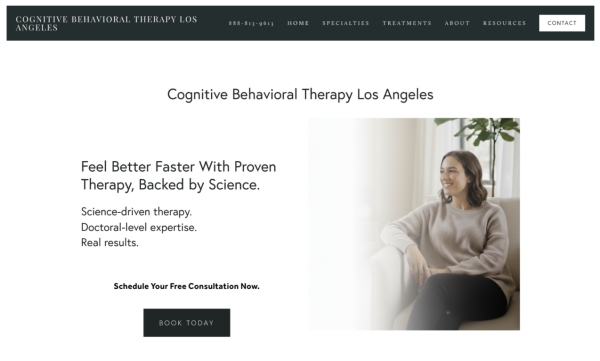
Cognitive Behavioral Therapy Los Angeles is a group of doctoral-level psychologists who specialize in structured, evidence-based therapy for adults and children. They work across CBT, ERP, ACT, and CBT-I formats, covering anxiety, OCD, depression, ADHD, insomnia, and PTSD. The practice operates from three Los Angeles-area locations and offers online therapy throughout California. What's worth pointing out is that many of their therapists hold faculty positions at top psychology programs, so clients are getting care from people who also train the next generation of clinicians.
Why Does Cognitive Behavioral Therapy Los Angeles Stand Out for Mental Health Specialists?
For patients who've tried therapy before without much traction, the issue is often a mismatch between the modality and the condition. That's exactly the problem this practice is built to solve. Their doctoral-level training across multiple structured protocols means the treatment plan is shaped by clinical precision, not guesswork.
What Users Are Actually Saying:
The practice has maintained client trust for well over a decade, which says something real about consistency. Clients value the structured approach and the sense that their therapist genuinely knows the research behind what they're doing. That kind of academic grounding is hard to match in a private practice setting
3. Rogers Behavioral Health - Best for Mental Health and Addiction Treatment Services
How Does Rogers Behavioral Health Operate?
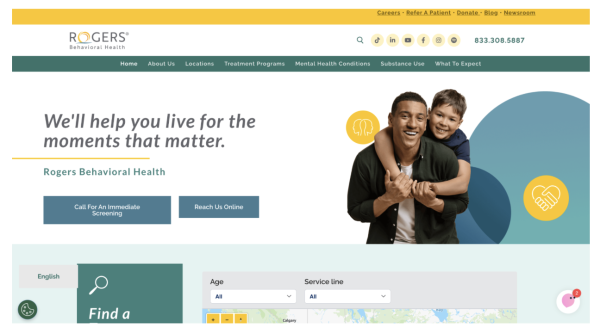
Rogers Behavioral Health is a nonprofit mental health and addiction treatment system with more than a century of operating history. They run a full continuum of care, from inpatient and residential programs to intensive outpatient and partial hospitalization services, across ten states. Their specialties include OCD, anxiety, depression, eating disorders, trauma, and addiction. With 25-plus years of outcome studies and a dedicated research center, Rogers tracks patient improvement with a level of rigor that most behavioral health organizations don't come close to matching. Joint Commission accreditation and NCQA Top Performer recognition back that up.
Why Does Rogers Behavioral Health Stand Out for Mental Health Specialists?
Patients with complex or co-occurring conditions often fall through the cracks when care isn't structured across multiple levels. Rogers was built to prevent that. Their measurement-based care model means treatment decisions are grounded in documented outcomes, not clinical intuition alone.
What Users Are Actually Saying:
Rogers has a reputation that holds up under scrutiny, not just a marketing claim. Patients and families reference the clinical depth and the organization's ability to handle cases that haven't responded to standard outpatient care. Recognitions like AMA Joy in Medicine status and APA internship accreditation through 2033 reinforce what patient accounts already suggest
4. Century City Psychiatry - Best for Psychiatric Care and Medication Management
How Does Century City Psychiatry Operate?
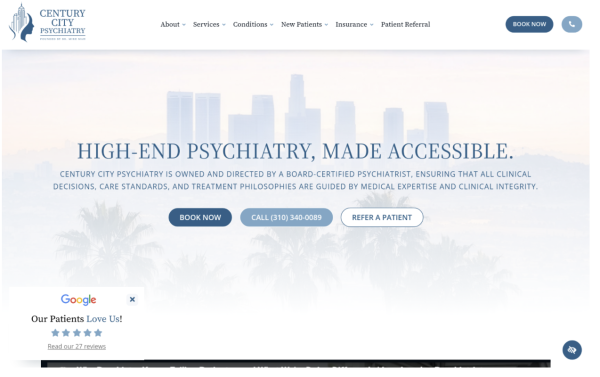
Century City Psychiatry is a physician-owned and physician-led practice offering psychiatric evaluations, medication management, and ongoing care for depression, anxiety, PTSD, ADHD, and bipolar disorder. They provide both in-person visits and secure telepsychiatry throughout California. Every clinician is personally selected, trained, and directly supervised by Dr. Mike Mah, which keeps the clinical philosophy consistent across the board. They also maintain in-network relationships with major insurance carriers, so boutique-level care doesn't automatically mean out-of-reach pricing (which is genuinely refreshing in the LA market).
Why Does Century City Psychiatry Stand Out for Mental Health Specialists?
Corporate-owned psychiatric groups sometimes let administrative priorities drift above clinical ones. Century City Psychiatry deliberately sidesteps that problem with its physician-led model. Direct supervision by Dr. Mah across all clinicians means every patient interaction is shaped by clinical knowledge rather than business metrics.
What Users Are Actually Saying:
Patients consistently highlight the personal attention and the sense that their care decisions are being made by someone who actually understands psychiatry at a clinical level. The combination of insurance accessibility and that boutique feel is the part that surprises people most. That balance is genuinely hard to pull off
5. Westwood Institute for Anxiety Disorders - Best for Severe and Treatment-Resistant OCD, BDD, and Anxiety Spectrum Disorders
How Does Westwood Institute for Anxiety Disorders Operate?
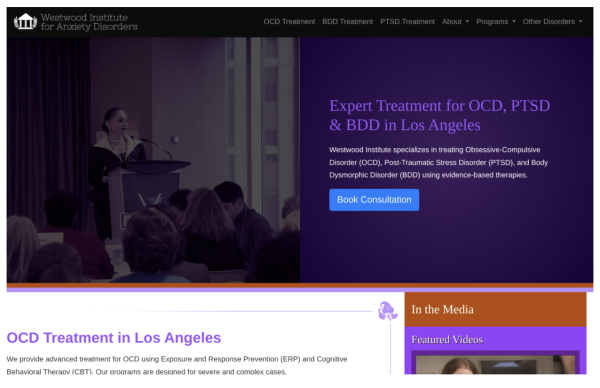
Founded in 1997 by Dr. Gorbis, the Westwood Institute for Anxiety Disorders focuses on severe and treatment-resistant cases of OCD, body dysmorphic disorder, and related anxiety spectrum conditions. Their main protocol is Exposure and Response Prevention therapy, paired with cognitive therapy, medication management, and group therapy. Intensive programs are available both in-person and remotely for clients worldwide. The Institute reports a 70% improvement rate for cases that haven't responded to prior treatment, which puts them among the highest-performing programs of their kind in the United States.
Why Does Westwood Institute for Anxiety Disorders Stand Out for Mental Health Specialists?
Severe OCD and treatment-resistant anxiety are conditions where standard outpatient care often runs out of road. This center exists for patients who've already tried other options without success. Their combination of ERP-based protocols and neuroscience-informed care produces outcomes that reflect the clinical seriousness of their approach.
What Users Are Actually Saying:
The center is frequently described as a place of last resort, and the fact that patients arrive from around the world tells you something real about the gaps it fills. Dr. Gorbis's media presence on programs like 60 Minutes and 20/20 brought visibility, but a sustained reputation comes from actual patient outcomes. That kind of clinical credibility is earned, not marketed.
Methodology Behind These Picks
Gathering Your Baseline Data
The research process started by pulling together a broad longlist of mental health practices and specialists operating in the Los Angeles area. Sources included professional directories like Psychology Today and Zocdoc, mental health-specific review platforms, state licensing board records, and the official websites of active practices. This baseline sweep was intentionally wide, covering everything from solo practitioners to multi-location groups and nonprofit treatment systems. The goal at this stage was volume, making sure no strong candidate was skipped before the filtering work began.
The Shortlist Cut
Once the longlist reached a workable size, each option went through a tightening process. Practices without verifiable credentials, active licensing, or any documented patient feedback were removed first. From there, review patterns were examined across multiple platforms to distinguish genuine clinical reputation from surface-level ratings. Any provider where reviews showed consistent gaps between stated services and actual patient experience was flagged. The shortlist that remained reflected practices with enough real-world documentation to hold up under closer review.
Fact-Checking the Picks
Each shortlisted practice was then cross-referenced against its own website claims. Treatment modalities listed on provider pages were checked against clinical literature to confirm they were legitimate, recognized approaches. Staff credentials were verified against their stated training backgrounds and board certifications, where that information was publicly accessible. Where a practice claimed specific outcomes or success rates, those figures were compared against patient accounts and any published research or outcome summaries tied to the organization.
Authority Signals and Industry Standing
Beyond clinical credentials, each option was evaluated for broader recognition in the behavioral health field. This included professional accreditations like Joint Commission or NCQA designations, mentions in peer-reviewed or mainstream health media, faculty affiliations at academic institutions, and participation in clinical research. These signals don't define a practice on their own, but they do reveal whether an organization is engaged with the broader field or operating in isolation. A track record of external recognition tends to correlate with clinical accountability.
Mental Health Specialists Track Record
The final layer of assessment looked at each practice's depth within the mental health space. Dedicated service pages, condition-specific resources, and case studies were reviewed to assess how clearly each provider communicates their scope and experience. Verified patient reviews referencing specific conditions, treatment timelines, and outcomes carried the most weight in this phase. Practices that could demonstrate a clear, consistent record of treating the conditions they specialize in, backed by patient accounts, moved to the final list.
Picking the Right Mental Health Specialists for You
Choosing a mental health specialist in Los Angeles takes more than a quick search. The right fit depends on your condition, your access needs, and how a provider actually measures progress over time. Here's what to weigh before you commit:
- Industry/Domain Experience: Look for specialists who list your specific condition prominently, not just as a footnote in a long services list. A provider who treats anxiety disorders daily will approach your case very differently from one who sees it occasionally.
- Features and Service Options: Consider whether you need medication management, talk therapy, or both. Some practices offer integrated care that covers multiple modalities, which tends to produce stronger long-term results than a single-track approach.
- Pricing Structure: Confirm insurance acceptance before your first appointment. In-network coverage can cut costs dramatically, and many quality practices in LA now work with major carriers. Don't assume out-of-pocket is your only option.
- Results Measurement: Ask how progress is tracked. Providers who use standardized tools like the PHQ-9 or GAD-7 give you something concrete to measure against, which keeps care accountable and adjustable.
- Industry Knowledge and Compliance: Confirm your provider is licensed in California, follows HIPAA and APA ethical guidelines, and operates within their defined scope of practice. These aren't optional checkboxes; they're the foundation of safe, ethical care.
The Verdict
Long-term stress relief isn't about finding a quick fix. It's about matching with a specialist whose clinical approach fits your actual situation.
The five practices covered here each bring something distinct, whether that's telehealth accessibility, doctoral-level therapy knowledge, or specialized care for treatment-resistant conditions.
As demand for mental health services keeps growing across California, providers who combine clinical rigor with real accessibility will define what quality care looks like in the years ahead.
Comments

Powered by RoundtableAn AI/DeFi-powered Enterprise Media Operating System. Learn more at Roundtable.io.© Roundtable 2026. By using this site you agree to the Terms of Use and Privacy Policy