


Oct 18, 2023 7:00 AM
Updated Oct 20, 2023 3:28 PM
All sports pistols have one thing in common: the magazine is in the grip housing. This saved space and was convenient for cartridge feeding.
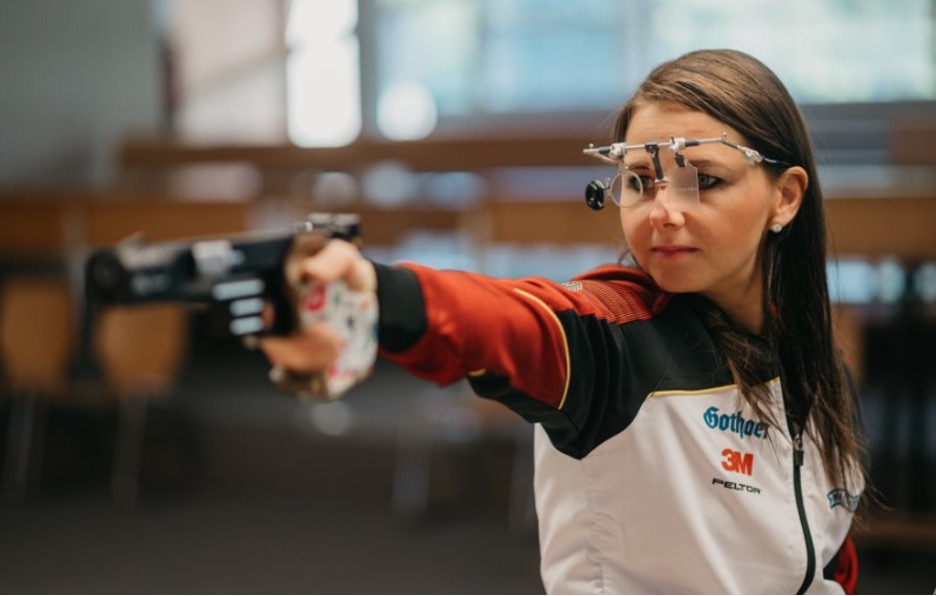
Five-shot sports pistols are among the most versatile types of weapons that can be used in competitions. With small caliber or large caliber, as a sports, standard or Olympic rapid-fire pistol, whether for the Olympics, for the CISM or for other associations - here you will find the most important key points for selection. And at the bottom you will find a surprising update...
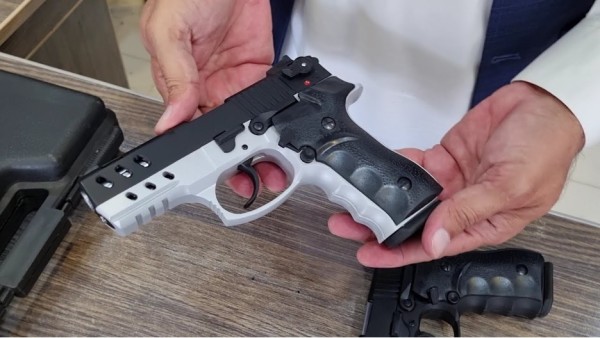
It always has to work, like a sports pistol. This is the name of the five-shot competition handgun that is used by women at the Olympics and is regularly carried to the shooting range by thousands of (mostly male) shooters around the world. Many shooters may not have an air pistol, but they do have at least one sports pistol. These are usually in the caliber .22 long rifle, but also often in the smallest match-suitable large caliber .32 S&W long wadcutter. Other large calibers such as .38 Special have not been used here for years.
Allowed Rules
There are few individual characteristics that the rules would allow. Theoretically, it also allows revolvers, but these are negligible, at least in top-level sport and in this article, because the shooter would have to compensate for too many disadvantages (such as the high barrel axis, the recoil behavior or cocking the single-action hammer with the other hand because of the shaped grip. With a small-caliber sports pistol you can also practice two other internationally represented disciplines: Olympic rapid-fire pistol and standard pistol.
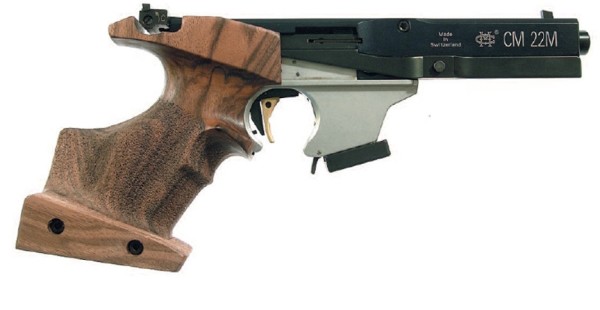
But the dimensions and weights specified by the international association ISSF and adopted by the DSB have had the heads of weapons designers spinning ever since they were introduced in the early 1960s. First of all, the external dimensions defined by the rules ensure that it is always a compromise design: If the barrel length uses the maximum dimension of 153 mm (6 inches) for top precision, there is only little space at the other end for a shaped handle provides a secure hold even for large hands.
Related stories
Since the Walther GSP debuted in the 1960s, the magazine has been sitting between the cartridge chamber and the handle in front of the trigger. Until then, people around the world shot with models modified from utility weapons and then used as sporting pistols: such as the Hämmerli s 108 and 208, the FN models n International or 150, the High Standard range, with the Smith & Wesson 41, and the Ruger MK II or Colt's Woodsman and Ace models.
Characteristics of Guns
All sports pistols have one thing in common: the magazine is in the grip housing. This saved space and was convenient for cartridge feeding. However, it did not allow changing the grip angle, which is necessary for high ring counts depending on hand size and shooting technique. And if you had hands that were too small and fingers were short, you had to struggle around the magazine and frame to get to the trigger. So what to do? Move the magazine forward like the old C96 military pistol and allow for an adjustable grip. This in turn often comes at the expense of the barrel length, but this wasn't so tragic until the targets were changed in the mid-90s.
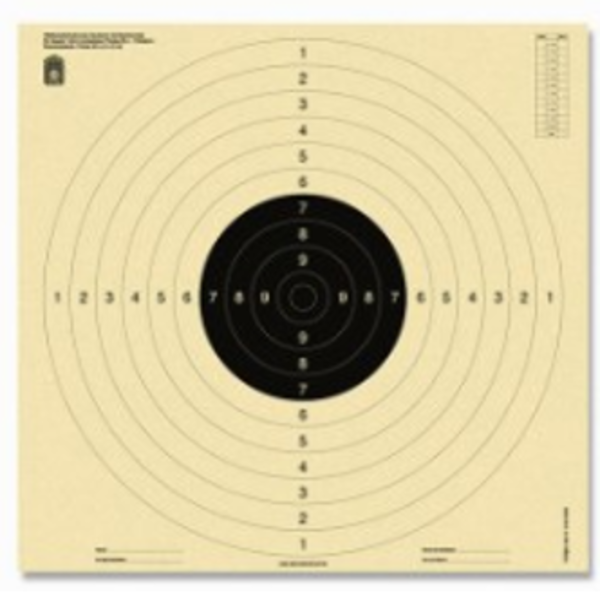
The original GSP had a barrel length of only 115 mm and therefore only mediocre precision. This was sufficient for the oval ten of the duel disc (15 cm high, 10 cm wide) that was common at the time. Today's discs have a round ten with a diameter of 10 cm. And in the final, only shots from 10.0 are valid with a tenth of a ring rating - in the sports pistol the women have to hit at least 10.2 so that it doesn't count as a mistake. With this new lens change, precision suddenly played a greater role.
Three disciplines with the same competition pistol
The procedure for the sports pistol according to the international ISSF and national DSB rules, regardless of whether with small or large caliber: two half programs are fired at 25 meters. First, six five shots at the precision target in six minutes each. Once this first half has been completed, we continue (usually in the afternoon or the next day) with duel shooting at the target with the slightly lusher black center.
Here you only have three seconds per shot (again 6 x 5 shots), and the holding hand must sink back into the “ready” position, which is tilted downwards at least 45 degrees, before each shot. Both half results are added together. And in major competitions, there is a final shooting of the best eight starters from the qualification. Everyone starts from scratch again, regardless of perhaps high pre-fight ring numbers.
Getting onto Shooting Practice
Here you need stamina, nerves and a lot of ammunition: it's just a matter of hits or misses, the worst shooters are gradually eliminated. A maximum of seven five-shot series take place before the final two decide on gold and silver - at least 50 more stressful competition shots after the 60-shot main program. (Current addition in April 2022: For the 2024 Olympics in Paris, the ISSF and IOC have just decided on different final procedures that have not yet been tested).

With the rapid-fire pistol, six series of five are shot twice, but at five targets standing next to each other. The standard pistol, which is rarely offered in this country, is fast precision shooting with 30 or 60 shots, with five-shot series in initially 150, then 20 and finally 10 seconds. It's pretty quick, but you can (if you can) stay at the top and shoot again. A sports pistol must be placed in a test box made of wood or plastic - internal dimensions 300 x 150 x 50 mm. When the plexiglass lid closes, there is the coveted approval sticker. Depending on the design and insertion angle, the box sample allows a few millimeters more here and there.
Comments

Powered by RoundtableAn AI/DeFi-powered Enterprise Media Operating System. Learn more at Roundtable.io.© Roundtable 2026. By using this site you agree to the Terms of Use and Privacy Policy