


Mar 1, 2026 8:00 AM
Updated Mar 6, 2026 1:44 AM
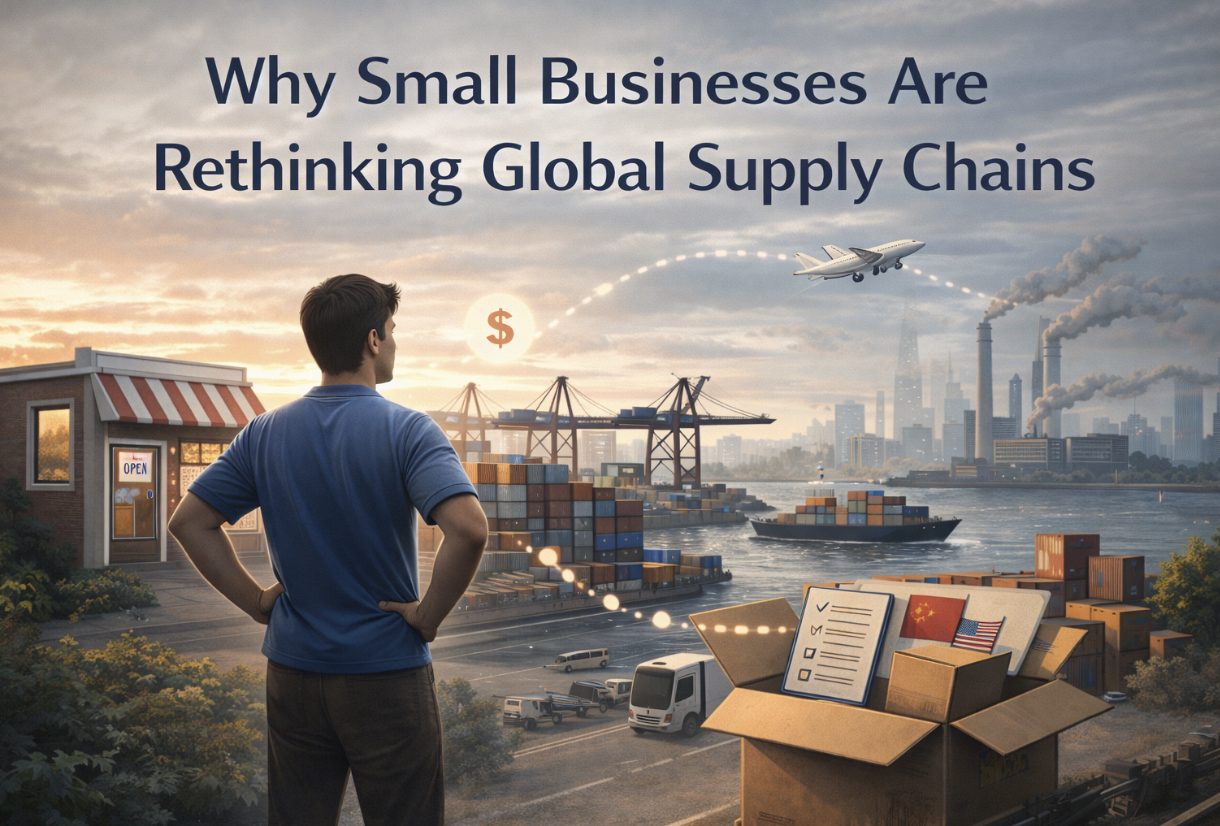
For a long time, global supply chains felt invisible
If you ran a small business, you placed an order with a factory overseas, waited a few weeks, and your products showed up. It wasn’t exciting, but it worked. Goods moved quietly across oceans, and most business owners focused on selling, not shipping.
Then things changed.
Ports backed up. Shipping costs jumped. Factories closed without warning. Lead times stretched from weeks into months. And many small business owners realized something uncomfortable: they depended on a system they barely understood.
Large corporations have teams that manage sourcing and logistics. Small businesses don’t. When something goes wrong, they feel it first — and often the hardest.
Related stories
That pressure is why more independent brands are rethinking how they source products from overseas.
When “Cheap and Easy” Becomes Risky
For years, sourcing from China was marketed as simple. You could find suppliers online, compare prices, send payment, and wait for production.
Sometimes that worked well.
But sometimes it didn’t.
Products arrived slightly different from the samples. Quality varied from batch to batch. Communication gaps caused delays. Shipping timelines shifted without clear explanations.
For a major retailer, one flawed order may be manageable. For a small business, it can wipe out months of profit.
Many entrepreneurs learned this lesson the hard way. The lowest price didn’t always mean the lowest risk.
Moving From Transactions to Systems
The shift happening now isn’t about abandoning overseas manufacturing. China remains one of the world’s largest and most efficient production centers. For many industries, it’s still the best option.
What’s changing is how small businesses approach sourcing.
Instead of treating each order as a separate transaction, more owners are building structured systems around it.
That often means working with someone who understands local factories, production standards, and quality control. A professional China sourcing agent can help verify suppliers, review samples before mass production, and arrange inspections before goods are shipped.
This kind of structure reduces guesswork.
When a factory’s credentials are checked, when product samples are approved carefully, and when goods are inspected before leaving the warehouse, the risk of costly surprises drops.
It’s not about adding complexity. It’s about creating clarity.
Why Transparency Matters More Now
Supply chains are no longer just a business topic. They’re part of public conversation.
Consumers ask more questions about where products come from. News headlines focus on trade tensions and factory shutdowns. Shipping delays make national headlines.
Small businesses operate in that environment.
They need competitive pricing. But they also need reliability and transparency.
If a product launch depends on goods arriving by a certain date, vague timelines are not enough. If customers expect consistent quality, informal agreements won’t protect the brand.
Structured sourcing processes help answer these concerns. They define expectations clearly. They set inspection checkpoints. They create written agreements instead of verbal promises.
That visibility builds trust — both inside the business and with customers.
The Cost of Not Knowing
One of the biggest risks in global trade is information imbalance.
Factories understand their own production capacity. Freight companies understand shipping routes. But small business owners often operate with limited insight.
Without clear oversight, problems can go unnoticed until it’s too late. A small design change may slip through. A packaging issue might not be caught before shipment. A production delay could disrupt a marketing campaign.
Structured sourcing systems aim to reduce these blind spots.
Some sourcing platforms outline how they manage this process step by step. For example, fuleisourcing.com explains workflows that include supplier vetting, production tracking, and pre-shipment quality checks before goods enter international shipping. Seeing a defined process like this helps business owners understand what proper oversight looks like.
The benefit isn’t just smoother operations. It’s peace of mind.
Balancing Power in Global Trade
There is also a question of leverage.
Large retailers can demand strict production standards because they place massive orders. Small businesses rarely have that bargaining power.
Without clear agreements, they may feel pressured to accept shifting timelines or inconsistent quality.
A structured sourcing framework helps level that field. When production standards are documented and inspections are routine, expectations become clearer for both sides.
It doesn’t eliminate all risk. Global trade will always involve uncertainty. But it reduces avoidable mistakes.
For small businesses operating on tight margins, that difference matters.
Resilience Over Speed
For years, conversations about global sourcing focused on cost and speed.
Now resilience is becoming just as important.
Resilience means knowing where your products are made. It means understanding realistic production timelines. It means having checkpoints that catch issues before they become disasters.
When disruptions happen — whether from shipping congestion or political tension — businesses with structured systems respond faster. They can adjust plans. They can communicate clearly with customers. They can make informed decisions.
Businesses without that structure often scramble.
For a small brand, resilience isn’t a luxury. It’s protection.
A More Thoughtful Way Forward
China’s manufacturing infrastructure remains central to global trade. Its supplier networks and production scale are hard to match.
The real question for small businesses isn’t whether to source internationally. It’s how to do it responsibly.
That responsibility starts with building systems instead of relying on informal arrangements. It means choosing clarity over assumption. Documentation over verbal agreements. Inspection over blind trust.
For many entrepreneurs, this shift reflects growth. It shows a move from reacting to problems toward preventing them.
And prevention is almost always cheaper than correction.
Looking Ahead
Global supply chains are unlikely to become simpler anytime soon. Economic shifts, trade policies, and transportation challenges will continue to shape how goods move around the world.
Small businesses cannot control those forces.
But they can control how prepared they are.
By building structured sourcing systems — whether through internal processes or trusted partners — independent brands reduce risk while staying competitive.
In uncertain times, stability becomes a competitive advantage.
For small businesses navigating global markets, the smartest move may not be chasing the lowest price.
It may be building the clearest system.
Comments

Powered by RoundtableAn AI/DeFi-powered Enterprise Media Operating System. Learn more at Roundtable.io.© Roundtable 2026. By using this site you agree to the Terms of Use and Privacy Policy