
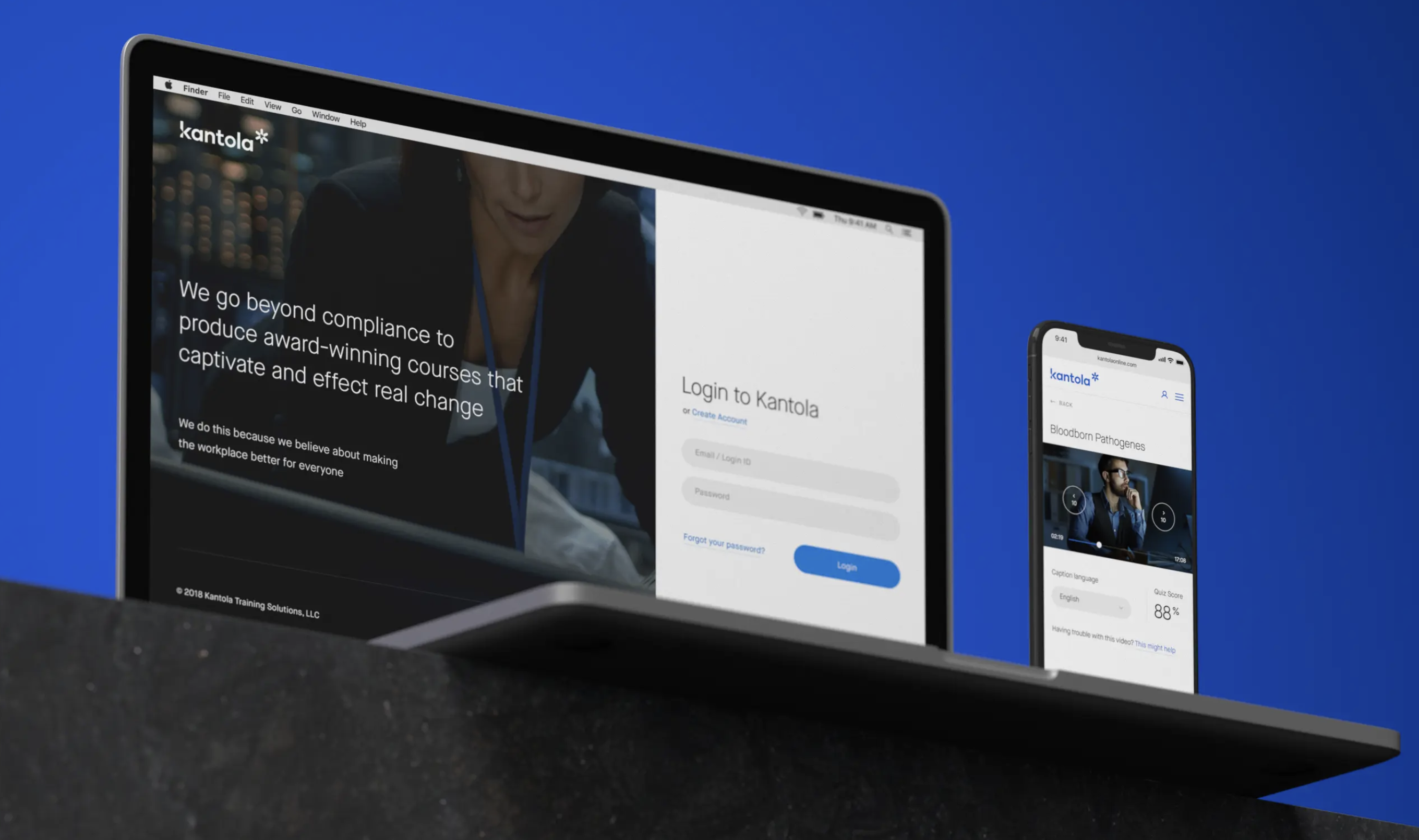


Shaping SaaS Future
Mar 30, 2024 7:00 AM
Updated Apr 1, 2024 6:49 PM
Enter the dynamic realm of Software as a Service (SaaS), where innovation in User Interface (UI) and User Experience (UX) is revolutionizing the landscape.
Innovation in UI/UX: How it's shaping the future of SaaS
The trend of the last four years is that platform applications are migrating to the cloud (Google Cloud Blog). The reason for the phenomenon is cloud infrastructure's benefits: scalability, flexibility, cost savings and improved performance. The key factors driving common migrations are the business desire for more efficient use of IT resources, faster application development and delivery, and improved application stability and performance in the cloud. Once the product is migrated, the customer is left with only the user interface (UI) through which they interact with the functionality that forms their user experience (UX).
Like the software itself, the user interface/user experience of cloud-based services is also undergoing radical transformations. Experts from Dworkz, a B2B SaaS design company, claim that good user interface design can double conversion rates and a good user experience can multiply conversion by four. In the SaaS world, where competition is becoming increasingly aggressive due to market saturation, high user expectations, innovation and globalization, innovation in UI/UX is not just a “good tone” — it's becoming a vital necessity. We should look beyond the UI/UX innovation of SaaS products.
History of UI/UX and their impact on SaaS development
User interface (UI) and user experience (UX) have evolved significantly since the late 1990s. Initially, design elements fulfilled a strictly functional role. But over time, UI and UX began to carry an aesthetic and logistical burden that determined the appearance and ease of navigation in SaaS products. Below is a table of key UI/UX elements and their evolution, based on current trends and interface design forecasts.
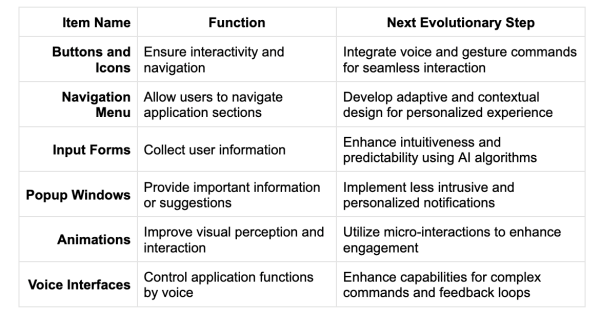
Since the early 2010s, design has begun to move towards flat style and intuitive interfaces. This change, especially in SaaS products, has greatly improved the user experience. However, not all UI/UX updates have been successful. The pursuit of functionality often led to the creation of complex and overloaded interfaces, which in turn caused user dissatisfaction and churn.
Related stories
To mitigate the risks, companies have begun using an approach developed in the 2000s, relying on data and user feedback for thoughtful design innovation. Founders of well-known SaaS companies, such as Stuart Butterfield of Slack and Eric Yuan of Zoom, have repeatedly stated that design is not just about the look and feel of the product, but also the essence of the product. To get to know that soul, that's what feedback is for. In the future, we can expect the evolution of UI/UX in SaaS products to lead to brutalism in design, more immersive scrolling experiences, and AI-driven personalization.
Current trends in UI/UX for SaaS
UI/UX design is constantly evolving in the SaaS world, offering innovative approaches to improve user interaction. Leading companies are already actively adopting trends such as AI-assisted hyper-personalization, interactive scrolling, gradients, glass morphism, large fonts and 3D elements. However, in the context of B2B SaaS products, these innovations face criticism. It emphasizes the risk of their short-term impact and inconsistency with long-term business goals.
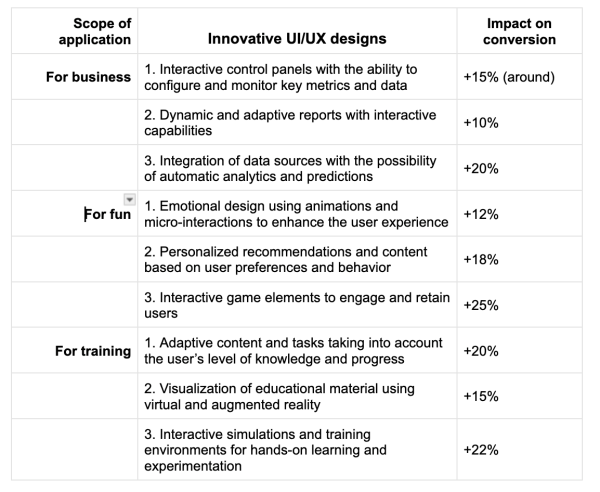
UI/UX developers for SaaS should be critical of design trends, choosing those that align with the values and goals of their product. Trends such as adapting the interface for different screens and maintaining visual hierarchy promise to be relevant forever. To find a harmony between innovation, the uniqueness of the product, and its functionality to solve the problems of ordinary users — this is the key.
How UI/UX innovations impact customer loyalty and retention
Complex visuals and interactive elements can make a product difficult to navigate and understand, causing customer frustration and abandonment. It is therefore crucial that innovations in design and user experience promote ease of interaction with the product, rather than creating barriers to use.
Here are two examples that demonstrate how unnecessary innovation in UI/UX can drive customers away (due to commercially sensitive information, we're not naming names):
- In a SaaS product, the helpdesk button was poorly visible due to an unfortunate color choice that blended in with the background. This made it difficult to find help, causing frustration among users and their subsequent abandonment.
- A product introduced many confusing updates, causing users to get lost, finding it difficult to complete common tasks, which also resulted in customer loss.
User feedback can tell to what extent designers have achieved their goal with interface innovations — whether they have improved the user experience or caused annoyance. If the user experience of your SaaS product improves, you can expect to see an increase in brand loyalty; otherwise, the risk of churn can be as high as 90%. The article on Medium will help you better understand the role of UI/UX design on B2B SaaS platforms.
Conclusion

The evolution of UI/UX in B2B SaaS design driven by innovation has a significant impact on conversion and customer loyalty. Trends such as interactive dashboards and immersive simulations increase conversion rates by 10-25%. It's important to stay aligned with long-term goals by embracing new trends. Going forward, the integration of artificial intelligence and VR promises to further improve user satisfaction. Investments in UI/UX foster strong customer relationships, ensuring sustainable growth in the competitive SaaS market. If you are thinking about how to innovate your existing UI/UX design, consider the expertise of Dworkz agency. This is a San Francisco-based UI/UX agency with extensive experience
Comments

Powered by RoundtableAn AI/DeFi-powered Enterprise Media Operating System. Learn more at Roundtable.io.© Roundtable 2026. By using this site you agree to the Terms of Use and Privacy Policy