



Jul 1, 2023 7:00 AM
Updated Jul 3, 2023 8:41 PM
After all, people in rural areas are as much in need of a reliable internet connection as major American cities are.
Rural regions may fascinate you with their scenic and unpolluted beauty. However, if you ask anyone to move permanently to any one of these lovely hamlets, chances are you would get a vehement ‘NO’. Because let’s face it: living in these rural regions may seem idealistic but they also come with a wide set of disadvantages, more specifically in terms of internet-based infrastructure, which unfortunately is a widespread dilemma on the part of most rural regions in the U.S.
Rural area residents are unable to enjoy the various benefits enjoyed by their urban counterpart. Hence, making it more difficult on the part of the local population because so many internet-related facilities are not easily accessible to them. One of them is finding top internet providers at their address. True, the pace of one’s life does tend to slow down if they are not on the right side but this doesn’t mean that rural centers deserve any less. And for this matter, they too deserve to utilize an uber-fast internet connection, just like people in the metropolises do!
After all, people in rural areas are as much in need of a reliable internet connection as major American cities are. But unable to do much about the digital divide, despite active government involvement in the matter. And since they are not able to enjoy and experience a plethora of internet options to choose from, more people are making the move – from quaint rural townships to major cosmopolitan centers – to enjoy the digital lifestyle that they desire! Hence, whether it's e-learning, remote work, regular gameplay sessions, non-stop streaming, or basic web browsing, one does need a glitch-free connection to achieve it all.
Types of Internet Connections Popular in Rural
It is important to note that the type of connection you select for your home does have a great impact on the service reception. This is because distance does affect the type of connection available to you! And though, DSL is said to be quite popular in rural regions in comparison to other kinds of internet (like hybrid coax cable network, satellite connection, fixed wireless, or a fiber-optic connection), that doesn’t mean that you should opt for it.
Related stories
The reason is simple: despite America’s work in this sector, not much has been able to be achieved in the digital arena. Even though the FCC initiative is a terrific way to combat active internet issues but it will take some time for these rural regions to achieve the kind of success they have had with the internet that they have been able to get in major urban centers.
However, fret not, because rural America has other options, which wouldn’t be available to you in standard conditions. Like fixed wireless or satellite internet, for instance. All this means is for you to do your homework right so that it becomes less difficult for you to select a provider, more apt for you! Let’s see which connection types are easily available in rural areas:
Digital Subscriber Lines (DSL) Internet Network
This is one of the basic types of internet connection that still enjoys massive popularity in rural America. Though, it utilizes copper phone lines to deliver high-speed internet service but is considered slower than other kinds of speedy ISPs available.
Cable Internet Service
Cable internet is another kind of internet connection that also offers a fast internet service. But since it is provided by the standard cable company, which is the same as your reliable TV service, chances are that it could be slightly speedier. And even more pricey than your DSL-based ISP. However, you need to check if this kind of service is available to you since most areas have been to a hybrid coax network, which facilitates fiber-optic in the last mile.
Satellite Internet Connection
A popular option that’s also widespread in rural regions of the U.S. All you need is a satellite dish and just by the right placement of your equipment, you can get decent service. However, this kind of service is still a bit pricey in comparison to a DSL or even cable internet network, for that matter.
Fixed Wireless Connection
Another type of high-speed internet is the fixed wireless connection, which utilizes a radio tower network to deliver smooth signals to your house! Though it is accessible mostly in rural regions but that may not be the case elsewhere.
Fiber Optic Internet
One of the speediest types of internet connection that’s most accessible to urban dwellers but not so much so to people residing in rural regions. Through consistent work being done to extend its accessibility beyond a few select areas, it may be difficult to get fiber internet at the best price if you are located in a rural location. Hence, your best bet is to consider a hybrid coaxial cable network or other types of internet connection if you are looking for uber-fast speeds.
Mobile Broadband
This is one high-speed internet option, which utilizes cell towers so that mobile signals can easily be delivered to your home. It is further divided into three types: 5G, 4G LTE, and Mobile Hotspot
5G
The newest kind of mobile-based broadband, which is also one of the fastest-growing mobile networks in the country. However, not all rural towns have access to this service type.
4G LTE
One option that’s easily available in rural regions and is known for being the current standard for mobile internet.
Mobile Hotspot
Mobile hotspot utilizes cell signal from your device to create a Wi-Fi network, which can then help you connect your smart devices to the nearest Wi-Fi network and get high-speed internet within no time!
Top Rural ISPs That Are Worth Every!
With limited internet options in rural America, finding a top-notch internet option may seem slightly difficult. But don’t worry because that’s exactly what this blog post aims to help you with! Here’s our list of internet connections, known for their high-speed and service reliability. These will not only help you determine the best options available close to you but also make it easier for you to get one for your home.
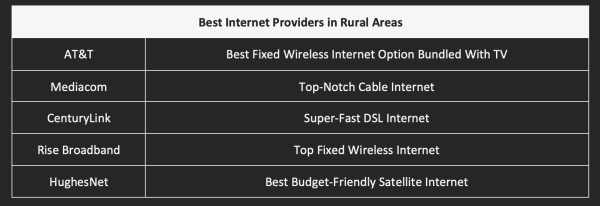
Once you are aware of the different kinds of internet services available to you, it will be easier for you to take the leap and opt for an accessible internet option close to you
AT&T
If you are located in a rural center, where AT&T is known to provide service, then we suggest that you go for it. AT&T offers a terrific fixed wireless service that comes with TV bundling as well. Though it’s a well-known provider popular for DSL and fiber plans, AT&T is also known to provide fantastic fixed wireless service in nearly 18 American states as well! Hence, if you are located in one of its service areas, you get an internet speed of up to 25Mbps (and a bit more that may not be available elsewhere). Although AT&T has long stopped supplying customers with its DSL service, it is still available in various regions of rural America. So if you are located in any such small township where you may be getting AT&T’s service, we say go for it!
Xtream by Mediacom
This is an ideal option if you are residing in one of its accessible regions. Considered one of the best cable internet providers, Xtream by Mediacom offers a reasonable yet speedy internet connection. Besides offering one of the finest yet inexpensive digital service suites, it's ideal for rural areas, for it opens with a price as low [AA4] of data, crossing the data limit will mostly cost up to $50 every month. However, if you opt for a greater internet speed tier, then you can expect data overage can go as high as 600 GB! (however, you have to check up with the service provider to see if the option also comes for rural areas as well). So, get Xtream Mediacom today!
CenturyLink
Known for being one of the best DSL internet providers in the country, CenturyLink rightfully boasts exceptional coverage that envelops urban and rural areas present on both American coastlines! CenturyLink’s DSL coverage to the rural population is dependent on factors like network infrastructure among several others. So you can expect download speeds up to 100 Mbps. However, always run speed tests to check internet speeds and what speed range is expected at your end.
Rise Broadband
You are probably aware of Rise Broadband if you are located in some of the following states such as Texas, Idaho, Illinois, Nebraska, Utah, Colorado, and Iowa. Though it is another popular fixed-wireless option that’s also known for its exceptional service quality and high reliability but unfortunately only about a limited percentage of rural households in the U.S. can get access to this ISP. However, if you are located in an area where Rise BB is accessible, we say go for it, for it's worth every cent you pay!
HughesNet
This is an ideal option for someone, who’s on the lookout for a budget-friendly satellite internet service. While HughesNet may experience some tough competition from its major rivals, the ISP offers reduced opening rates for new customers. Moreover, it offers considerably value-packed deals in comparison to its competition in the category of satellite internet – Viasat being the most common one. This is one provider you shouldn’t miss out on if its service is accessible to you!
The Bottom Line

A high-speed ISP is a necessity that cannot be termed a luxury today. However, a highly-reliable and robust service may seem like one, especially if you have been suffering due to some providers at your end. This is why, always thoroughly research the type of services that are available in your area before you make a purchase. And the various ISPs as well, which can furnish your household with an uber-fast service suite. For it is not just extremely important but ensures that you don’t have to change your service provider, every so often. Once these two factors are in your control, you will find that it’s much easier to invest in an ISP in the longer run.
Comments

Powered by RoundtableAn AI/DeFi-powered Enterprise Media Operating System. Learn more at Roundtable.io.© Roundtable 2026. By using this site you agree to the Terms of Use and Privacy Policy