
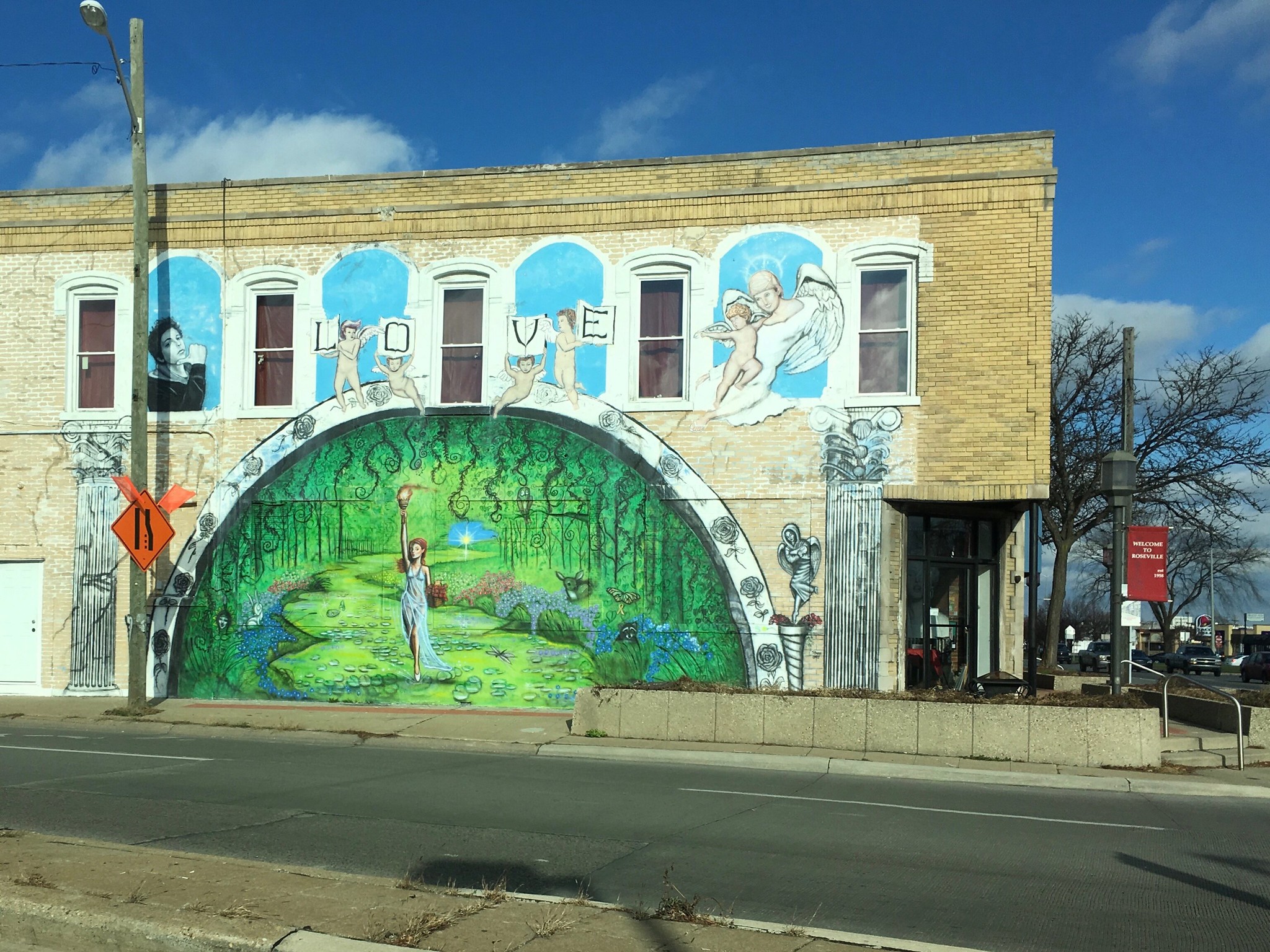
Liza Lagman Sperl • Welcome to Roseville • Attribution-NonCommercial-NoDerivs (CC BY-NC-ND 2.0) • Flickr


Roseville
Oct 9, 2024 7:00 AM
Updated Oct 10, 2024 6:31 PM
Roseville, Minnesota, like much of the surrounding region, has a deep-rooted Indigenous history, primarily connected to the Dakota (Sioux) and Ojibwe peoples.
Roseville, Minnesota, has a rich history rooted in indigenous cultures and transformed by European settlers. Understanding the history of Roseville, MN offers locals and visitors insight into the development of this vibrant city located in Ramsey County. The city's unique blend of history and modern amenities showcases its transformation from farmland to a bustling suburban community.
Early Indigenous History of Roseville
Roseville, Minnesota, like much of the surrounding region, has a deep-rooted Indigenous history, primarily connected to the Dakota (Sioux) and Ojibwe peoples. The Dakota, who occupied the area for centuries, held the land in spiritual reverence, believing it to be positioned at the "center of the earth and beneath the center of heaven" due to its proximity to the Mississippi and Minnesota Rivers.
This land provided the Dakota with essential resources such as hunting grounds, water routes for trade, and ceremonial spaces.
Alongside the Dakota, the Ojibwe people also maintained a strong presence in the region, known for their hunting, fishing, and trade networks. These Native American tribes sustained themselves through a combination of hunting, gathering, and trading long before European settlers arrived.
Related stories
First European Settlers
The first European settlers arrived in what is now Roseville, Minnesota, in the early 1840s. One of the earliest settlers was Stephen Desnoyer, who established a homestead in 1843, followed by Isaac Rose and his family.
Isaac Rose played a significant role in the area’s early development, and Rose Township was named in his honor when it was officially established in 1850. The township's establishment marked the beginning of formal European settlement in the region, and it included the areas now known as Roseville, Lauderdale, and Falcon Heights.
The Founding of Rose Township
Rose Township, named after the early settler Isaac Rose, was officially established in 1850, marking the formal organization of the area that would later become Roseville, Minnesota. Isaac Rose played a pivotal role in the township's founding by conducting the land survey that led to its formation.
Initially, the area was home to farmers, with families like the Desnoyers and Gibbs arriving in the early 1840s. The township encompassed the regions now known as Roseville, Lauderdale, and Falcon Heights, as well as parts of modern-day St. Paul and Minneapolis.
Transformation to Roseville
The transformation of Roseville from a rural township into a thriving suburban community began in the mid-20th century, particularly after its incorporation as a village in 1948. Originally established as Rose Township in 1850, the area was primarily agricultural, with farming dominating the local economy.
However, the post-World War II era brought rapid suburbanization to the region, fueled by population growth and commercial expansion. During the 1950s and 1960s, Roseville became an attractive residential area for people working in the nearby Twin Cities of Minneapolis and St. Paul. Its location, with easy access to major highways, made it ideal for both residents and businesses.
Commercial and Industrial Growth in the 20th Century
Roseville's commercial and industrial growth in the 20th century was significant, particularly after its incorporation as a village in 1948. The post-war suburban boom in the 1950s and 1960s transformed the city from a largely agricultural area into a retail and commercial hub.
This rapid growth was spurred by its strategic location between Minneapolis and St. Paul, making it an ideal spot for businesses. Notably, the first Target store in the United States was opened in Roseville in 1962, solidifying the city’s place as a commercial center in Minnesota.
Other major retail developments included the construction of the Rosedale Center in 1969, which remains one of the largest shopping destinations in the region, drawing millions of visitors annually.
Historic Roseville
Historic Roseville, Minnesota, traces its origins back to the 19th century when it was primarily part of Rose Township. The area was first settled by European settlers in the 1840s, and by 1850, it was officially named after Isaac Rose, one of the earliest surveyors in the area.
Over the years, Roseville developed from a farming community into a bustling suburb. The Roseville Historical Society plays a vital role in preserving this rich heritage, safeguarding documents, artifacts, and stories that chronicle the city’s journey from its agricultural roots to its transformation as a commercial and residential hub.
Roseville’s Role in Minnesota’s Development
Roseville, Minnesota, has played a crucial role in the state’s development, particularly as a major retail hub.
The city was home to several historic firsts, including the opening of Minnesota’s first McDonald’s in 1957 and the nation’s first Target store in 1962. These commercial developments marked Roseville as a pivotal location for retail growth in the Midwest.
Today, the city continues to attract millions of visitors annually, especially to the Rosedale Center, a 1.2 million-square-foot shopping destination that hosts approximately 12 million visitors each year. Roseville’s strategic location between Minneapolis and St. Paul, along major highways, has reinforced its importance as a key commercial and economic center.
Population Growth Over the Decades
Roseville, Minnesota, has experienced notable population changes over the decades. The city saw rapid growth during the 1950s and 1960s, following its incorporation in 1948 when it had a modest population of 4,589. This post-World War II growth spurt was driven by suburbanization and the city's strategic location between Minneapolis and St. Paul.
The population continued to grow steadily through the 20th century, peaking in 2019 at 36,379 residents. However, more recent years have shown a slight decline, with the population dropping to an estimated 35,627 by 2022, representing a 0.59% decrease from the previous year.
Modern Roseville
Modern Roseville, Minnesota, has evolved into a dynamic suburban community known for its balanced approach to urban development and environmental sustainability. With a population of approximately 36,066 as of 2022, Roseville maintains a family-oriented, residential character while offering vibrant commercial areas.
The city's economic strength is evident in its household median income, which has grown to $87,702—higher than the state average. This economic growth is complemented by an educationally advanced population, with 54.3% holding a bachelor's degree or higher.
Conclusion
The history of Roseville, MN is a testament to its ability to adapt and grow while preserving its rich heritage. From its roots as a farming community to its status as a modern suburb, Roseville’s evolution has been shaped by its residents’ commitment to progress and preservation. Looking ahead, the city of Roseville, Minnesota is poised for continued growth, offering a welcoming environment for future generations.
For those planning to move to Roseville, hiring professional moving companies in Roseville is highly recommended. Moving companies can simplify the relocation process by efficiently transporting your belongings and helping you settle into the city.

They are familiar with Roseville’s traffic patterns and road networks, ensuring a smooth transition for newcomers. Whether you're moving locally or from out of state, a moving company will ease the stress of logistics, allowing you to explore the city’s transportation options and amenities at your own pace.
Comments

Powered by RoundtableAn AI/DeFi-powered Enterprise Media Operating System. Learn more at Roundtable.io.© Roundtable 2026. By using this site you agree to the Terms of Use and Privacy Policy