



Apr 10, 2026 7:00 AM
Updated Apr 14, 2026 1:37 PM
Crash games went from a niche category to the fastest-growing format in digital gaming. Titles like Aviator and JetX attracted millions of players across emerging markets with mechanics built for mobile screens and short attention spans
The online casino floor looked roughly the same for two decades. Slots dominated the lobby, table games filled a corner, and novelty titles popped up before disappearing within months. That pattern broke when crash games showed up. Titles like Aviator, JetX, Spaceman, and Chicken Road introduced a format that had nothing in common with spinning reels or card hands, and the player response caught even the developers off guard. The mechanic is almost absurdly simple. A multiplier climbs on screen, you cash out before it crashes, and the round ends in seconds. That simplicity is exactly why it worked. The traffic data on platforms like site Onjabet Iran shows that crash game sessions now rival slot play in volume across several regional markets, a shift that would have sounded delusional three years ago. The developers who built these games for emerging mobile audiences ended up reshaping how the entire industry thinks about session design.
Why the Format Clicked With a New Generation
Slots are built around repetition. Crash games, by contrast, are built around timing, and that distinction matters more than it seems. The multiplier rises on screen in real time, creating a sense of pace that traditional slots rarely match. Watching that number grow shifts attention from passive spinning to active decision-making. Instead of waiting for an outcome, players choose when to exit each round. That small moment of control changes how the experience feels. It becomes less about triggering features and more about reacting to what is happening right now.
Gen Z players who grew up on mobile games with instant feedback loops found the format familiar in a way that traditional casino products never quite achieved. A crash game round lasts between five and fifteen seconds, which means a player can go through multiple rounds during a short break — far more quickly than in a typical slot session. That rhythm fits the way people actually use their phones: in short, fragmented moments rather than long, continuous sessions. Crash games align with that pattern naturally. They do not require long setup or extended focus in the same way as poker or feature-heavy slots.
Spribe's Aviator became the breakout hit, though it took time to gain traction. After its 2019 launch, the game remained relatively quiet in major markets for several years. Then momentum built in regions that Western operators had often overlooked, and Aviator began to stand out as one of the top-performing titles on a number of platforms. JetX, developed by Smartsoft Gaming, followed a similar concept with a different visual approach and quickly established its own audience.
Related stories
The Numbers Behind the Growth
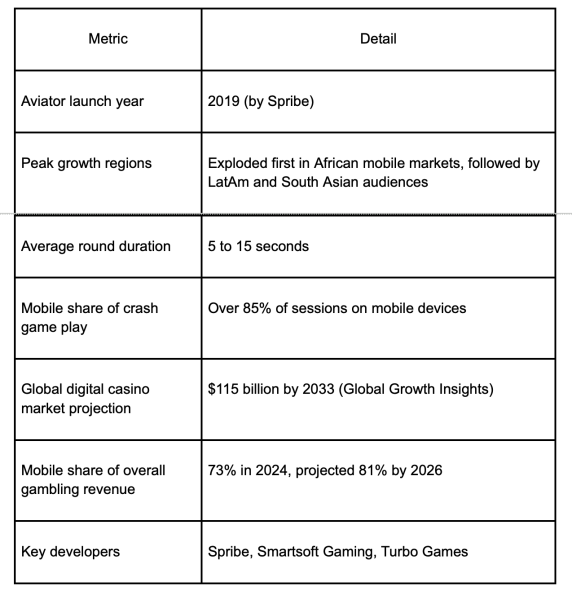
The mobile dominance of crash games is not a coincidence. The format was designed for vertical screens and one-thumb interaction. A round uses minimal data and renders cleanly on budget smartphones, which explains why adoption in markets with lower average device specs outpaced Western markets where desktop play still matters.
What Changed for Operators
Casino operators noticed that crash game players behave differently from slot players. The stakes tend to be smaller per round, but the volume is dramatically higher. A slot player might place 200 bets in an hour. A crash game player can clear that number in 15 minutes, which is the part that changes the revenue conversation. Smaller bets, sure. But the sheer volume of rounds means the house edge has hundreds of chances to do its job before the player even checks the clock.

The social layer amplified everything. Crash games show other players' cash-out points in real time, creating a competitive dynamic that slots never had. Picture this — someone cashes out at 2x and watches the multiplier keep climbing to 14x. That screenshot ends up on X within minutes, and the comments section does the marketing work that no ad budget could buy. Operators figured this out at different speeds. The ones who moved early built sharing buttons and leaderboards into the game. Some of the titles that dropped in late 2025 already started blending crash mechanics into what looks like a slot bonus round, and the players did not blink. The 2026 release calendar has a dozen more of those hybrids lined up, which tells you where the studios are placing bets. Nobody in the development pipeline is asking if crash games will stick around anymore.
Comments

Powered by RoundtableAn AI/DeFi-powered Enterprise Media Operating System. Learn more at Roundtable.io.© Roundtable 2026. By using this site you agree to the Terms of Use and Privacy Policy