



Dec 2, 2025 8:00 AM
Updated Dec 5, 2025 8:28 PM
When evaluating proposal software, businesses should look for specific functionalities that enhance productivity and eliminate redundancies.
In today’s competitive digital landscape, efficiency is the cornerstone of business success. Companies and professionals are constantly searching for tools that streamline document creation, approval, and execution. Among these solutions, electronic signature software and proposal automation platforms have emerged as essential components for modern workflows. Proposal software not only helps businesses generate polished and persuasive documents but also ensures faster deal closing, better collaboration, and improved client experiences.
Why Proposal Software Matters in 2025
The traditional process of preparing business proposals has always been cumbersome: writing long texts from scratch, formatting documents manually, and waiting for stakeholders to print, sign, and return them. This process often delayed deals, leaving room for competitors to step in. With the rise of cloud technologies and digital workflows, proposal software has revolutionized the way organizations create, share, and track proposals.
Today’s top solutions offer automated templates, collaboration features, and built-in signing capabilities. They help sales teams, freelancers, and small businesses focus less on administration and more on closing deals. By centralizing the proposal process, teams gain greater visibility, speed, and confidence.
Key Features of Proposal Software
When evaluating proposal software, businesses should look for specific functionalities that enhance productivity and eliminate redundancies. Some of the most important features include:
Related stories
- Pre-built templates for quick proposal generation.
- Drag-and-drop editors for easy document customization.
- Real-time collaboration tools for multiple stakeholders.
- Electronic signature integrations for faster approvals.
- Analytics and reporting to monitor proposal performance.
- CRM integrations to keep client data in sync.
By combining these features, organizations can dramatically improve proposal turnaround times and client engagement rates.
From Templates to Automation
One of the biggest advantages of proposal platforms is their ability to standardize documents. Instead of wasting hours formatting each proposal, users can rely on ready-made assets. For instance, a business proposal template can ensure consistent branding, professional design, and accurate information across all sales documents. This prevents costly mistakes and allows teams to maintain a polished image with every client interaction.
Beyond templates, automation tools take efficiency a step further. Imagine a salesperson generating a fully customized proposal in minutes by pulling client details directly from a CRM. With automation, personalization no longer means extra effort. It becomes a seamless, repeatable process that scales with the business.
Top 8 Proposal Software to Improve Your Workflow
To help businesses navigate the crowded market of productivity tools, here is a list of the top 8 proposal software solutions in 2025 that are reshaping the way companies operate:
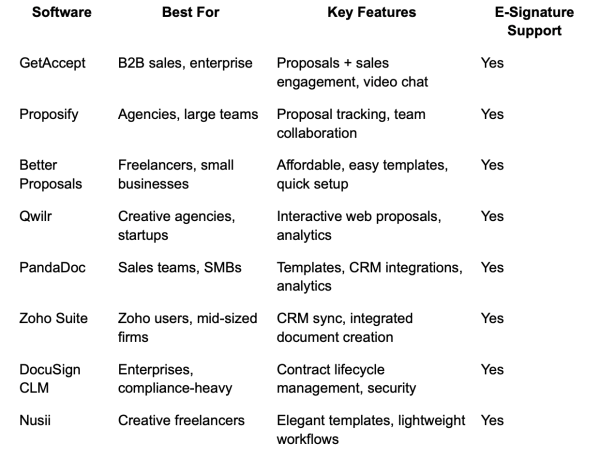
- PandaDoc – Known for its user-friendly interface and strong integration with CRMs, PandaDoc offers document automation, e-signatures, and analytics.
- Proposify – Aimed at agencies and sales teams, Proposify provides templates, interactive quotes, and detailed proposal tracking.
- Better Proposals – With clean designs and easy-to-use editors, this tool is ideal for freelancers and small businesses.
- Qwilr – Famous for creating interactive, web-based proposals, Qwilr makes presentations visually engaging and highly customizable.
- GetAccept – Combining proposal management with sales engagement features, GetAccept goes beyond document creation by adding video messaging, live chat, and digital signatures.
- Zoho CRM + Zoho Writer – This integration offers simple, effective proposal creation directly within the Zoho ecosystem.
- DocuSign CLM – More than just an e-signature platform, DocuSign CLM (Contract Lifecycle Management) provides advanced automation and compliance features.
- Nusii – Designed for creative professionals, Nusii focuses on simple workflows and elegant templates for proposals.
Comparison Table: Best Proposal Software
Benefits of Using Proposal Software
Adopting proposal software in 2025 comes with numerous advantages, including:
- Efficiency – Automating repetitive tasks reduces manual work.
- Consistency – Brand and tone remain uniform across all documents.
- Speed – Faster document creation leads to shorter sales cycles.
- Transparency – Proposal tracking shows when clients view or engage.
- Scalability – Teams can handle more proposals without hiring extra staff.
List: Best Practices for Proposal Management
- Use standardized templates for consistency.
- Integrate proposal tools with your CRM system.
- Enable real-time collaboration to avoid version conflicts.
- Incorporate multimedia (videos, charts) to boost engagement.
- Add e-signature capabilities to speed up deal closure.
- Monitor proposal analytics to optimize strategies.
- Store all signed proposals in a secure, centralized system.
Challenges and How to Overcome Them
Despite their many benefits, proposal software platforms are not without challenges:
- Learning Curves – Some tools require training before adoption.
- Integration Complexity – Aligning proposals with CRMs and other apps can take time.
- Cost Concerns – Advanced solutions may be too expensive for startups.
- Over-Customization – Too many options can overwhelm small teams.
The solution lies in choosing software that matches your company’s size, budget, and industry requirements. Small businesses might prefer cost-effective platforms like Better Proposals, while enterprises could benefit from robust tools like GetAccept or DocuSign CLM.
The Future of Proposal Management
As technology advances, proposal software will continue to evolve with trends like:
- AI-powered personalization – Automated recommendations for proposal content.
- Deeper CRM integrations – More seamless client data synchronization.
- Blockchain verification – Immutable proof of signed agreements.
- Interactive experiences – Rich media proposals that act like mini websites.
These innovations promise to make proposals more dynamic, secure, and impactful.
Conclusion

In the digital-first world of 2025, proposal software has become indispensable for businesses of all sizes. From freelancers to global enterprises, organizations that adopt automation and e-signatures gain a clear competitive advantage. By leveraging tools such as PandaDoc, Qwilr, Proposify, and GetAccept, companies can ensure their proposals are professional, consistent, and persuasive.
From a simple business proposal template to a fully automated workflow with analytics and CRM integration, these platforms transform proposals into powerful sales tools. By investing in the right solution, businesses can improve productivity, strengthen client relationships, and close deals faster than ever before.
Comments

Powered by RoundtableAn AI/DeFi-powered Enterprise Media Operating System. Learn more at Roundtable.io.© Roundtable 2026. By using this site you agree to the Terms of Use and Privacy Policy