
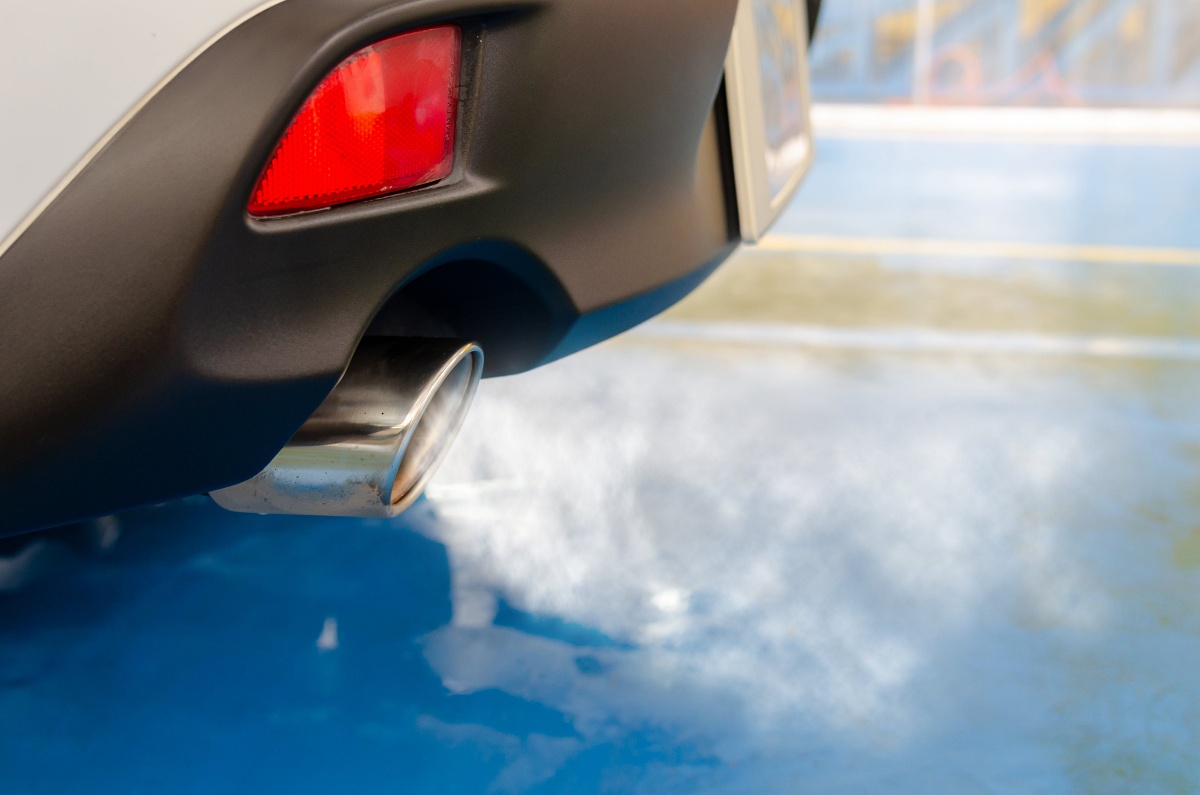
Photo by Khunkorn Laowisit


Auto Exhaust
Jan 3, 2024 8:00 AM
Updated Jan 5, 2024 4:50 PM
Vehicle exhaust filters are vital in reducing harmful pollutants released into the atmosphere.
As the global population continues to grow, so does the number of vehicles on the roads. The rise in vehicular movements translates into increased air pollution levels and the emission of harmful gases and particle matter by exhausts. Studies have indicated that air pollution is responsible for millions of deaths annually worldwide, with the World Health Organization (WHO) putting the figure at seven million deaths. Moreover, the WHO states that vehicle emissions and the resultant air pollution are responsible for a significant proportion of these deaths.
Why Are These Particles Escaping Exhaust Filters?
Vehicle exhaust filters are vital in reducing harmful pollutants released into the atmosphere. One of the most widely used filters in modern cars is the diesel particulate filter (DPF), designed to capture and eliminate particulate matter from diesel engine exhaust gas. Research from the University of Birmingham reveals a troubling fact: filters meant to curb particulate matter from vehicle exhausts are falling short when it comes to containing ultrafine particles.
The Department of Transport underscores the significance of these filters, mandated in new cars since 2011 and in lorries since 2013. DPFs are crucial in mitigating air pollution and associated health risks, with their removal deemed illegal in nearly all cases. While the filters used in experiments effectively eliminate larger particulate matter, they demonstrate reduced effectiveness in halting smaller, liquid particles. Ultrafine particles result from incomplete combustion of organic materials like wood and diesel. What makes these particles unique is their small size. They can travel much further into the lungs and bloodstream than larger particles, causing more harm and leading to a range of serious health effects, such as heart disease, respiratory problems, and even cancer. In addition, ultrafine particles have been found to cross the blood-brain barrier and may contribute to neurological conditions such as Alzheimer's disease and Parkinson's disease.
Researchers analysed data from a monitoring station on Marylebone Road in London. The data revealed a significant 81% decrease in larger particles, such as black carbon, between 2014 and 2021. However, the ultrafine particles, measuring less than 100 nanometres, only decreased by 26%, and the smallest particles, measuring less than 30 nanometres, showed no reduction - suggesting that current filters are ineffective in capturing these specific particles.
Related stories
A Failure of Regulation?
Some experts have suggested that this failure to address the problem is due to a failure of regulation, highlighting the Dieselgate scandal and the lack of transparency in the industry. In 2015, it was revealed that Volkswagen had installed software in its diesel cars that could cheat emissions tests. The software enabled the cars to pass the tests, even when their emissions levels were much higher than allowed by regulations. The scandal led to a worldwide recall of thousands of cars and billions of dollars in fines and compensation for diesel emission claims. More information about this issue can be found at https://www.emissions.co.uk.
There is currently no legal requirement for car manufacturers to remove ultrafine particles from exhaust emissions. Instead, the focus has been on reducing particulate matter, which typically refers to larger particles that are easier to remove. However, there is growing evidence that this approach is not enough. Ultrafine particles are likely to be equally, if not more, important when it comes to the risks they pose to health and the environment. As such, experts are calling for greater regulation of car manufacturers to ensure they are designing vehicles capable of removing these particles.
Possible Solutions
As the evidence on the health impact of PM2.5 particles from car exhausts and other sources continues to mount, governments and automakers must take immediate action to address this issue. Several measures can be taken to reduce the release of these particles from car exhausts. One way is to develop more efficient filters that trap smaller particles to prevent their escape into the air. Another solution is to switch to electric vehicles, which do not generate emissions from their tailpipes. Mass adoption of electric vehicles could significantly reduce the level of air pollution. However, this would require significant government incentives to encourage drivers to make the switch.
Moreover, policies such as congestion charges and low emission zones (LEZs) can also be implemented to reduce the number of cars on the road and encourage drivers to switch to public transport or alternative modes of transport such as bicycles, walking, or electric scooters. It is equally important to hold car manufacturers accountable for diesel claims and encourage them to invest in environmentally friendly technologies.

In conclusion, new research highlights the need for governments and international organisations to take decisive, positive action to reduce the growing public health impact of vehicle-related air pollution. The findings have uncovered that the technology currently used to reduce harmful emissions is unsuitable for capturing the most dangerous particles. It is essential to work towards long-term solutions, including technological developments and transportation changes, which aim to reduce the number of vehicles on the road.
Comments

Powered by RoundtableAn AI/DeFi-powered Enterprise Media Operating System. Learn more at Roundtable.io.© Roundtable 2026. By using this site you agree to the Terms of Use and Privacy Policy