
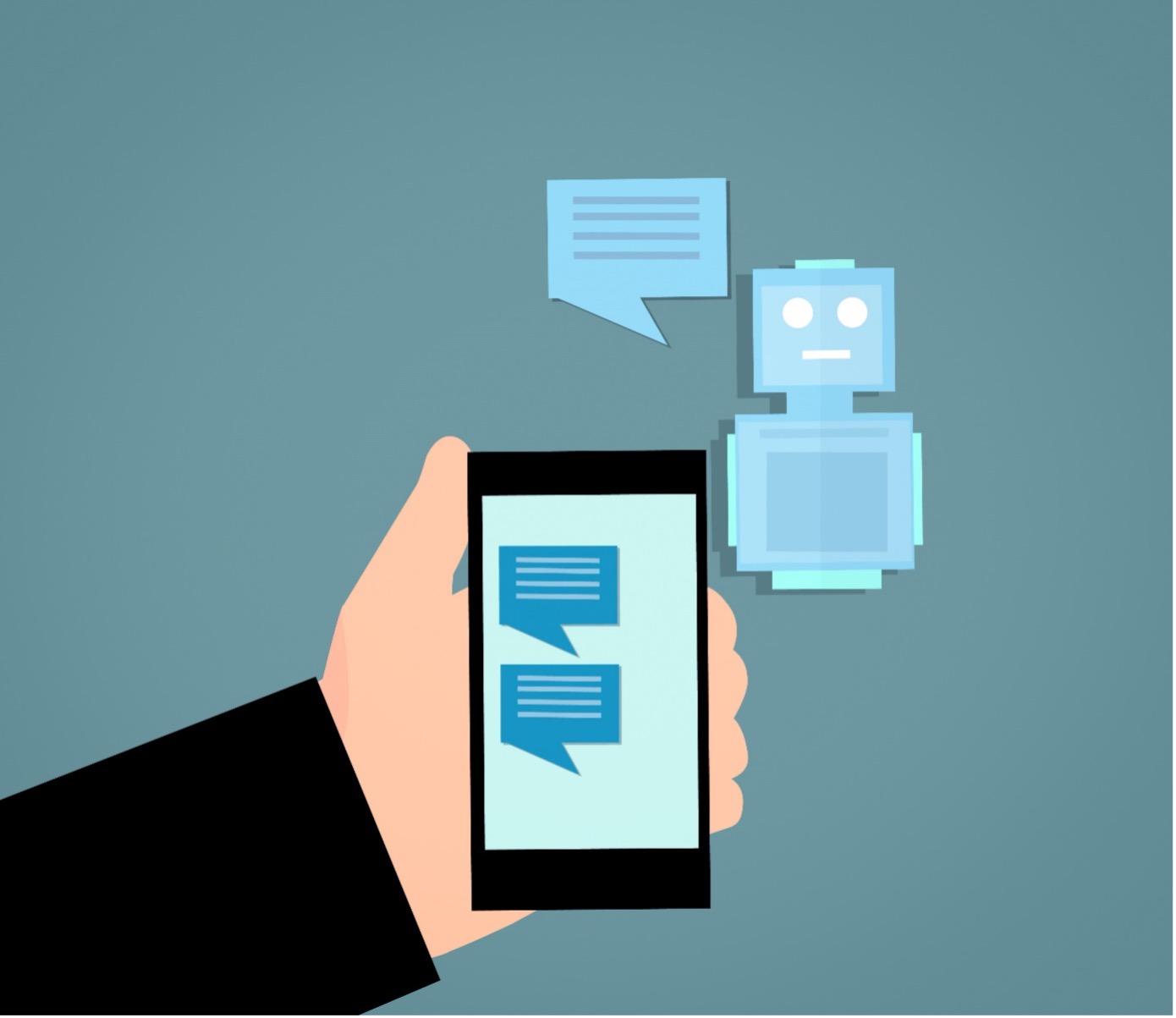
Credit: Mohamed Hassan - Pxhere


Dec 12, 2022 8:15 AM
Updated Dec 12, 2022 5:15 PM
OpenAI CEO Sam Altman confirmed this week that his company’s chatbot phenomenon had crossed the one-million-threshold
An AI chatbot is taking the world by storm. Despite only being made available to the general public on November, 30, this intriguing technology has everyone talking to it. Developed by artificial intelligence company OpenAI, which was co-founded by Elon Musk, ChatGPT quickly garnered mass attention worldwide for its AI-powered back-and-forth conversations mirroring real-life interactions in mind-blowing fashion.
Rare are the ventures that entirely reinvent our approach to technology. But OpenAI’s viral chatbot might well be one of them. While still in a test phase, ChatGPT has gained much traction among netizens for its revolutionary – and slightly uncanny – means of providing in-depth and human-like responses to users’ queries and prompts.
This prototype has also taken academics aback while prominent tech leaders have voiced their enthusiasm for this game-changer in the making. Head of California-based tech company BOX, Aaron Levie said OpenAI was doing with ChatGPT what Google and Firefox did to “adjust one’s thinking about computing.”
Chatbot GPT, a pioneering programmable AI application
OpenAI CEO Sam Altman confirmed this week that his company’s chatbot phenomenon had crossed the one-million-threshold, hitting the mark faster than any social media that came before. But how does this ground-breaking app work exactly? ChatbotGPT is a language model trained to create thorough and accurate responses online. And the GPT-3 technology is at the core of this technological prowess.
Related stories
Short for Generative Pre-trained Transformer, this generative language software makes use of statistics to predict and then spawn an output based on a given digital input. In this case, a user’s question triggers an automated instant response. Scripted bots powered by GPT-3 benefit from an immediate boost of pattern recognition and contextual understanding. In other words, the chatbot is able to identify subtle changes in conversational tones and topics, and adapt accordingly to access new information.
After signing up for free on the platform, users can hit the AI system with a series of questions of varying complexity, including open-ended queries. Users may as well ask the AI to solve a math equation or summarize an obscure intellectual concept into simpler terms. Yet netizens are already getting the hang of the app to let their creativity loose, asking ChatbotGPT to rewrite hit songs or to come up with a movie scenario. Developers have anticipated the drawbacks that could come along, though, training the system to “reject inappropriate requests” and, in so doing, avoid unwished-for outcomes like racial and gender bias.
Some responses are still glaringly inaccurate, however, while other interactions seem non-sensical. OpenAI candidly tackled the system’s limitations on its website, stating the chatbot might occasionally write “plausible-sounding but incorrect” answers. The app’s AI-generated answers were also temporarily banned on coding platforms such as Stack Overflow. Yet ChatbotGPT remains a giant leap for artificial intelligence across the board, nonetheless.
The unstoppable rise of artificial intelligence
The AI industry is growing at an increasingly rapid pace. According to the BLS, AI specialist jobs are expected to grow to 37,000 by 2028 in the US alone. But artificial intelligence is already making waves across several fields. In the supply chain ecosystem, AI components are allowing corporations to streamline procedures. Artificial intelligence could be an equally transformative driving force for the healthcare system, helping care providers in various administrative tasks such as classifying clinical documentation.
Yet the gaming industry might be one of the forefront examples of the transformative nature of artificial intelligence-driven technologies. AI is empowering developers to take immersion and realism to the next level through opted-in data from gamers and sharp behavior analysis tools. As a result, gamers can experience ever-so-personalized interactions with NPCs and an enhanced gameplay overall.
The impact of artificial intelligence is just as prevalent in the iGaming industry, as data collection helps online casinos personalize their marketing campaigns and even provide players with exclusive promotions. Both newcomers and seasoned players might thus claim profitable rewards like casino cashback bonuses. Cashback bonuses are paid as a percentage of a player’s losses. A refund of sorts, these offers usually come with no wagering requirements attached. Therefore, such bonuses are a convenient means of reducing losses while still enjoying a casino’s catalog.

From casual entertainment to high-stakes economic sectors, artificial intelligence is proving to be every bit as disruptive as its advocates always anticipated. And while fully sentient technology is still years – if not centuries – ahead, applications like ChatbotGPT are already showing the way of the future.
Comments

Powered by RoundtableAn AI/DeFi-powered Enterprise Media Operating System. Learn more at Roundtable.io.© Roundtable 2026. By using this site you agree to the Terms of Use and Privacy Policy