


Apr 10, 2026 7:00 AM
Updated Apr 14, 2026 1:13 AM
The harshest effects of drug use still gather in the same places again and again, and that is not random. It is patterned. It follows inequality.
The next big drug story will probably arrive with the usual headlines. A new substance. A fresh panic. A familiar rush to blame bad choices, broken morals, or some vague cultural decline. That script is old. It is also incomplete.
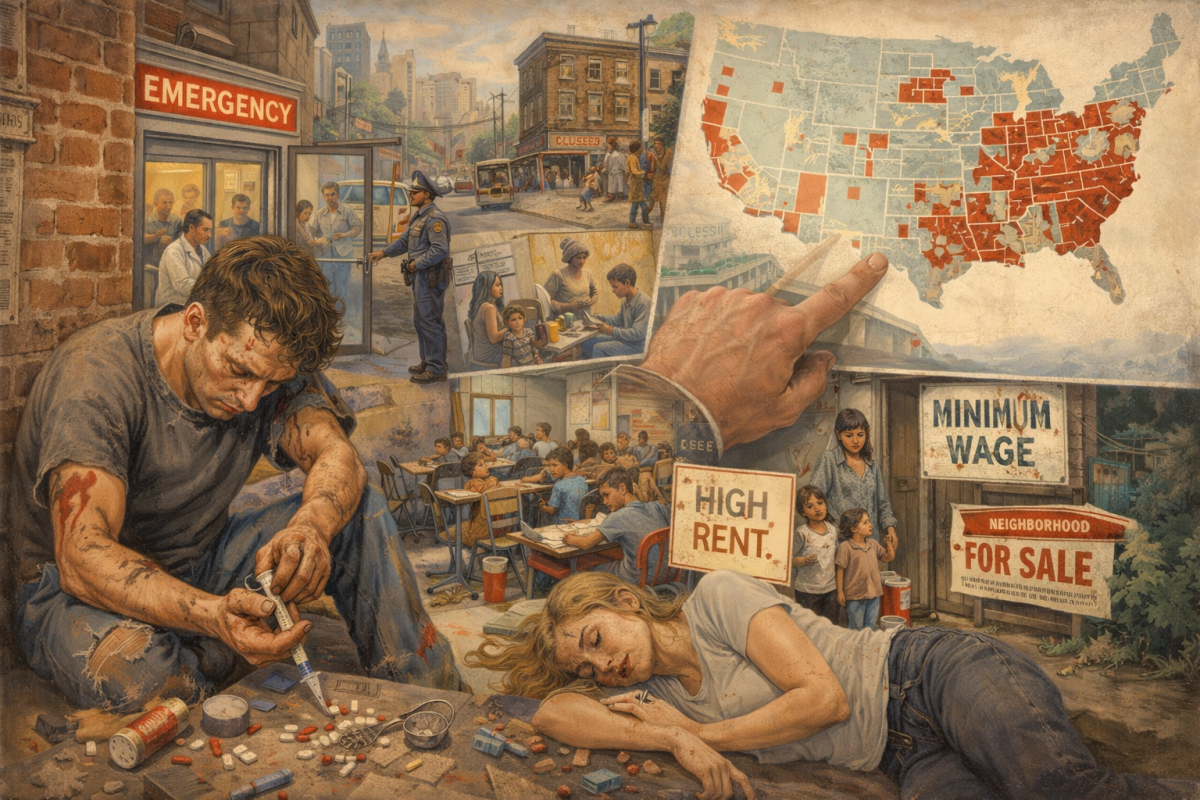
If you want to understand where the drug crisis is going, stop looking only at the substances themselves. Look at the map. Look at rent. Look at wages. Look at emergency rooms, overcrowded schools, and neighborhoods where basic stability feels like a luxury item. The harshest effects of drug use still gather in the same places again and again, and that is not random. It is patterned. It follows inequality.
That is the story hiding in plain sight. The drug market changes fast. Supply chains shift. Synthetic substances move quicker than policy. But the places hit hardest still tend to share the same conditions: unstable housing, patchy healthcare, unsafe work, chronic stress, and a public system that shows up late or not at all. People often talk about addiction like it drops out of the sky. It does not. It lands where the ground is already cracked.
It’s not just about drugs. It’s about the conditions around them.
Drug use does not exist in a vacuum. It grows in an environment. If that sounds obvious, good, because it should be. But public debate still treats drugs like the main event when they are often the symptom, the accelerant, or the aftershock.
Related stories
In communities where housing is fragile, daily life becomes a loop of stress management. You worry about eviction. You worry about missing work. You worry about a sick family member who cannot get seen soon enough. Even rest becomes unstable. And once stress stops feeling temporary and starts feeling structural, people look for relief where they can find it.
Stress is not abstract when it lives in your body
This part matters. Long-term economic pressure is not just a policy issue. It changes how people feel, think, sleep, and cope. When work is precarious and healthcare is inconsistent, survival itself becomes emotionally exhausting. That kind of pressure can push substance use from occasional escape into routine self-medication.
That is why the usual moral framing falls apart. It misses the physical reality of inequality. Your nervous system does not care whether a crisis came from a landlord, a lost shift, or untreated trauma. It only registers danger, over and over again.
The market adapts faster than safety nets do
Drug markets are flexible. They move quickly into places where people are cornered and where state support is thin. Synthetic drugs get cheaper, stronger, and easier to distribute. Meanwhile, treatment access remains uneven, slow, and full of hoops. So the market meets people where institutions fail them.
That is not an accident. It is how neglected systems work. Or rather, how they stop working.
When a neighborhood is unstable, the risk multiplies
There is a reason substance-related harm tends to cluster in areas with weak housing security. Housing instability does not simply sit beside addiction. It deepens it. It makes recovery harder. It makes relapse more likely. It raises the odds that a bad week turns into a dangerous month.
If you do not know where you are sleeping next week, the usual advice starts sounding detached from reality. Keep a routine. Reduce stress. Attend appointments. Build consistency. Sure. But consistency is hard to build when your life keeps getting broken into pieces.
Shelter is not a side issue
People often treat housing as a secondary support, something to figure out after the “real” addiction problem gets handled. That gets the order backward. Safe housing is part of the treatment picture from the start. It gives structure to recovery. It lowers exposure to chaos. It creates room for sleep, privacy, and the basic dignity that helps people stabilize.
That is why services connected to Recovery Housing Support matter in this conversation. They point to something larger than a bed or a temporary address. They speak to the fact that recovery rarely sticks when a person returns to the same instability that fed the crisis in the first place.
And honestly, this should not be controversial. You cannot build a steady life on shifting ground.
The health system keeps showing up halfway
For all the talk about public health, many people still meet a system that is fragmented, expensive, and difficult to trust. You can find care in one place, housing help somewhere else, and mental health support behind a waiting list that stretches longer than your patience can handle. The handoffs are messy. The paperwork is endless. The urgency gets lost.
That patchwork hurts everyone, but it hits poorer communities hardest. If you have money, time, transport, and flexibility, you can often piece together support. If you do not, every small barrier becomes a wall.
Untreated pain does not stay neatly categorized
A lot of substance use starts or worsens around untreated pain, anxiety, depression, or trauma. Yet those issues are still split into separate boxes by many systems. One provider handles the mind. Another handles the body. Another handles addiction. The person in the middle gets shuffled around like a file no one wants to own.
That is part of why accessible options like Personal Therapy Support matter. Not because therapy alone solves inequality, and it does not, but because untreated emotional strain keeps feeding the cycle. If people cannot get care early, the crisis becomes more severe, more visible, and far more expensive for everyone later.
And then society acts surprised.
The slum story is really an economic story
When substance use rises in slum areas or deeply neglected urban neighborhoods, public conversation often turns harsh fast. The language gets moral. The images get sensational. The policy response leans toward surveillance and punishment. But if you look closely, what you are often seeing is concentrated economic abandonment.
These communities are not just dealing with drugs. They are dealing with overcrowding, polluted surroundings, informal labor, predatory lending, unreliable services, and weak political attention. Drug use in those spaces is not some strange local defect. It is one of many signals that the broader economy has sorted risk downward and left some people to absorb more of it than others.
Why punishment keeps missing the point
Punitive responses sound decisive. They photograph well. They produce numbers, raids, arrests, seizures. But they rarely touch the conditions that make drug harm durable. If anything, they can deepen them by destabilizing already fragile households.
Take away a wage earner through incarceration, even briefly, and the whole family may slide further into debt or displacement. Add stigma, police pressure, and less access to formal work, and the path out gets narrower. That is the contradiction at the center of a lot of drug policy. It claims to restore order while making ordinary life more disorderly for the people already hanging on by a thread.
Here’s the part we keep avoiding
People like clean stories. One villain. One bad substance. One crackdown. One fix. Inequality ruins that simplicity. It forces a more uncomfortable truth: the next big drug story is not just about chemistry or crime. It is about how societies distribute safety.
Who gets stable housing? Who gets a doctor before an emergency? Who gets time off without losing pay? Who lives near care, and who lives near risk? Who gets treated as a patient, and who gets treated as a problem?
Those questions shape drug outcomes long before anyone appears in a headline.
And yes, personal choices matter. Of course they do. But choices are never made on a level field. A person with savings, support, healthcare, and a safe home has more room to recover from a mistake. A person living in constant precarity does not. That is not softness. That is reality.
A different way to read the crisis
So when the next wave of reporting arrives, it helps to read between the lines. If a community is seeing worsening substance harm, ask what else is happening there. Are rents rising faster than wages? Are clinics disappearing? Are jobs getting more unstable? Are schools and public services stretched thin? Those are not side notes. They are part of the same story.
The public likes to talk about drug problems as if they reveal personal failure. More often, they reveal system failure. They show where the social contract is weakest, where stress is chronic, and where relief, even dangerous relief, becomes easier to find than real support.

That is why the next big drug story is really about inequality. Not because drugs do not matter, but because the damage tells you where the deeper fracture already was. The substances may change. The names may change. The headlines definitely will. But the pattern stays painfully familiar.
If you want to know where the crisis is heading next, watch where life is getting harder to hold together. That is where the story starts.
Comments

Powered by RoundtableAn AI/DeFi-powered Enterprise Media Operating System. Learn more at Roundtable.io.© Roundtable 2026. By using this site you agree to the Terms of Use and Privacy Policy