


May 22, 2026 7:00 AM
Updated May 25, 2026 11:31 PM
When evaluating a transition into an AI-augmented production cycle, teams often make the mistake of measuring a tool's value by the quality of its first output.
The initial rush of generating a high-fidelity image from a simple text string is a hallmark of the current AI era. For a hobbyist, a "pretty good" result is a victory. For a professional content team, however, "pretty good" is often where the real work begins. This is the granularity gap—the distance between a generative model’s interpretation and the specific, non-negotiable requirements of a creative brief.
When evaluating a transition into an AI-augmented production cycle, teams often make the mistake of measuring a tool's value by the quality of its first output. In reality, the viability of a platform is determined by how it handles the subsequent five to ten iterations. The transition from a prompt-centric workflow to an intervention-centric one marks the difference between playing with technology and producing with it.
The 'Close Enough' Trap in Professional Production
Content teams live in the "final 10%." While a model might generate a stunning landscape or a convincing character, it rarely gets the specific placement of a product or the exact shade of a brand’s primary color right on the first try. This is the "Close Enough" trap: the illusion that because a tool can do 90% of the work in seconds, the remaining 10% will be equally effortless.
High-output teams are increasingly realizing that one-shot prompting is a bottleneck, not a shortcut. If a designer has to spend three hours in external software fixing a "hallucinated" finger or an awkwardly placed shadow, the time saved by the generator is neutralized. The evaluation criteria should therefore shift away from "How good does this look?" to "How easy is this to fix?"
Related stories
An "intervention-ready" workflow treats the initial generation as raw material—a high-quality suggestion rather than a finished product. This requires a platform that doesn't just provide a chat box, but an environment where the generated asset can be sliced, adjusted, and re-rendered in sections.
Evaluating Model Latency: When to Choose Nano Banana Over Heavyweight Models
In a production environment, speed isn't just a convenience; it’s a cognitive requirement. There is a psychological cost to "thinking time" in generative models. When a creator is in a flow state, a 60-second wait for a single image can break their momentum. This is where smaller, more agile models like Nano Banana become essential.
While heavyweight models are optimized for high-density detail and artistic complexity, Nano Banana is designed for the rapid-fire stage of creation. During storyboarding or layout ideation, a team might need to see twenty variations of a composition in a few minutes. At this stage, pixel-perfect lighting is less important than spatial logic and thematic consistency.
However, there is a clear trade-off to acknowledge. Smaller models like Nano Banana Pro often struggle with complex spatial relationships or long-tail descriptive prompts compared to their larger counterparts. If you ask for a "highly specific 17th-century navigational instrument resting on a modern glass desk," a smaller model might conflate the objects. The evaluation here isn't about which model is "better," but about which model fits the current stage of the creative funnel. Using a heavyweight model for a brainstorming session is as much of a resource waste as using a lightweight model for a final high-res campaign asset.
Spatial Control: Moving from Chat Interfaces to the Canvas Workflow
The industry standard for AI interaction has largely been the linear chat interface. For a writer, this makes sense. For a visual creator, it is a functional prison. Visual work is non-linear; it requires looking at the relationship between different assets on a single plane.
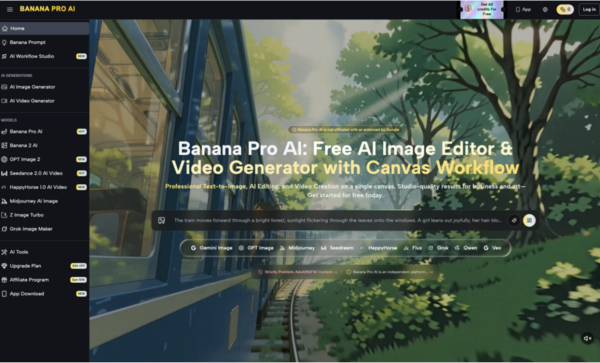
This is why the canvas workflow provided by Banana Pro is a critical point of evaluation. A 2D workspace allows a designer to see their primary generation alongside its variations, and more importantly, alongside the reference images or brand assets they are trying to match. It moves the process from "I hope the AI remembers what I said three messages ago" to "I can see the context of my entire project right here."
A significant limitation remains, however: the industry has not yet solved the problem of maintaining absolute consistency in lighting and character depth when moving between different model seeds on a canvas. While a canvas makes these discrepancies easier to see, fixing them still requires a level of manual oversight that AI has not yet automated away. Professional teams must evaluate whether a tool gives them the spatial tools to manage these inconsistencies, even if it can’t eliminate them entirely.
The AI Image Editor as the Primary Production Engine
If the generator is the engine, the editing suite is the steering wheel. A modern AI Image Editor must go beyond simple filters. It needs to provide semantic editing—the ability to identify and change specific elements within an image based on their meaning, not just their pixels.
In-painting and out-painting are the primary tools here. If a generation is perfect except for the background, a content team shouldn't have to discard the entire image. They should be able to "mask" the background and prompt a replacement that maintains the lighting and perspective of the foreground subject. This non-destructive approach is what allows AI to integrate into professional pipelines.
The "undo" culture in digital design is vital. Traditional AI tools often feel like gambling—you pull the lever and hope for a win. A professional-grade editor replaces the "gamble" with "refinement." When evaluating these tools, teams should look at how granular the masking is and how well the editor handles the "blending" between the original pixels and the newly generated ones.
Where the Logic Breaks: The Unsolved Problem of Brand Precision
It is important to reset expectations regarding brand-specific assets. Currently, no AI tool—including the most advanced versions of Banana AI—can perfectly replicate 1:1 brand guidelines, complex typography, or specific logo geometry without manual intervention.
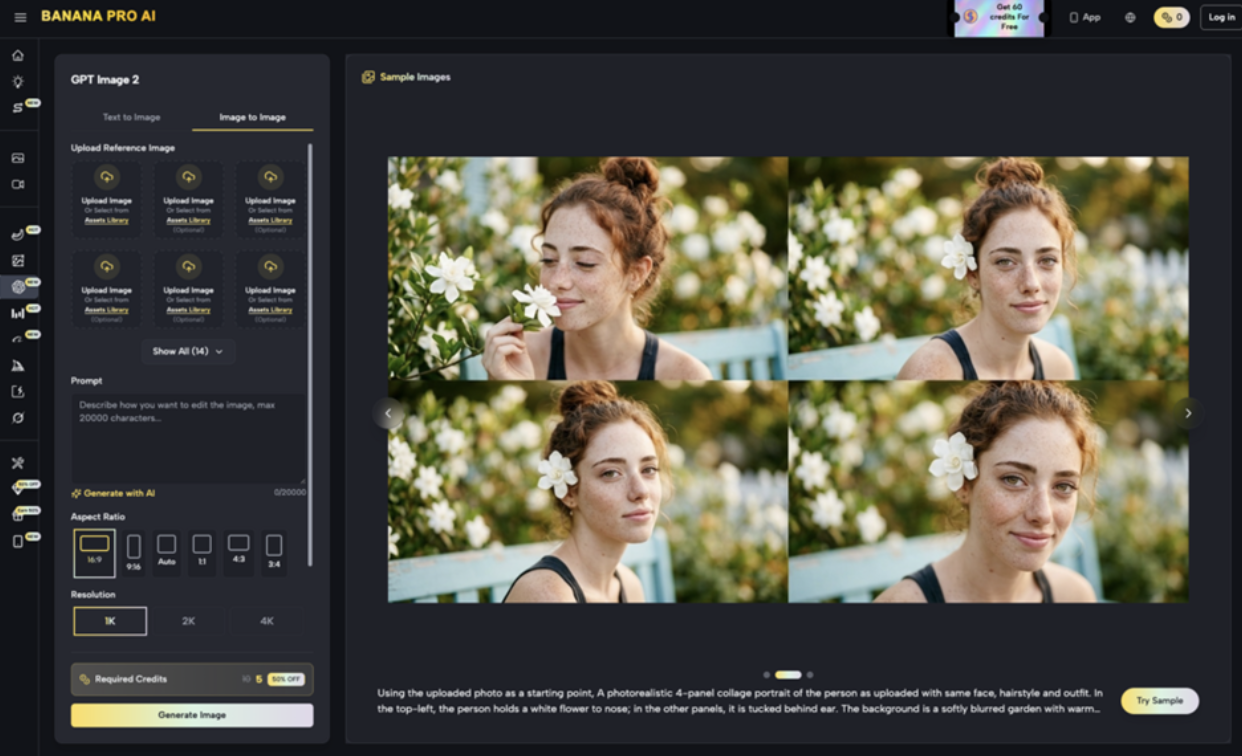
There is a recurring danger in over-relying on "Image-to-Image" transforms for high-fidelity product placement. While these features are excellent for maintaining the "vibe" of a product, they often subtly alter the geometry in ways that a legal or brand department would never approve. If your workflow requires an exact replica of a specific watch face or a proprietary automotive grill, the AI should be used to generate the environment, while the product itself is likely best composited in via traditional means.
Furthermore, we are in a period of high volatility regarding model updates. An update that improves "photorealism" might simultaneously break a team’s established visual style guide that relied on a specific quirk of an older model version. This "unconcludable" factor means that any workflow adopted today must be flexible enough to survive the next iteration of the underlying technology.
Building the Hybrid Stack: A Strategy for Implementation
For teams ready to move beyond experimentation, the most successful strategy is the "Hybrid Stack." This involves layering different tools and models based on the specific requirements of the production phase.
- The Skeleton Phase: Use Nano Banana for rapid ideation and layout. The goal here is quantity and composition. The low latency allows for a high volume of "bad" ideas to be discarded quickly.
- The Texture Phase: Once a composition is locked, move the project into a more robust environment like Nano Banana Pro to generate high-fidelity textures and lighting.
- The Intervention Phase: Utilize the editor to fix hallucinations, adjust colors, and ensure that the generative elements play well with any pre-existing brand assets.
Instead of measuring the "time to generate," teams should measure the "time to edit." A tool that produces a beautiful image in 10 seconds but requires 2 hours of fixing is inferior to a tool that takes 30 seconds to generate but offers an integrated editing environment that reduces the fix-time to 15 minutes.
In the long run, the safest bet for a content team's ROI is a tool-agnostic, canvas-focused approach. The models will change, the prompts will evolve, but the need for a spatial workspace where a human can steer the output will remain the constant in the generative workflow. Focus on the intervention points, and the granularity gap becomes a manageable part of the creative process rather than a barrier to entry.
Comments

Powered by RoundtableAn AI/DeFi-powered Enterprise Media Operating System. Learn more at Roundtable.io.© Roundtable 2026. By using this site you agree to the Terms of Use and Privacy Policy