



May 20, 2026 7:00 AM
Updated May 24, 2026 1:50 AM
The financial toll of motorcycle crashes and found that $7.4 billion is spent on medical bills each year, while $3.6 billion is lost in wages.
Motorcycle injuries in the U.S. are costing a staggering $107 billion annually, with head and spinal injuries being a major contributor. These injuries don’t just impact the victims—they create a significant burden on healthcare systems and communities, leaving behind long-term disability and high medical costs.
Texas Law Dog analyzed the financial toll of motorcycle crashes and found that $7.4 billion is spent on medical bills each year, while $3.6 billion is lost in wages. Despite safety improvements, motorcycle injuries have been on the rise, underscoring the urgent need for more effective safety measures and policies.
Key Findings:
- $107 billion annual cost of motorcycle injuries (2019).
- $7.4 billion is spent annually on medical expenses.
- $3.6 billion lost in wages from long-term disabilities.
- 58% of costs come from head and spinal injuries.
- 12% increase in motorcycle injuries over the last 5 years.
- 6,335 motorcyclists were killed in 2023, the highest since 1975.
- 82,564 motorcyclists were injured in 2023, with many facing long-term disabilities.
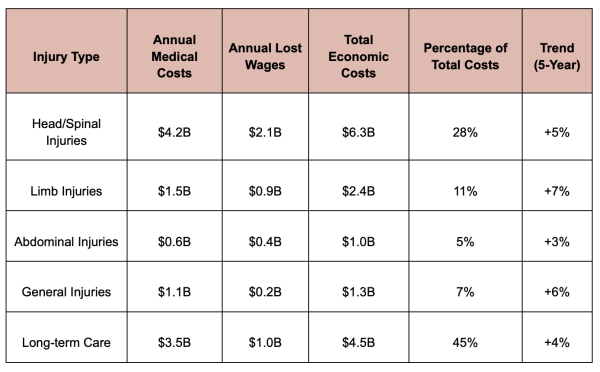
Data Table: Economic Impact of Motorcycle Injuries (2023)
What This Data Reveals:
- Rising Costs: The $107 billion annual cost of motorcycle injuries reflects a significant economic burden, including medical expenses, lost wages, and long-term care costs. As injury rates rise, these costs are expected to grow, placing greater strain on healthcare systems and public resources.
- Head and Spinal Injuries: 58% of the total economic costs come from head and spinal injuries, which are some of the most severe and expensive to treat. These injuries often require lifelong medical care, rehabilitation, and in some cases, permanent disability support, leading to substantial long-term costs.
- Texas' Heavy Toll: Texas alone bears $5.8 billion annually due to motorcycle injuries, which includes hospital care, emergency services, and the lost productivity of those injured or killed. This mirrors a national trend, demonstrating that the costs of motorcycle injuries are widespread and urgent.
- Injury Increase: Over the past five years, motorcycle injuries have increased by 12%, despite safety improvements and advances in technology. This trend signals the need for stronger safety measures, more widespread helmet usage, and enhanced enforcement to reduce these preventable costs.
- Impact of Licensing and Alcohol: 34% of riders involved in fatal crashes in 2023 were unlicensed, and 41% of riders in single-vehicle crashes were impaired by alcohol. These figures underscore the importance of stricter licensing regulations and addressing alcohol-related accidents in reducing crash severity and costs.
Related stories
Why This Matters Now
The staggering $107 billion cost of motorcycle injuries is not just a number—it’s a crisis that continues to grow, with head and spinal injuries alone driving up healthcare and long-term care costs. As the number of injuries has increased by 12% over the past five years, these costs are piling up on taxpayers, healthcare systems, and families. With $3.6 billion lost annually in wages, this issue impacts the broader economy, not just the victims. Immediate action is needed to implement stronger safety measures, such as helmet laws and better enforcement, before the costs spiral out of control, further straining our public health systems and adding to the national economic burden.
Methodology
The data for this study were sourced from FARS (Fatality Analysis Reporting System), Texas Department of Transportation (TxDOT), and the National Safety Council. It includes statistics on motorcycle fatalities and injuries from 2023, with an emphasis on economic costs related to medical expenses, lost wages, and long-term care. This analysis also draws from CDC data on head and spinal injuries and state-specific economic impact reports to assess the broader financial burden on healthcare systems and communities.
Data Sources:
- FARS – Fatality Analysis Reporting System (2023)
- Texas Department of Transportation (TxDOT) – Annual Motorcycle Injury Report (2023)
- National Safety Council – Motorcycle Injury Statistics (2023)
- CDC – Motorcycle Crash Data (2023)
- IIHS – Insurance Institute for Highway Safety, Motorcycle Safety Report (2023)
- NHTSA – National Highway Traffic Safety Administration, Motorcycle Safety Awareness Report (2023)
Full Study -
Comments

Powered by RoundtableAn AI/DeFi-powered Enterprise Media Operating System. Learn more at Roundtable.io.© Roundtable 2026. By using this site you agree to the Terms of Use and Privacy Policy