



May 26, 2025 7:00 AM
Updated May 30, 2025 11:09 PM
Explore how Arab banking institutions are balancing tradition with innovation as they adapt to mobile payments. From GCC pioneers to emerging markets, discover the strategies and unique Islamic banking integrations.
The Digital Revolution: How Banks in Arab Countries Are Adapting to Mobile Payments
In the high-speed environment of financial technology, Arab banking organizations are at a critical crossroads, trying to balance early traditions with the relentless march of digital change. This conflict is also reflected in the region's approach to adopting mobile payments, where banks balance the need to preserve long-held banking relationships with the revolutionary potential of mobile technology. Perhaps above all, this change is occurring in the context of varying regulatory conditions, technology infrastructure, and consumer attitudes within the diverse Arab world.
The Current Mobile Payment Landscape in Arab Countries
The mobile payments marketplace among Arab nations is extremely heterogeneous, with some markets advancing rapidly while others creep along. GCC countries—driven by the United Arab Emirates, Saudi Arabia, and Bahrain—have been at the vanguard of this finance revolution, supported by sophisticated digital infrastructures and forward-thinking regulation that has accelerated take-up. The change has triggered profound changes in the way consumers interact with various service industries, from retailing to entertainment. Banks have developed certain mechanisms for transaction processing with international platforms like Melbet due to the complex regulatory framework of online sports betting and gaming services. This is evidence of the delicate balance that financial institutions have to tread between supporting consumer choice and operating within local legal frameworks. Egypt, Jordan, and Morocco are feeling the rising tide as their financial sectors are now viewing mobile payments not as a competitive advantage but as an essential service.
We can consider the young population of the region as the prime mover for this revolution. With almost 60% of the Arab world being under the age of 30 and smartphone penetration in the majority of Arab countries exceeding 80%, all the ingredients towards the growth of mobile payments appear to be highly positive. Traditional banks, unwilling to abandon their traditional sources of revenue, are now confronted with an imperative to respond to this new generation of financial activity.
Key Adoption Drivers and Challenges
A number of unique factors are driving the mobile payment revolution in Arab banking markets. Knowledge of these drivers is essential for gaining an understanding of how incumbent institutions are reacting:
Related stories
Financial inclusion is at once a powerful possibility and a moral imperative for many Arab nations. In a region of the globe where whole portions of society are not banked or are underbanked, mobile payment technology promises a compelling means to expanded financial inclusion without an extensive buildup in physical infrastructure.
The cost reductions of mobile payment technology make a powerful business case for both banks and consumers. Transaction cost typically falls 40-60% when transferred from traditional channels to mobile environments, providing effective economic incentives for adoption.
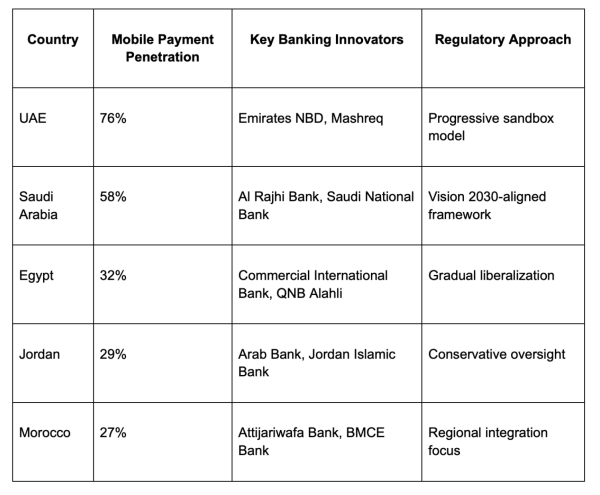
Regulatory environments across the region differ widely, with the landscape for innovation thus highly uneven. Whereas some countries have embraced regulatory sandboxes and frameworks that are conducive to innovation, others remain conservative in their approaches to financial technology. This variance of regulation has produced a fascinating mosaic of business models and adoption patterns across the Arab banking sectors.
Customer trust proves to be an insurmountable barrier, particularly in cash-based markets where the traditional dominant mechanism is still cash. Banks face the daunting task of not only delivering technological solutions but also establishing genuine trust in electronic financial systems.
Below are major barriers that banks must overcome to fuel mobile payment growth:
- Infrastructure deficits: Digital payments require robust technological infrastructures in the form of reliable internet connectivity, high smartphone penetration rates, and merchant acceptance networks. The vast majority of areas within the Arab world are still plagued by infrastructure deficits that are in the way of large-scale adoption processes.
- Security concerns: Consumer skepticism on data protection, transaction security, and fraud protection remains a problem across the region. Banks must invest heavily in both consumer awareness and security architecture to alleviate such valid concerns.
- Cultural tastes: Cash remains deeply embedded in the majority of Arab economies, based on cultural factors of tangibility, privacy, and directness of exchange. These deeply ingrained attitudes require intentional strategies that take into consideration and respect cultural contexts.
The interaction between drivers and inhibitors creates a dynamic environment in which banks must manage complex trade-offs and strategic decisions. Banks that can satisfy widespread problems and capitalize on the region's unique demographic and technological opportunities are able to gain significant market share.
Strategic Approaches of Arab Banks
And so how are Arab banks responding to this multi-dimensional environment? Their strategic plans reflect interesting trends of adaptation and innovation that marry global fintech trends with local regional characteristics.
Collaborative Ecosystems and Partnerships
Rather than viewing fintech startups as threats to their existence, vision-led Arab banks have increasingly employed collaborative approaches—strategic partnerships, innovation labs, and investment funds dedicated to incubating promising financial technologies. This is a dramatic turnaround from the competitive reaction that prevailed over early fintech disruption responses.
The emergence of "banking as a platform" models is evidence of this collaborative spirit. Visionary banks such as Emirates NBD and Qatar National Bank have developed open API frameworks that facilitate third-party developers in building complementary services on top of their underlying banking infrastructure. This approach helps banks remain at the center of the financial ecosystem and leverage external innovation in order to enhance customer experiences.
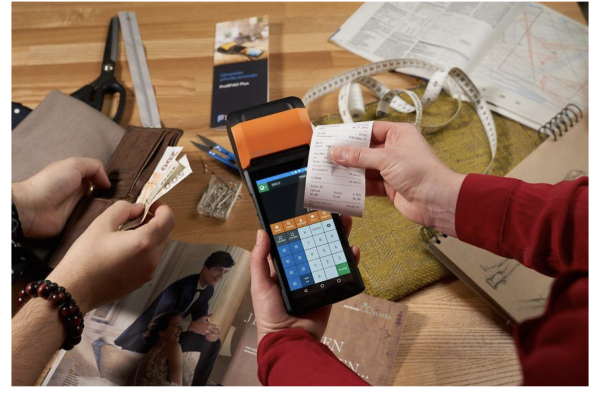
Telco-bank partnerships have actually been most effective in promoting innovative mobile payments take-up. These partnerships deploy each other's strengths—banks' knowledge of banking and regulatory compliance expertise, and telecom operators' vast customer base and technical capacity. Examples include Mashreq Bank and Zain's partnership in the UAE and Ahli United Bank and Zain's partnership with Zain in Bahrain.
Islamic Banking Integration
The intersection of mobile payment technology and Sharia banking philosophy is a unique regional innovation warranting special mention. Could the coming together of advanced financial technology with Sharia-bank complaint procedure hold special advantages for Arab financial institutions internationally?
Multiple Islamic banks have been most innovative in creating mobile payment products compliant with religious requirements and yet competitive in capability. These banks have been at the forefront of methods such as:
- Murabaha-based payment structures: These structures avoid conventional means of interest by structuring agreements as cost-plus agreements, essentially permitting installment payments without violating Islamic prohibitions on interest.
- Wakala agency structures: In these structures, the provider of payment is an agent (wakil) rather than a lender, ensuring Sharia compliance while facilitating frictionless transactions.
- Profit-sharing vehicles: Institutions have created new profit-sharing structures that distribute dividends to stakeholders in accordance with Islamic precepts and advancing modern payment ability.
This innovative combination of religious commitment with technological progress may provide Arab banks with strong competitive advantages in regional and global markets. The strategy demonstrates how cultural commitment and technological advancement are by no means mutually incompatible.
Future Trajectories and Emerging Trends
As we explore the emerging relationship between Arab banking institutions and mobile payment technologies, several emerging trends are worth close attention. These trends will perhaps define the future of the region's financial landscape.
The use of artificial intelligence and machine learning capabilities in mobile payment systems is a fundamental source of competitive differentiation. Large banks are using these technologies to enhance fraud prevention, personalize customer interactions, and route transactions for peak performance, creating more sophisticated systems that learn and adapt to the unique patterns and preferences of individual users.
Cross-border payment services that serve the needs of the region's substantial expatriate populations are an extremely promising growth area. Remittances are an economic lifeline for much of the Arab world, and banks that can serve these flows through mobile channels have the potential to capture huge market share while providing genuine social value.
Regional central bank digital currencies (CBDCs) in the region's development is an imminent paradigm shift in the future of mobile payments. The Saudi Central Bank and Central Bank of the UAE have been pioneers in piloting digital currencies, perhaps setting new ground for the future of payment systems.

Looking back on the spectacular trajectory of Arab banks towards the adoption of mobile payment technologies, there is one reality that is increasingly clear: the most effective companies will be those that combine technological advancement with deep cultural understanding. The promising intersection of tradition and innovation contains within it the special character of the Arab world's mobile payment revolution—a journey still evolving in fascinating and unexpected ways.
Comments

Powered by RoundtableAn AI/DeFi-powered Enterprise Media Operating System. Learn more at Roundtable.io.© Roundtable 2026. By using this site you agree to the Terms of Use and Privacy Policy