
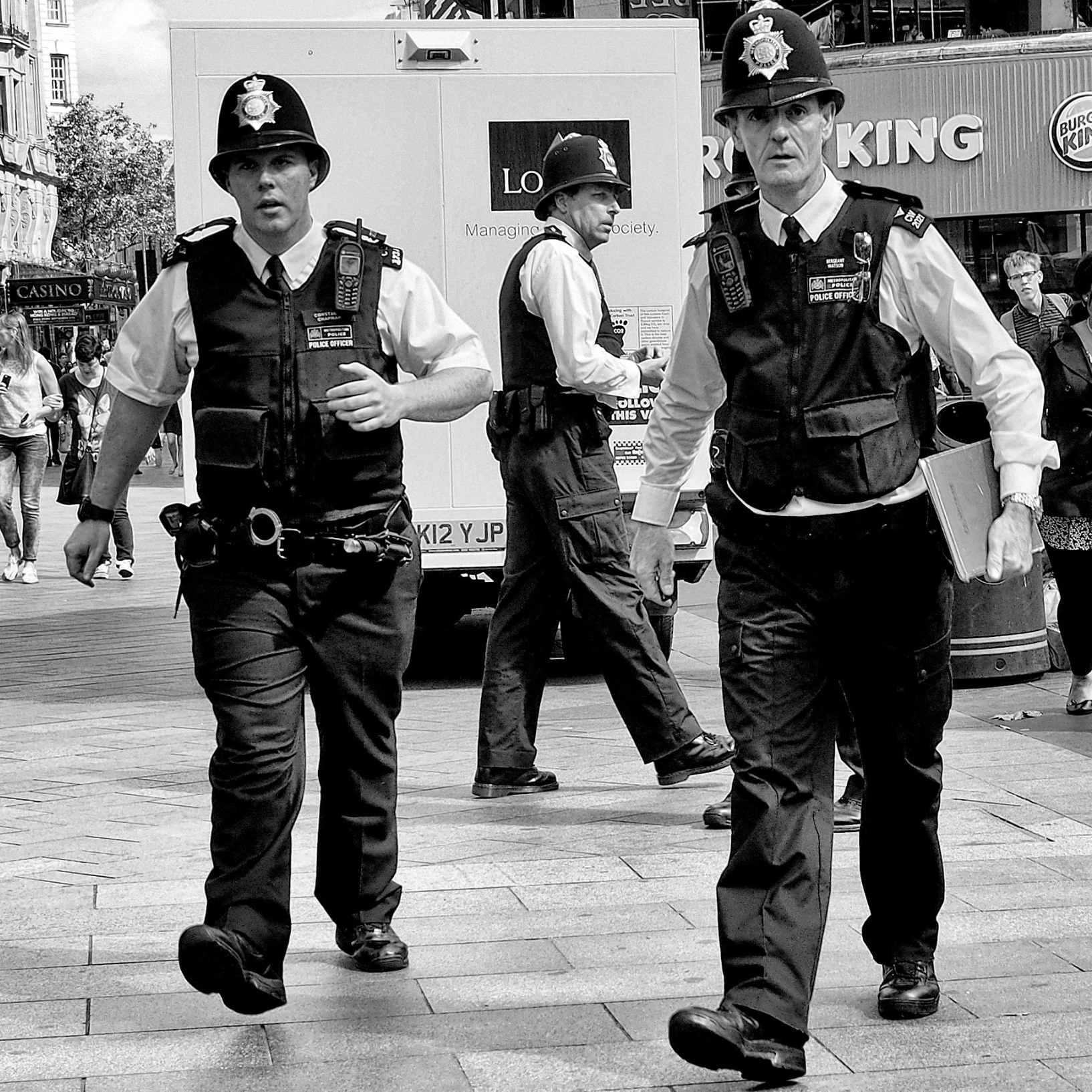
Michael Summers • Attribution-NonCommercial-NoDerivs (CC BY-NC-ND 2.0) Flickr


Sep 19, 2023 11:17 PM
The Met tends to protect its officers and defend their actions, even when those actions are seen as inappropriate or offensive by the wider public.
The Metropolitan Police Force in London has been found to be institutionally racist, sexist, and homophobic, according to a commissioned review led by Louise Casey. The report discovered that the force has been maintaining a culture of toxic masculinity and misogyny, leading to an environment where inappropriate behaviour and attitudes towards women and minorities are pervasive.
Casey's report comes as the Metropolitan Police has been battling a crisis of trust and accountability in its policing practices. This crisis has been highlighted by several high-profile cases, including the recent murder of Sarah Everard by a serving police officer and the subsequent mishandling of a vigil for her in March 2021.
The report highlights that the views held by police officers are not representative of the broader population they are meant to protect. It found that these views can manifest themselves in discriminatory actions towards women, people of colour, and members of the LGBTQ+ community.
Moreover, it found that the Met tends to protect its officers and defend their actions, even when those actions are seen as inappropriate or offensive by the wider public. The report discovered that the Met's culture of defensiveness and indifference towards criticism has been a significant barrier to change.
Related stories
The report also highlighted that there had been little progress in achieving diversity among the leadership of the Met. The review revealed that of the hundreds of senior leaders within the force, only a small number were from black, Asian, or ethnic minority backgrounds in 2021.
The review's findings add to the body of evidence which has exposed the institutional weaknesses of many policing institutions worldwide in dealing with racism, sexism, and homophobia. Critics argue that much more needs to be done to tackle these pervasive issues and to enable the police to live up to their public trust.
How individual discrimination and harassment contribute to institutionalised problems
Individual discrimination and harassment are carried out by one person against another, but they do not exist in a vacuum. They are underpinned by attitudes shaped by societal norms, beliefs, and values. When such attitudes are pervasive within an organisation, they contribute to institutionalised discrimination and harassment.
Discrimination and harassment can take many forms, including racial, gender-based, sexual orientation-based, and religious. When these acts are repeated over time, they establish patterns that become accepted as normal within the organisational culture.
Individual acts of discrimination and harassment harm the targeted individuals and contribute to a wider culture of disrespect and intolerance. Such acts undermine the integrity of the organisation and its ability to perform its duties effectively. In the case of the Metropolitan Police, officers have been found to be complicit in abusing their positions of power, causing damage to the community's trust in the police force. Instances of police misconduct and the prevalence of unlawful arrests among minorities create a culture of exclusion and discrimination.
The impact of institutionalised discrimination and harassment can also be seen in who is and is not recruited or promoted within the organisation. When a culture of discrimination exists within an organisation, it can be harder for people from underrepresented groups to enter, progress, or remain.
The impact of unconscious bias in policing
Research has shown that unconscious bias can affect policing practices at every stage of the criminal justice system, from initial interactions between police and potential suspects to decision-making in court. For example, studies have found that police are more likely to use force and make arrests during encounters with black individuals, even when controlling for other factors such as criminal history.
One potential source of unconscious bias in policing is using heuristics or mental shortcuts when making decisions. For example, a police officer may have a mental image of what a typical criminal looks like and unconsciously apply this stereotype to individuals they encounter, leading to the over-policing of certain demographics.
The consequences of unconscious bias in policing can be severe, leading to negative outcomes such as wrongful arrests, excessive use of force, and escalating conflicts. Furthermore, the impact of these biases is not limited to the individuals involved in specific incidents but can also erode trust in law enforcement and perpetuate broader societal prejudices.
Much more work must be done to ensure that law enforcement practices are fair and equitable for all communities. This includes training and education for individual officers and addressing broader societal issues, such as racism and sexism, which may contribute to unconscious bias.
How to file a civil rights complaint against police
Filing a civil rights complaint against police can be a daunting process. However, it is important to stand up for your rights and take legal action if necessary. The panel of solicitors at ClaimExperts.co.uk can guide you through the process of filing a police complaint and help build a strong case. You can visit their site here - https://www.claimexperts.co.uk/police-complaints/.
It is crucial to gather any evidence or witness statements that support your claim. Additionally, keep in mind that there are strict deadlines for filing these types of complaints, so it is important to act quickly. With the help of experienced solicitors, you can seek justice and hold law enforcement officials accountable for any violations of your civil rights.
Comments

Powered by RoundtableAn AI/DeFi-powered Enterprise Media Operating System. Learn more at Roundtable.io.© Roundtable 2026. By using this site you agree to the Terms of Use and Privacy Policy