
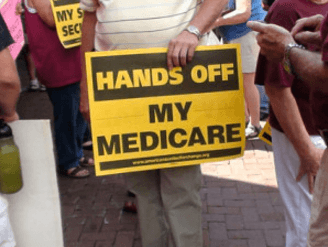


GOP Secretly Planning to Gut Medicaid, Medicare
Apr 3, 2025 7:00 AM
Updated Apr 7, 2025 3:25 AM
Healthcare experts anticipate several key policy shifts that could reshape both programs substantially in the coming months and years.
The Trump administration's return to the White House signals potential significant shifts in America's healthcare landscape, particularly for the Medicare and Medicaid programs that serve millions of elderly, disabled, and low-income Americans. While specific policy details are still emerging following President Trump's January 2025 inauguration, his past healthcare positions and recent statements offer insights into likely directions for these critical safety net programs.
“During his first administration, Trump supported efforts to transform Medicaid into a block grant system, giving states fixed funding and greater flexibility to administer their programs.”, says Medicare lawyer, Nicholoson & Eastin. This approach is likely to resurface. Meanwhile, his views on Medicare have evolved, moving from promises to protect the program to more recent endorsements of efficiency-focused reforms.
Healthcare experts anticipate several key policy shifts that could reshape both programs substantially in the coming months and years.
For Medicaid, the administration is expected to accelerate the approval of state waivers that would allow work requirements for able-bodied beneficiaries. Several states attempted to implement such requirements during Trump's first term, though many faced legal challenges. The administration may also pursue legislative changes to convert Medicaid funding to a per-capita cap or block grant model, potentially limiting federal expenses but raising concerns about reduced coverage during economic downturns.
Related stories
Another likely focus will be a rollback of the Medicaid expansion that was implemented under the Affordable Care Act. While full repeal might be challenging, the administration could pursue administrative changes that make it more difficult for expansion enrollees to maintain coverage or that reduce benefits.
For Medicare, which serves primarily older Americans, the administration has indicated interest in expanding privatization through Medicare Advantage plans. These privately-administered alternatives to traditional Medicare have grown significantly in recent years, and the administration may introduce policies that further favor this approach.
Prescription drug pricing, a focal point during the campaign, may see reform through market-based approaches rather than direct government negotiation. The administration has expressed a preference for increasing competition and transparency while reducing regulatory barriers for pharmaceutical companies, in contrast to the price negotiation mechanisms recently implemented under the previous administration.
One of the most consequential potential changes involves the financial structure of Medicare itself. Several conservative policy organizations allied with the administration have advocated for raising the eligibility age above 65 and introducing means-testing that would require higher-income seniors to pay more for their coverage. While politically challenging, such proposals could gain traction as discussions about Medicare's long-term solvency intensify.
The administration has also signaled interest in expanding telehealth services and digital health options within both programs, building on innovations that accelerated during the COVID-19 pandemic. This approach could improve access for rural populations while potentially reducing costs.
Stakeholder reactions to these anticipated changes have been predictably divided. Healthcare industry groups have generally welcomed the potential for reduced regulations and greater state flexibility, while patient advocacy organizations have expressed concerns about potential coverage losses and increased out-of-pocket costs for vulnerable populations.
The Congressional Budget Office has not yet scored any formal proposals, but past analyses of similar approaches suggested that federal spending on these programs could decrease significantly over time. However, those same analyses indicated that such savings would likely come partly from reduced enrollment and coverage.
Implementation timelines remain uncertain, as major structural changes would require congressional approval in most cases. With current congressional dynamics, dramatic legislative overhauls may face significant obstacles. However, the administration retains substantial authority to reshape these programs through regulatory changes, demonstration projects, and guidance to states.
Healthcare providers are preparing for potential disruptions to payment systems and coverage patterns. Hospitals that serve large Medicaid populations are particularly concerned about financial impacts if enrollment decreases substantially or payment rates are reduced under new funding models.
States themselves face difficult decisions if Medicaid funding mechanisms change. Republican-led states may welcome the flexibility of block grants, while states with Democratic leadership have already indicated they would challenge such changes legally and seek to maintain current coverage levels.
For individual beneficiaries, the practical implications could vary widely depending on state of residence, income level, and health status. Rural Americans might benefit from telehealth expansions but could face challenges if local healthcare facilities struggle financially under new payment models.
As these policy directions develop from broad outlines into specific proposals, the debate will likely intensify around fundamental questions about government's role in healthcare and the appropriate balance between fiscal sustainability and coverage guarantees. What remains clear is that significant changes to America's health safety net programs are on the horizon, with consequences that will reverberate throughout the healthcare system and affect millions of Americans who depend on these vital services.
Comments

Powered by RoundtableAn AI/DeFi-powered Enterprise Media Operating System. Learn more at Roundtable.io.© Roundtable 2026. By using this site you agree to the Terms of Use and Privacy Policy