


Sep 20, 2025 7:00 AM
Updated Sep 24, 2025 10:56 PM
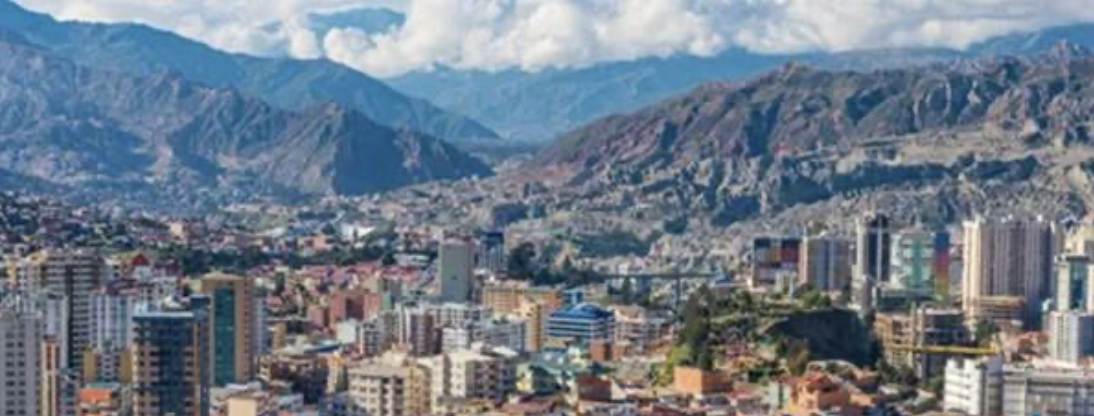
La Paz is no ordinary capital. Sitting on the Altiplano Andes plateau, it is surrounded by rainbow-colored mountains and guarded by the iconic Mt. Illimani, which rises like a watchful giant.
When travelers from South Korea picture South America, Bolivia may not be the first country that comes to mind. Yet the capital, La Paz, perched high in the Andes, is one of the most surprising destinations you could choose. It is a city where modern teleféricos glide across mountain ridges, markets spill over with tradition, and the air itself reminds you that you are far from sea level. As of January 2025, Bolivia is open to international travelers with no reported restrictions, though it is always wise to confirm with your local Bolivian embassy before making the trip.
La Paz is no ordinary capital. Sitting on the Altiplano Andes plateau, it is surrounded by rainbow-colored mountains and guarded by the iconic Mt. Illimani, which rises like a watchful giant. The altitude is unrelenting; even simple walks feel like uphill treks. The author of a well-known travel guide once admitted, “I felt I was trekking throughout,” except in lower regions such as Santa Cruz and Samaipata. To cope, Bolivians turn to coca leaves, chewing them or brewing coca tea. Former president Evo Morales famously chewed them at a UN meeting and asked, “how could I have eaten them if they were drugs,” a line that convinced the UN to recognize domestic use.
Finding your base in this unusual city is part of the adventure. From family guesthouses to boutique stays, travelers often search for a comfortable hotel around lapaz, and the range can surprise you with both price and atmosphere. Some are located in bustling neighborhoods, while others look out over the steep hillsides crossed by cable cars. Each has its own charm, but all share the same high-altitude backdrop that defines daily life here.
Despite its challenges, La Paz offers travelers an unmatched cultural immersion. The pace of life here is slower than in many capitals, though the city buzzes with markets, street food, and endless graffiti art. Teleféricos soar above steep neighborhoods, turning daily commutes into panoramic rides. On the ground, you might notice women known as Cholitas—wearing fluffy skirts, braided hair tied with ribbons, and bowler hats. Their traditional style has become iconic across the nation.
Related stories
Safety is often a concern for first-time visitors, but personal accounts from travelers are reassuring. During a one-month trip, one writer reported no incidents of theft or danger. Rumors of taxi kidnappings in La Paz exist, yet she found drivers to be kind, sometimes even going out of their way to help. The key is to use registered taxis arranged through your hotel. Pickpocketing can occur in places like El Alto, so keep belongings close, preferably in a money pouch. Buses, while cheap, require caution. Regular lines may involve scams or delays, while tourist services such as Todo Turismo are far more reliable. Always photograph your ticket, carry local cash, and try to arrive in new cities during daylight.
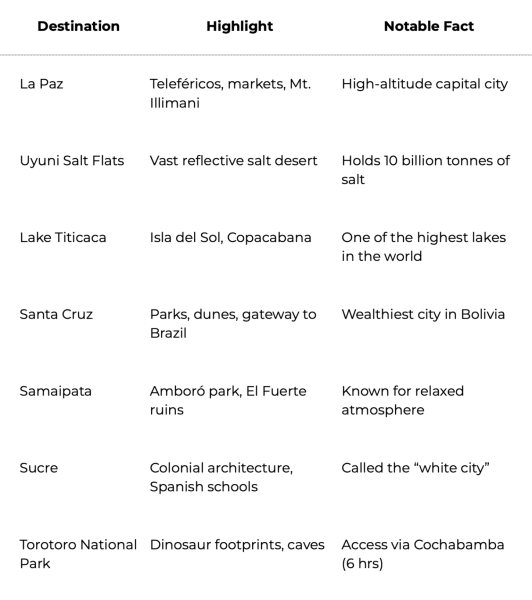
La Paz is also a starting point for many of Bolivia’s spectacular landscapes. Within the country you will find the Uyuni salt flats—ten billion tonnes of dazzling white hexagons that become a mirror after rain—Lake Titicaca with its sacred Isla del Sol, the wealthy eastern city of Santa Cruz, the peaceful village of Samaipata, and the white colonial town of Sucre. Torotoro National Park, reached from Cochabamba, even holds dinosaur footprints and surreal canyons.
To help you orient your trip, here is a simple overview:
The people of Bolivia number around eleven million (2018). Official languages are Spanish, Quechua, and Aymara. Roughly 47% of citizens are indigenous Aymara or Quechua, 30% are mixed, and about 12% are of European descent. Service may come with a straight face rather than enthusiasm, which many visitors interpret as rudeness. In truth, it reflects the country’s hardships and lack of formal hospitality training.
When to go? Summers (November to March) bring sunshine and occasional rain. Winters (May to September) are cold and dry. The best months are spring to early summer, when “golden sunshine” fills the valleys and rain is minimal.
Travel costs are gentle on a visitor’s wallet. A hostel bed in Santa Cruz might cost 80 bolivianos (about 12 USD), while a shared room in Copacabana runs about 10 USD per person. Meals can be as cheap as 4–5 bolivianos for a set menu, though restaurants in tourist areas may charge up to 30 bolivianos. A domestic flight, such as La Paz to Santa Cruz, can be found for about 523 bolivianos (75 USD).
If you are planning your first days in La Paz, here are five practical steps to consider:
- Rest and adapt to the altitude before rushing into sightseeing.
- Try coca tea in your hotel or from a market stall.
- Use the teleféricos for both transport and stunning views.
- Visit Mercado 16 de Julio and the Witches’ Market for a taste of local life.
- Arrange longer tours—to Uyuni or Lake Titicaca—only once you feel comfortable.
Packing for La Paz requires balance. Days may be sunny but winds bite quickly at this altitude. Bring warm jackets, sturdy shoes, wool socks, a rain jacket, sunscreen, and altitude pills. Locals rarely wear shorts, though in warmer Santa Cruz or Samaipata you may feel more comfortable in lighter clothes. Essentials like a Lifestraw water bottle, a memory foam travel pillow for long bus rides, and even a small first-aid kit will serve you well.
Food in Bolivia is hearty and meat-heavy. Expect soups with beef or chicken even when you request otherwise, though vegetarian travelers may find quinoa-based dishes or prepare meals in hostel kitchens. Don’t miss the chifa restaurants, a unique blend of Chinese and Bolivian cooking, which many travelers rave about.
La Paz is more than a city; it is a reminder of resilience in the face of thin air, steep streets, and turbulent history. From the March 23 marches against Chile to the voices in crowded markets, it is a living narrative of survival and pride. For South Korean travelers curious about a destination far from the beaten track, La Paz offers not just a trip, but a lesson in how humans adapt to extremes. It is challenging, beautiful, affordable, and unforgettable—a city that demands you slow down, look around, and breathe, even if the air is thin.
Comments

Powered by RoundtableAn AI/DeFi-powered Enterprise Media Operating System. Learn more at Roundtable.io.© Roundtable 2026. By using this site you agree to the Terms of Use and Privacy Policy