

Photo by Thijs van der Weide


Home Improvement Consumer Protection Act
Apr 5, 2024 7:00 AM
Updated Apr 7, 2024 7:03 AM
For homeowners venturing into new home construction projects, MyHomeQuote offers a game-changing solution.
The Home Improvement Consumer Protection Act (HICPA) is a critical piece of legislation designed to protect consumers engaging in home improvement projects. However, a common question that arises is whether the HICPA covers new home building. This question is important as it can significantly impact contractors, homeowners, and the regulatory landscape of the construction industry. In this comprehensive guide, we will delve into the nuances of the HICPA and explore its applicability to new home building projects.
For homeowners venturing into new home construction projects, MyHomeQuote offers a game-changing solution. Our innovation-driven home service connects you with verified contractors in your local ZIP area in real-time. This seamless platform simplifies and accelerates the process of bringing your new home improvement projects to life. With our tailored approach and meticulous vetting process, homeowners can rest assured that they are getting the best value for their money while enjoying a stress-free experience.
Understanding the Home Improvement Consumer Protection Act
The HICPA is a state-level law that varies in its specifics across different jurisdictions. Its primary aim is to regulate transactions and contracts related to home improvements. Home improvements typically include renovations, remodels, repairs, and upgrades to existing residential properties. The HICPA sets forth guidelines for contractors and homeowners regarding contracts, warranties, disclosures, dispute resolution mechanisms, and consumer rights protection.
Related stories
Differentiating Home Improvements from New Home Building
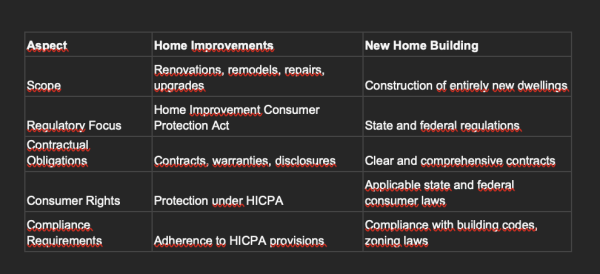
It's crucial to differentiate between home improvements and new home building to understand the HICPA's scope accurately. Home improvements involve altering or enhancing existing residential structures. On the other hand, new home building refers to the construction of entirely new dwellings, including custom-built homes and speculatively constructed residences from scratch. These two categories of construction have distinct regulatory considerations.
Applicability of the HICPA to New Home Building
The HICPA primarily focuses on regulating transactions related to home improvements rather than new home construction. This distinction is essential because the act's provisions regarding contracts, warranties, disclosures, and dispute resolution mechanisms are tailored to the specific nuances of home improvement projects. However, certain aspects of the law may indirectly impact new home builders, especially concerning consumer rights and contractual obligations.
For example, while the HICPA may not explicitly cover new home building contracts, it may still require contractors involved in such projects to adhere to fair business practices, provide clear and comprehensive contracts, and disclose relevant information to consumers. Additionally, some states may have specific regulations or consumer protection laws that govern new home construction, which builders must comply with.
Exemptions and Limitations
It's essential to note that while the HICPA may not directly apply to new home building contracts, other state or federal regulations may govern such transactions. Additionally, certain exemptions or limitations may exist based on jurisdiction, project scope, and contractual agreements. Builders and consumers alike should consult legal experts to ensure compliance with applicable laws and regulations governing new home construction.
Key Considerations for New Home Builders
Despite not falling under the purview of the HICPA, new home builders must prioritize transparency, honesty, and fairness in their dealings with consumers. Clear and comprehensive contracts, detailed project specifications, adherence to building codes, and ethical business practices remain paramount in fostering positive builder-client relationships and mitigating disputes.
Conclusion: Navigating Regulatory Landscapes in Residential Construction
In conclusion, while the Home Improvement Consumer Protection Act primarily addresses home improvement projects, its principles of consumer protection and fair business practices resonate across the broader spectrum of residential construction. New home builders must navigate regulatory landscapes, uphold ethical standards, and prioritize consumer satisfaction to thrive in the dynamic and competitive construction industry.
As the construction industry continues to evolve, staying informed about applicable laws, regulations, and best practices is crucial for builders, contractors, and homeowners alike. By understanding the nuances of the HICPA and other relevant regulations, stakeholders can ensure compliance, mitigate risks, and promote positive outcomes in new home building projects.
Key Differences Between Home Improvements and New Home Building
Comments

Powered by RoundtableAn AI/DeFi-powered Enterprise Media Operating System. Learn more at Roundtable.io.© Roundtable 2026. By using this site you agree to the Terms of Use and Privacy Policy