


Mar 26, 2026 7:00 AM
Updated Mar 31, 2026 1:43 AM
Learn how untreated addiction affects low-income families through housing instability, job loss, and unequal healthcare access, creating lasting emotional and financial strain.
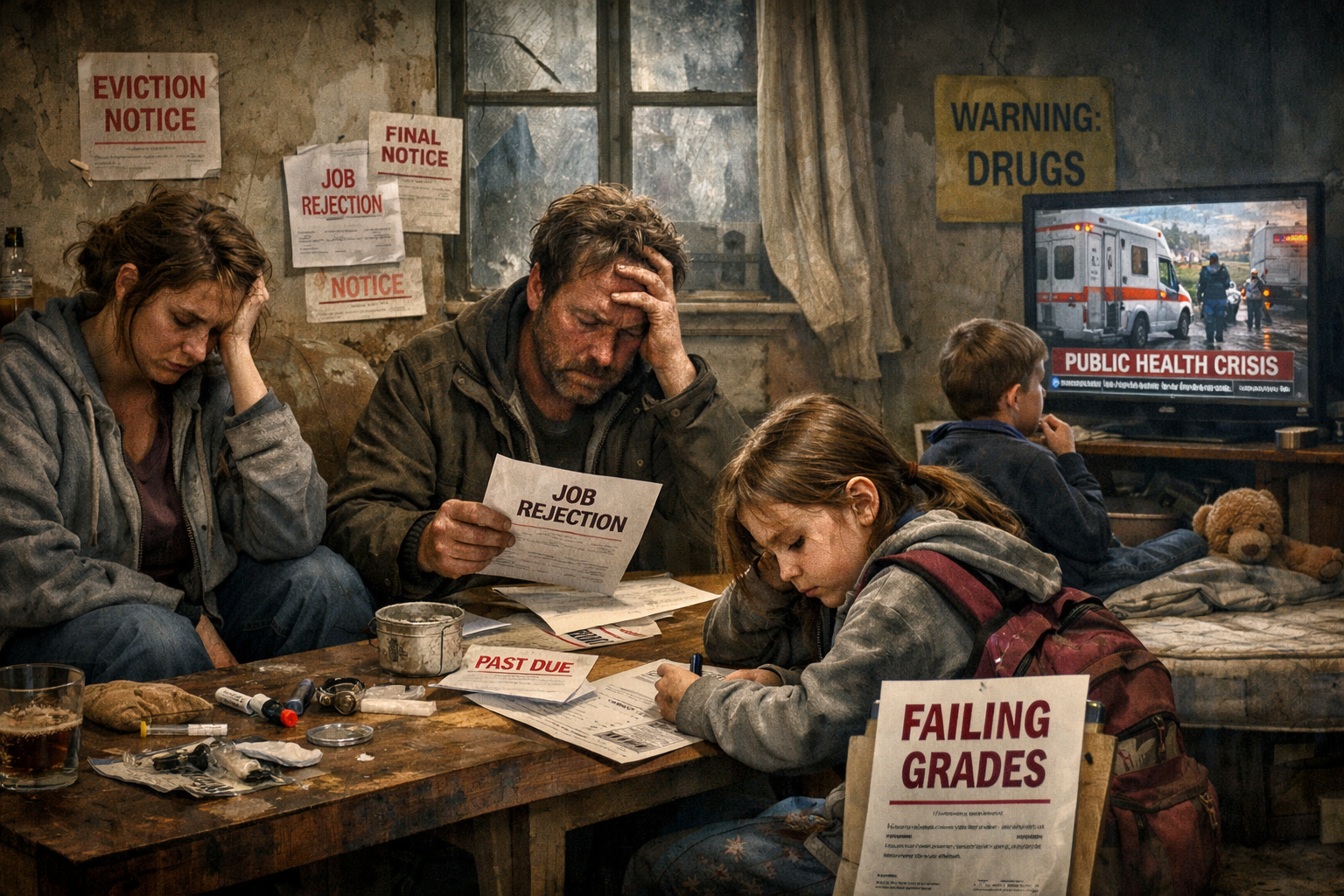
Addiction is often talked about like a personal failure, a private struggle, or a bad run of choices. But that framing misses something big. In low-income families, untreated addiction is rarely just one person’s problem. It becomes a housing problem, a job problem, a school problem, a childcare problem, and eventually a public health problem too.
That’s the part people don’t always see.
When treatment stays out of reach, the damage doesn’t stop with the person using substances. It spreads across the whole household. Rent gets harder to cover. Work becomes unstable. Children start carrying adult-sized stress. Medical issues pile up. Court fees, missed appointments, unpaid bills, and transportation gaps start stacking like dishes in a sink that never gets emptied. It is not dramatic every single day. Sometimes it looks ordinary. That’s what makes it so easy to ignore.
And yet the cost is enormous.
Related stories
Low-income families already live close to the edge. One setback can throw off the whole month. So when addiction enters that picture and treatment stays inaccessible, the result is not just pain. It is a deeper kind of precarity, one that keeps families trapped in crisis long after outside observers stop paying attention.
When survival mode becomes the family routine
For many low-income households, daily life already runs on careful math. How much is left after rent? Can the electric bill wait? Is there enough for gas, groceries, or the co-pay? Then addiction enters the picture, and the margin for error disappears.
A missed shift matters. A lost job matters more. A relapse during a week when the rent is due can ripple across an entire household. Suddenly there is an eviction notice on the door, or the phone service gets cut off, or the refrigerator is mostly empty by Wednesday. Children notice all of it, even when adults think they’re shielding them.
Small disruptions do not stay small
In wealthier families, addiction can be buffered for a while by savings, private insurance, paid leave, or relatives with resources. In lower-income homes, those buffers often do not exist. There is no soft landing. A missed paycheck is not a setback. It is a crisis.
This is why untreated addiction hits poor families harder. It is not because they care less or try less. It is because the system gives them fewer ways to recover from anything.
And honestly, that reality gets dressed up in moral language all the time. People say families need to make better choices. But choice sounds different when you are deciding between paying for treatment intake, keeping your job, and finding someone to watch your kids.
The household starts bending around the addiction
Families adapt because they have to. One person starts covering more bills. A grandparent steps in with childcare. A teenager gets a part-time job sooner than they should. Somebody learns how to talk to landlords, schools, or employers in a calm voice while chaos hums in the background.
That adaptation can look like resilience. Sometimes it is. But it is also exhausting.
Low-income families become experts at patching holes. They stretch money, time, and emotional energy past the point where any of it should stretch. The trouble is, patching is not healing. You can keep a family afloat for a while with borrowed help and raw determination. You cannot build long-term stability on that.
Housing instability turns treatment into a moving target
It is hard to recover when you do not know where you will sleep next month. That sounds obvious, but policy conversations often treat housing and addiction as separate categories. They are not separate in real life. They are tangled together.
A family dealing with addiction may also be facing overcrowding, unsafe housing, temporary motel stays, or the threat of eviction. Recovery needs routine, follow-through, and a basic sense of safety. Housing instability destroys all three.
Recovery is hard when your address keeps changing
Think about what treatment often requires. Intake paperwork. Insurance verification. Transportation. Scheduled counseling. Prescription management. Follow-up appointments. Group attendance. Phone access. A stable place to rest. Safe storage for medication. Childcare. Reliable contact information.
Now picture trying to keep all of that straight while couch surfing, dealing with a landlord dispute, or moving your family from one relative’s home to another because rent went up again.
This is one reason access to Substance Abuse Treatment matters far beyond the treatment center itself. Families do not only need a clinical response. They need care that understands the real shape of instability and works with it, not against it.
Homelessness risk changes family dynamics fast
Once housing becomes shaky, the stress inside the home shifts. Conflict rises. Privacy disappears. Children lose routines. Parents become more reactive, not because they are cruel, but because they are depleted. Sleep gets worse. Everyone is on edge.
And addiction thrives in instability. Not because people want it to, but because fear, trauma, and uncertainty are powerful triggers. If the home does not feel safe, if the future feels blurry, substances can start to look like relief, even when they are wrecking everything else.
That is one of the cruel contradictions here. Families need stability to support recovery, but addiction itself often makes stability harder to hold onto.
Work, wages, and the punishment of being poor
Employment is often treated like the fix. Get a job, keep a schedule, stay busy, move forward. There is truth in that, sure. But low-wage work can also make treatment harder to access, not easier.
If you are paid hourly, missing time for assessment, detox, therapy, or court-related recovery requirements may cost you your job. If your employer has no paid leave, every appointment carries a price tag. If your schedule changes week to week, consistent treatment becomes a logistical mess.
You cannot heal on a schedule that keeps changing
A lot of low-income workers live under strict attendance rules. Be late twice, and you are written up. Miss a shift, and your hours get cut. Ask for flexibility too often, and suddenly you are no longer a good fit. That language is common. It sounds neat and professional. But for families already hanging on by their fingertips, it can be devastating.
Untreated addiction often leads to job loss. But the reverse is also true. Job precarity helps keep addiction untreated.
There is also the issue of stigma. A worker dealing with substance use may hide symptoms, avoid asking for help, and try to push through until things blow up. That happens in offices too, of course, but low-wage workers usually face harsher consequences and fewer safety nets. No union support. No generous benefits package. No quiet medical leave. Just missed hours and mounting pressure.
Poverty charges interest on every mistake
That is what people miss. Poverty charges interest on every problem. A missed bus can become a missed shift. A missed shift can become a smaller paycheck. A smaller paycheck can become unpaid rent. Unpaid rent can become a move, a school transfer, a broken support system, and another wave of stress that fuels more substance use.
It is not one event. It is a chain reaction.
And families live inside that chain reaction every day.
Unequal healthcare leaves families to improvise
Healthcare access in the United States is still sharply uneven, and addiction treatment exposes that gap in brutal ways. Insurance networks are limited. Waitlists are long. Outpatient options may be thin. Detox services may be far away. Mental health care is often split from substance use care even when both problems are clearly feeding each other.
For low-income families, those gaps are not abstract policy concerns. They shape whether help arrives early or far too late.
When care exists on paper but not in practice
You can technically have insurance and still have almost no real access to treatment. The provider list may be outdated. The nearest option may be too far. The available program may not fit your language, your schedule, or your family responsibilities. A parent may be told to attend several times a week with no help for childcare. Someone with co-occurring depression may get bounced between systems.
That kind of fragmented care wears people down.
And then comes the judgment. If a patient drops out, misses intake, or delays treatment, the story often becomes that they were not ready. Sometimes that is true. But a lot of the time, the system was not ready for them.
For families in the Northeast, access points like NJ Drug Addiction Rehab can matter because geography, insurance compatibility, and actual program availability shape real outcomes. Treatment is not just about willingness. It is about whether care is reachable, affordable, and built for real life.
Children absorb the cost without choosing any of it
Kids in these households do not need a full explanation to feel the strain. They notice the tension over money. They notice the missed work, the unstable moods, the arguments, the silence after the arguments, the adults who are physically present but emotionally checked out.
Some children step into helper roles early. Others withdraw. Some act out at school. Some become perfectionists because order feels safer than uncertainty. That emotional toll does not vanish once the immediate crisis passes. It can shape educational outcomes, health, trust, and future relationships for years.
So when people ask what untreated addiction costs, the answer is not only dollars spent on emergency care or public services. The answer includes lost childhoods, chronic stress, interrupted schooling, and families forced to function with too little support for too long.
This is not just personal pain. It is a policy failure.
Addiction in low-income families is often described in intimate terms, and yes, it is intimate. It lives in kitchens, bedrooms, school mornings, and exhausted late-night conversations. But it is also political. Very political.
When housing is unstable, wages stay low, healthcare stays uneven, and treatment remains hard to reach, addiction does more damage because the surrounding system leaves people exposed. That is not accidental. It is the predictable result of public choices.
The cost spreads outward, whether people admit it or not
Untreated addiction increases emergency room visits, family court involvement, foster care pressures, school disruptions, lost productivity, and neighborhood instability. Public systems end up paying anyway. The bill just comes later, in harsher forms, after more harm has already settled in.
Here’s the thing. Early care is cheaper than a crisis. Stable housing is cheaper than emergency shelter. Accessible treatment is cheaper than repeated hospitalization, incarceration, or family separation. But those savings usually show up in different budgets and different agencies, so the larger picture gets missed.
That fragmented thinking hurts real people.
Families need more than lectures
Low-income families do not need another sermon about responsibility. Most already carry too much responsibility. They need treatment access that meets the conditions they are actually living in. They need housing support, reliable transportation, fair work protections, childcare options, and healthcare that treats addiction like health care, not moral theater.

Because untreated addiction does not stay contained. It spills into every corner of family life. It drains money, peace, safety, and time. It can turn ordinary hardship into long-term damage. And in communities already burdened by inequality, that hidden cost is not really hidden at all. People living it can see it clearly.
The real question is whether the rest of us are willing to see it too.
Comments

Powered by RoundtableAn AI/DeFi-powered Enterprise Media Operating System. Learn more at Roundtable.io.© Roundtable 2026. By using this site you agree to the Terms of Use and Privacy Policy