
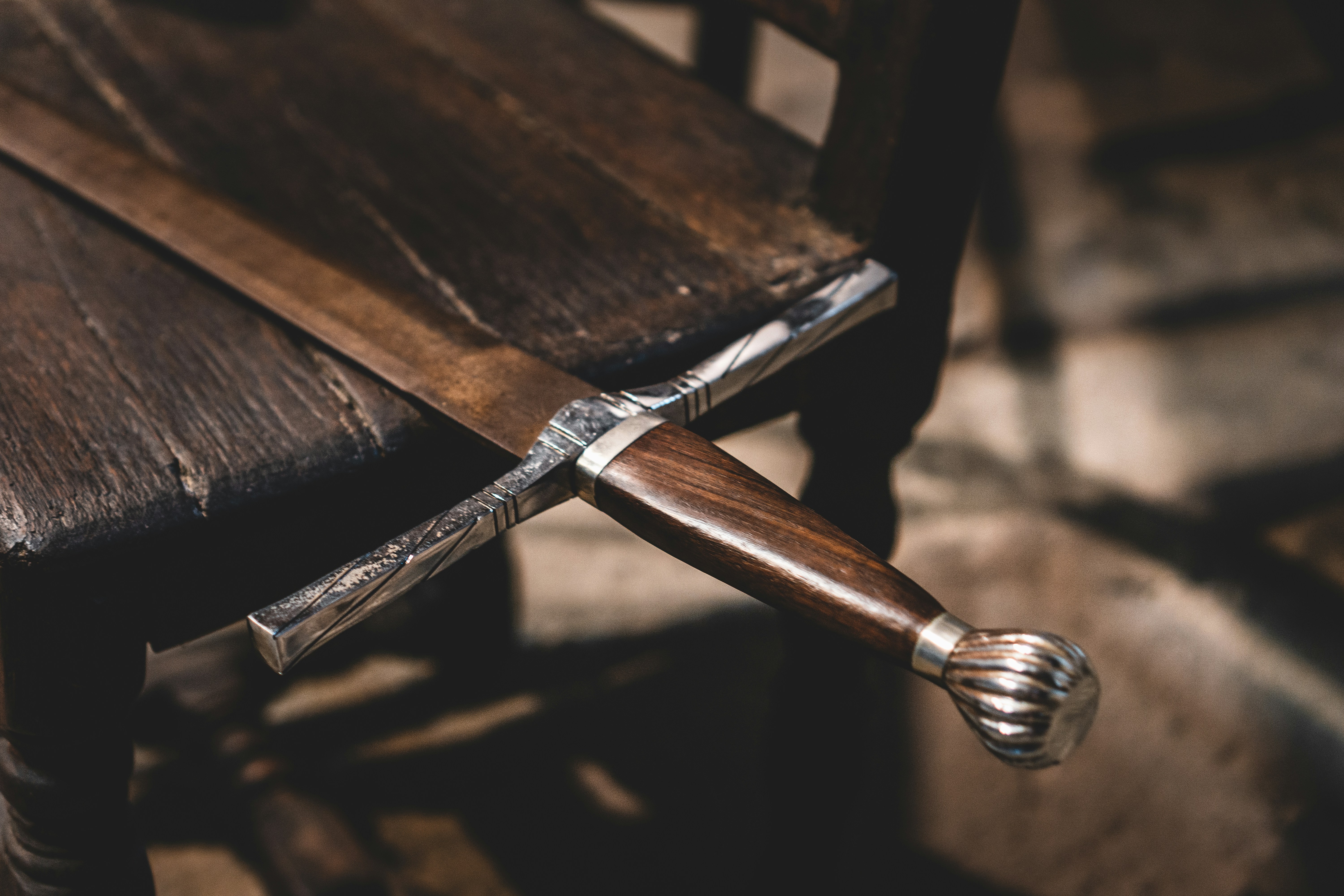
Photo by Jonathan Kemper on Unsplash


Nov 25, 2025 8:00 AM
Updated Nov 29, 2025 9:39 PM
The bastard sword was a weapon of war that was deadly and reliable as well, so knights, and men-at-arms, and also mercenaries chose it for its superiority in fighting at close quarters.
The versatile design and presence of the legendary weapon, The hand and a half sword, have without doubt changed the course of history forever with a strong aura on the battlefield. During the tumultuous and stormy period of the Middle Ages the sword was getting perfected.
It was a very important step forward in sword design. The sword's grip was longer and the blade was tapering giving the soldiers more choices, hit with power, and longer distance in fighting.
The bastard sword was a weapon of war that was deadly and reliable as well, so knights, and men-at-arms, and also mercenaries chose it for its superiority in fighting at close quarters. In this comprehensive study, we follow the sword from medieval times to its lasting impact on modern martial arts.
The Birth of the Bastard Sword
The bastard sword, or the épée bâtarde in French and spada bastarda in Italian, came to be the characteristic weapon of late medieval Europe. It was the "hand-and-a-half" sword that spanned the range from one-handed arming swords to two-handed greatswords and represented the adaptability of martial technology to the transition from mail to plate armor.
Related stories
The design of the bastard sword evolved along with the martial needs. At first, the sword was made so that it could easily penetrate mail armor, then the blade became wider and stronger when plate armor took over, as this new protection needed a weapon able to deliver the strongest blows. The adaptation of the sword to the armor of the time shows not only the blacksmiths' creativity but also the influence of the sword on the weapons of that period.
Balance Between One-Hand and Two-Hand Combat
The design of the bastard sword is an example of perfect balance and effectiveness. Normally, a sword measured 35 to 45 inches and the user enjoyed an incredible reach without any sacrifice of speed or control. The bastard sword thus became an excellent weapon for both slashing and thrusting, which was besides its non-killing attribute in warfare.
The fighters were provided with the chance to switch their moves even in the middle of the fight by for instance, blocking a heavy blow thanks to the one or two-handed grip of the handle. The sword was really easy to use because it was very well balanced, thus, the fighter could use fast and nimble movements that might catch the adversary unawares.
The bastard sword was an intermediate weapon between the longsword and the greatsword which made it a multifunctional weapon choice for the medieval soldiers. Its adaptability permitted the warriors to use either one-hand or two-hand style depending on the circumstances. The differences separating two main types are as follows:
- One-Hand Focused: Built for quickness and mastery, perfect for one-on-one fights or combined use with a shield.
- Two-Handed Focused: Turns season and power; good against armored foes and in the heat of the battle.
A constant investigation of ancient artifacts and modern reproductions has resulted in the categorization of bastard swords based on length, grip contour, and weight distribution that reveals the nuances of the weapon's capability to merge quickness and power in one blow.
The 4 mm thick blade, constructed of hardened steel 65G, is not only hard but also quick, a strength and speed masterpiece. The sword in hand, the imagined body movements are like water, every cut is made with speed and precision while the 0 cm balance from the crossguard keeps the sword, your control close to you, really each move a carefully calculated step towards defeat of the opponent. This splendid piece of work, which is a modern-night design, is 123 cm overall length, with a 90 cm blade, and a total weight of 2100 g. It seems that your skill is quite similar to it.
Modern Techniques and Training
The medieval warrior underwent the most rigorous and comprehensive training which enabled him to face the reality of the battlefield.For the individuals who spent their time on the practice of the bastard sword fighting, it was necessary to acquire a whole range of skills from the simplest strikes and blocks to the more sophisticated ones like feints and counter-attacks. The sword was given as a tool for the practitioner to switch his grip and master the situation, according to the teacher's instructions. The training consisted of fighting with other trainees, which sharpened their skills and toughened them up for actual combat.
At present, the art of bastard sword fighting is being reconstructed by the fans and specialists through the scrupulous examination of the ancient writings and chroniclers in order to bring back the dead practices. The contemporary fighters of Historical European martial arts (HEMA) are bringing back a technique that has been forgotten for centuries.
The Legacy Continues with Modern Smiths
The present-day blacksmiths are the ones who have the task of carrying on the centuries-old tradition of weapon-making and at the same time, they are creating swords that combine characteristics from both the past and present, the swords being appropriate for full-contact fights. Every sword incorporates the different attributes of length, weight, and grip, thus giving the fighters the choice to respond to any situation with precision and control.

Discover the assortment of medieval extreme's combat-ready bastard swords, which have been skilfully made to be perfectly balanced, last for a long time, and be good for tournaments. Ask for a customized consultation.
Comments

Powered by RoundtableAn AI/DeFi-powered Enterprise Media Operating System. Learn more at Roundtable.io.© Roundtable 2026. By using this site you agree to the Terms of Use and Privacy Policy