


GSA Compliance Challenges
Oct 11, 2024 7:00 AM
Updated Oct 16, 2024 12:50 AM
GSA compliance refers to the adherence of contractors to the specific rules, regulations, and guidelines set forth by the General Services Administration.
Maintaining compliance in GSA contracts is crucial for any business looking to successfully engage with the federal marketplace. The General Services Administration sets strict guidelines to ensure that all contractors meet government standards for pricing, performance, and accountability.
Non-compliance, on the other hand, can have serious consequences. Violations may result in financial penalties, loss of contract eligibility, and even disqualification from future government opportunities.
In this article, we will explore the most common GSA compliance challenges and provide practical tips for avoiding these pitfalls. Price Reporter, with its extensive experience in managing GSA contracts, can help guide businesses through these complexities and ensure long-term success.
Understanding GSA Compliance
GSA compliance refers to the adherence of contractors to the specific rules, regulations, and guidelines set forth by the General Services Administration. These rules are designed to ensure that vendors provide federal buyers with high-quality goods and services at fair, pre-negotiated prices while maintaining transparency and accountability throughout the duration of their contracts.
Related stories
Key Compliance Requirements
- Financial Transparency: Contractors must maintain and provide accurate financial records to demonstrate their ability to fulfill government orders.
- Pricing Rules and the Price Reductions Clause: One of the most critical aspects of GSA compliance is ensuring that pricing is competitive and consistent with the best deals offered by the GSA contractor to her commercial customers. The Price Reductions Clause mandates that the government must receive the same or better pricing than a contractor’s most favored customers.
- Audit Readiness: GSA contractors must always be prepared for government audits. These audits assess whether the contractor is complying with the terms of their contract, including pricing, financial stability, and service delivery.
- Product Catalog Updates: Keeping the product or service catalog updated on platforms like GSA Advantage is another key compliance requirement. Contractors must ensure that the descriptions, pricing, and specifications of their products or services are always accurate and reflect current offerings.
- Contract Modifications and Reporting: GSA contractors are required to promptly report any changes in their business operations that could affect contract performance, such as changes in pricing, product availability, or business structure. Additionally, regular reporting on contract performance, including sales and delivery metrics, is mandatory.
Consequences of Non-Compliance
Non-compliance may result in financial penalties, suspension or termination of the contract, and in severe cases, debarment from future government contracting opportunities. Moreover, a damaged reputation with federal agencies can make it difficult for a business to regain trust and secure new contracts in the future.
Common GSA Compliance Challenges
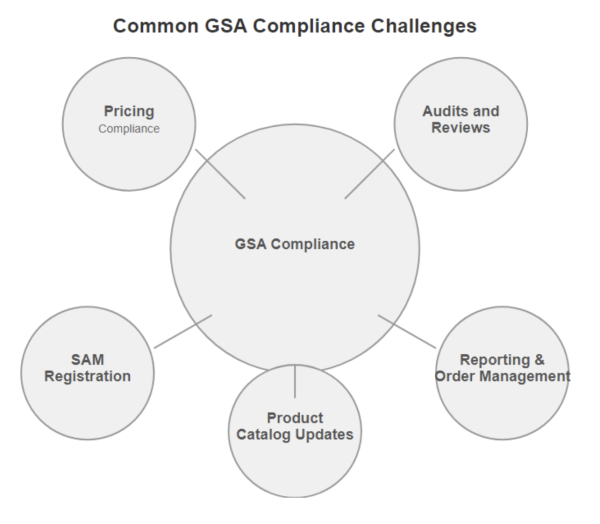
Compliance with GSA contracts can be challenging, particularly when navigating pricing rules, audits, and administrative tasks.
Pricing Compliance: The Price Reductions Clause
The Price Reductions Clause is one of the most important components of GSA contract compliance. It requires that GSA receive the same or better pricing than a contractor’s most favored commercial customer for similar terms and conditions.
Common Mistakes:
- Failure to Update Pricing: Contractors often forget or delay updating their GSA pricing when they offer discounts or promotional pricing to commercial customers.
- Inconsistent Discount Application: Some contractors misapply discounts inconsistently across their commercial and government pricing models, resulting in discrepancies that violate GSA regulations.
Impact of Failing to Comply:
- Non-compliance with the Price Reductions Clause can lead to severe penalties, including retroactive refunds to the government, contract cancellation, or even legal action.
Audits and Reviews
GSA contracts are subject to regular audits and compliance reviews to ensure that contractors meet the requirements set by the government. These audits assess a contractor’s financial records, pricing compliance, product catalogs, and overall performance under the contract.
Challenges:
- Maintaining Detailed Documentation: Many businesses struggle to keep accurate and up-to-date records of all transactions, contract modifications, and compliance-related activities. Inadequate documentation can cause delays during audits and lead to compliance violations.
- Unpreparedness for Audits: Contractors may not always be audit-ready, which can result in fines or contract suspension.
Importance of Being Audit-Ready:
- Businesses should have systems in place to ensure ongoing audit readiness. This includes maintaining organized records of pricing, transactions, and contract modifications.
SAM Registration and NAICS Code Accuracy
The System for Award Management is a mandatory registration process for businesses interested in federal contracts. Contractors must ensure that their NAICS codes are correctly aligned with their business activities and products.
Common Pitfalls:
- Incorrect or Outdated NAICS Codes: Contractors often choose incorrect NAICS codes that do not match their offerings or fail to update their codes when expanding into new service areas.
- Missing Updates in SAM Registration: Changes in business structure, ownership, or key personnel must be reflected in SAM.
Ensuring Correct Classification:
- Review your NAICS codes regularly to ensure they accurately represent the products and services you offer.
Product Catalog Updates and GSA Advantage Compliance
Contractors are required to keep their product or service catalogs updated on platforms like GSA Advantage. This includes maintaining accurate pricing, product descriptions, and specifications to ensure that government buyers receive current information.
Challenges:
- Maintaining Accurate Descriptions and Pricing: As product lines evolve and prices change, it can be difficult to ensure that GSA Advantage listings stay accurate. Inconsistent catalog updates can lead to buyer confusion and compliance issues.
- Non-Compliance Due to Outdated Listings: Failing to update product specifications and prices can result in non-compliance and may even lead to financial penalties and eventual suspension.
Avoiding Catalog Compliance Issues:
- Regularly review and update your GSA Advantage catalog to reflect any changes in your products or services.
Inconsistent Reporting and Order Management
Managing GSA contract performance involves consistent and timely reporting on sales, orders, and compliance metrics. However, some businesses struggle with meeting these reporting requirements.
Challenges:
- Inconsistent Reporting: Missing deadlines or providing incomplete reports can create compliance issues.
- Order Management Issues: Mismanagement of orders, such as delays in delivery or incorrect fulfillment, can lead to contract violations and harm relationships with government buyers.
Best Practices for Reporting:
- Implement a system for tracking and managing all reporting obligations to avoid missing deadlines or submitting incomplete data.
Practical Strategies for Avoiding Compliance Pitfalls
To maintain compliance with GSA regulations and avoid potential pitfalls, businesses must adopt proactive strategies. Below are four essential steps to ensure long-term compliance and successful contract management.
Establish a Compliance Management System
Setting up a robust compliance management system is the foundation for avoiding common GSA compliance issues. This system allows businesses to monitor their adherence to regulations continuously and ensures that potential problems are identified early.
Importance of Setting Up a System: A compliance management system helps automate and streamline tasks related to monitoring contract performance, pricing updates, reporting obligations, and documentation. By having a centralized system, businesses can reduce the risk of oversight and improve overall efficiency in contract management.
Tools and Software for Compliance Tracking: Numerous tools and software solutions are available to help automate compliance tracking. Tools like SAP Ariba, Coupa, or custom-built dashboards can simplify monitoring and reporting.
Assigning Dedicated Staff or Teams: Designate a compliance officer or a team to oversee GSA contract obligations. Having a dedicated team ensures that someone is always accountable for managing compliance tasks, responding to audits, and keeping records up to date.
Regular Internal Audits
Conducting regular internal audits is a proactive way to ensure your business is always prepared for official GSA audits. By reviewing compliance internally, you can identify any potential issues before they escalate into serious problems.
Why Internal Audits Are Essential: Regular audits allow you to detect and address compliance issues, pricing discrepancies, and reporting inaccuracies before GSA auditors discover them.
Steps to Ensure Audit-Readiness:
- Set a schedule for internal audits – Review your GSA contracts, pricing structures, and documentation at least quarterly.
- Use audit checklists – Create comprehensive checklists that cover GSA requirements, including the Price Reductions Clause, SAM registration, product catalog updates, and reporting obligations.
- Review documentation and financial records – Ensure all records, such as invoices, financial statements, and pricing agreements, are up to date and properly organized.
How to Identify and Fix Compliance Gaps: During internal audits, look for inconsistencies in pricing, outdated catalog information, or incomplete reporting. Correct these issues immediately to avoid penalties and delays when external audits occur.
Maintaining Accurate and Transparent Pricing
Pricing compliance is critical under GSA contracts, particularly when it comes to adhering to the Price Reductions Clause. Keeping your pricing structure adherent and transparent ensures that you avoid potential violations and penalties.
Tips for Transparent Pricing:
- Regularly review pricing agreements to ensure that the government is receiving the same or better terms than your top commercial clients. Keeping your pricing structure transparent involves documenting all discounts and promotions offered to other customers and ensuring that GSA pricing reflects those terms.
- Automate pricing updates using tools that track pricing changes for commercial customers and automatically adjust GSA prices when needed.
Methods for Tracking Pricing Changes:
- Implement pricing management software that monitors price changes across all sales channels and customer segments. Ensure that all pricing changes are reported to GSA in a timely manner to comply with the Price Reductions Clause.
- Conduct regular price audits to verify that GSA pricing remains competitive and consistent with your commercial offerings.
Training and Education
Ongoing training and education are key to ensuring that all staff involved in contract management are up-to-date with GSA regulations. Compliance rules can change, and regular training helps prevent knowledge gaps that can lead to violations.
Importance of Regular Staff Training: Employees who understand GSA compliance requirements are better equipped to manage contracts without making costly errors. Regular training sessions should cover critical areas such as pricing rules, reporting requirements, and audit preparation.
Staying Informed About Changes in GSA Rules: GSA regulations and guidelines evolve over time, and staying informed about these changes is crucial for maintaining compliance. Regularly review updates on the official GSA website, subscribe to GSA newsletters, and attend webinars or conferences that cover federal contracting regulations.
Resources for Ongoing Education: GSA offers various resources, including online training modules, webinars, and compliance guides, which can be accessed through their website. Additionally, industry associations, such as the National Contract Management Association, provide valuable insights and training for federal contractors.
The Role of Consultants in GSA Compliance
Navigating the complexities of GSA contracts can be overwhelming, especially for businesses new to the federal marketplace or those managing multiple contracts. This is where GSA compliance consultants can play a vital role in ensuring that companies stay on track and avoid costly mistakes.
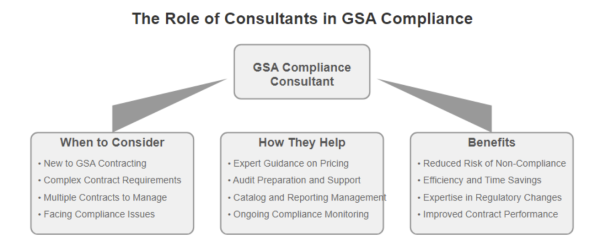
When and Why to Consider Working with a GSA Compliance Consultant
There are several scenarios when hiring a GSA compliance consultant becomes crucial for maintaining your business's competitive edge in the federal marketplace:
- New to GSA Contracting: If your company is just starting out with GSA contracts, consultants can provide expert guidance throughout the application process, helping you avoid pitfalls and ensuring a smooth entry into the federal marketplace.
- Complex Contract Requirements: Some industries, such as IT or construction, involve more complex contract requirements, including cybersecurity protocols, environmental standards, and pricing structures. A consultant can help navigate these specific challenges.
- Multiple Contracts to Manage: Businesses managing several GSA contracts simultaneously may struggle to stay compliant with each one’s unique terms. A consultant can streamline the process, ensuring that all obligations are met without overwhelming the company's internal operational teams.
- Facing Compliance Issues: If your business has faced penalties, pricing violations, or audit-related problems, a consultant can help rectify these issues and implement systems to prevent future occurrences.
How Consultants Help Businesses Avoid Common Compliance Pitfalls
GSA compliance consultants are experts in understanding and interpreting the complex regulations governing federal contracts. Here’s how they help:
- Expert Guidance on Pricing Compliance: Consultants ensure that your pricing is always in line with GSA’s strict requirements, particularly the Price Reductions Clause. They help set up systems to monitor and report pricing changes, minimizing the risk of non-compliance.
- Audit Preparation and Support: One of the key benefits of working with a GSA consultant is their ability to guide you through audits. They ensure that your documentation is complete, organized, and compliant with GSA standards, which significantly reduces the likelihood of penalties.
- Catalog and Reporting Management: Consultants ensure that product and service catalogs on GSA Advantage are kept up to date and in compliance with contract terms. They also manage reporting obligations, ensuring timely and accurate submissions of sales data, contract modifications, and other required information.
- Ongoing Compliance Monitoring: A GSA consultant can implement compliance management systems that provide ongoing oversight, making sure that your business stays audit-ready and compliant throughout the contract lifecycle. This includes regular internal reviews, catalog updates, and consistent monitoring of SAM registrations and NAICS codes.
Benefits of Professional Compliance Management Services
Engaging a professional GSA compliance consultant offers several advantages that can save your business time, money, and resources while minimizing the risk of contract violations:
- Reduced Risk of Non-Compliance: Consultants reduce the likelihood of errors that lead to non-compliance, helping your business avoid costly penalties, contract terminations, and loss of future opportunities.
- Efficiency and Time Savings: With a consultant handling the complexities of compliance, your internal teams can focus on other core business activities.
- Expertise in Regulatory Changes: A consultant stays informed about these changes and ensures that your business remains compliant with the latest requirements, avoiding potential issues stemming from outdated practices.
- Improved Contract Performance: By ensuring that all compliance obligations are met and contracts are managed efficiently, consultants help businesses improve their performance in the federal marketplace.
Conclusion
Maintaining GSA compliance is not only a regulatory requirement but a critical component of long-term success in the federal marketplace. By adhering to the strict standards set by the GSA, businesses can avoid costly penalties, maintain valuable contracts, and build trust with government buyers. Compliance ensures that your business remains competitive, reliable, and capable of meeting the demands of federal procurement.

To safeguard against common compliance pitfalls, companies must adopt proactive strategies, such as implementing a robust compliance management system, conducting regular internal audits, maintaining transparent pricing, and staying informed about regulatory changes. Working closely with a GSA compliance consultant, such as Price Reporter, can provide valuable expertise and support, ensuring your business remains audit-ready and compliant throughout the contract lifecycle. Price Reporter offers a full suite of services to help businesses manage their GSA contracts, from initial application to ongoing compliance management.
Comments

Powered by RoundtableAn AI/DeFi-powered Enterprise Media Operating System. Learn more at Roundtable.io.© Roundtable 2026. By using this site you agree to the Terms of Use and Privacy Policy