
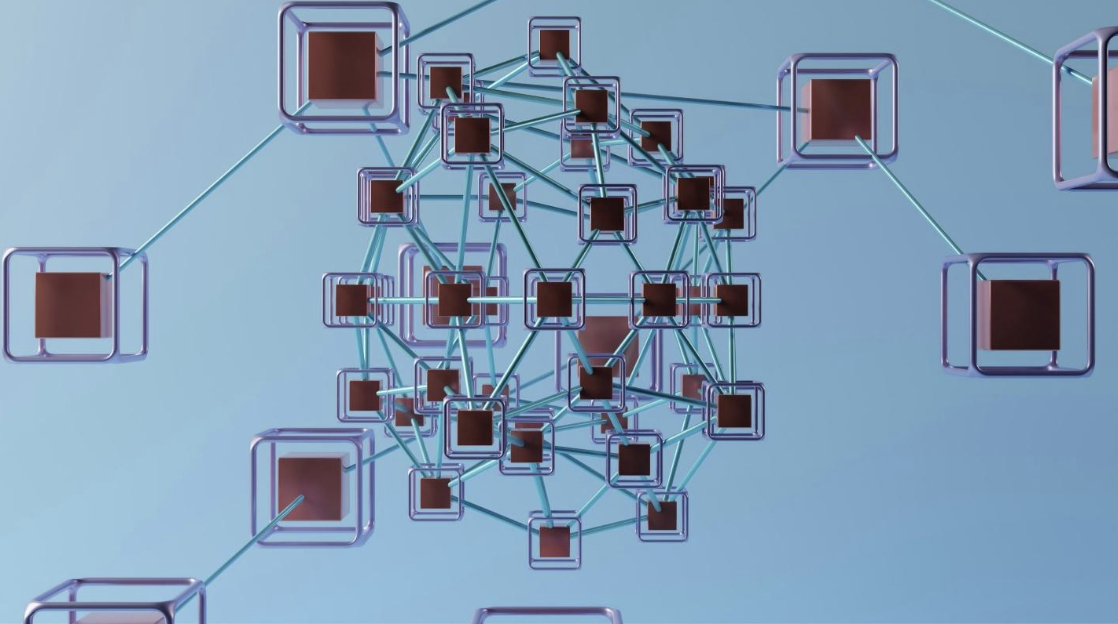


blockchain projects
Jan 13, 2025 8:00 AM
Updated Jan 17, 2025 4:08 AM
However, besides Ethereum, other promising blockchain projects emerge as an alternative to Ethereum’s high gas fees and scalability issues.
Blockchain projects are important for cryptocurrencies as they support transaction safety and efficiency. Since there are numerous types of blockchains, each with a different use case, some are more valuable than others. Ethereum, for instance, is an established blockchain whose smart contract tools allow developers to design unique decentralized apps.
However, besides Ethereum, other promising blockchain projects emerge as an alternative to Ethereum’s high gas fees and scalability issues. At the same time, they collaborate with well-known companies to bridge the gaps between decentralized organizations and centralized brands. Ton, for example, partners with Samsung, BitTorrent, and Opera, offering benefits such as low energy consumption and enhanced speed through the protocol. These collaborations can strengthen investors’ outlook on the Tron price as they can capitalize on its increasing use case within partners.
Such blockchain projects are significantly important for making decentralization more approachable, so let’s discover some digital ledger initiatives driving adoption.
The Tron protocol
The Tron blockchain focuses on user experience, scalability, and speed to reach a decentralized internet. Through its native token, TRX, developers and users access and benefit from dApps and smart contracts. The token is also essential for fast and cheap transactions since it covers fees in the absence of sufficient bandwidth points.
Related stories
Developers design and deploy dApp projects on Tron, and its architecture makes it efficient through its three layers:
- State storage;
- The core of smart contracts;
- Interfaces and wallets;
Tron’s Virtual Machine (TVM) is also an essential feature that offers compatibility with other blockchains, such as Ethereum, for creating and sharing decentralized applications. Developers choose Tron for its high throughput—it can handle about 2,000 TPS—but also for scalability and low transaction fees.
Therefore, the Tron blockchain has plenty of use cases in industries like gaming, where it enables building play-to-earn games. In multimedia, on the other hand, Tron establishes a decentralized peer-to-peer content ecosystem in which users and artists as well can share and capitalize on intellectual property.
The Stellar blockchain
The Stellar open-source protocol is a popular decentralized blockchain that supports cross-border transactions between digital currencies and even fiat money. The network targets organizations, as they can benefit from fast payment services to worldwide customers. Its native token, XLM, is a well-known cryptocurrency investment.
Stellar is highly efficient due to its:
- Consensus mechanism, the Federated Byzantine Agreement (FBA);
- Fast transaction speed, with conformation times within five seconds;
- Speedy processing of up to 1,000 operations per ledger;
Stellar became trustworthy in time, collaborating with companies like Deloitte to develop a payments app. The partnership was followed by banks signing up to use the Stellar blockchain for cross-border transactions, making the protocol popular among decentralized solutions for companies.
The ledger offers numerous use cases, but it’s fairly appreciated for enabling simultaneous validation for more accounts to eliminate delays and the complexity surrounding cross-border transactions.
The Qubetics Layer 1 solutions
Qubetics is a Web3 multi-chain aggregator that aims towards scalability, security, and interoperability in unifying blockchain solutions. The ecosystem offers some of the most advanced for developing decentralized applications. The project also focuses on online privacy, global payments, and decentralized finance.
The solution stands out through the decentralized VPN (dVPN), which confers worldwide users a superior form of VPN, different from centralized servers. The technology takes advantage of a decentralized node network, through which people connecting to public WiFi are protected from cyber threats.
Qubetics also provides a non-custodial multi-chain wallet, accepting popular solutions like Apple Pay and Google Pay. Due to the accessibility of the collaboration, users and companies can convert cryptocurrency into fiat money in no time. Another unique feature of Qubetics is the no-KYC policy, which ensures users' privacy while using crypto to their advantage.
The Fetch.ai solution
Artificial intelligence has been a catalyst for blockchain and cryptocurrency technology since it offered a new path to autonomous activities within networks. The open platform allows developers to build AI applications in an innovative infrastructure. Anyone can build and test their projects, deploy them, and run them on the blockchain.
Fetch.ai is also known as an open marketplace where investors and users can search and discover unique AI projects. Since developers have all the tools to integrate frameworks like LLMs or ML models, mastering the steep learning curve is not that difficult.
Fetch.ai can be used for:
- Optimized financial trading;
- Network reconfiguration;
- Decentralizing access to data;
- Exchanging information through autonomous agents;
Some of Fetch.ai's innovative products include an AI Engine through which developers monetize their apps, the Agentverse for building and listing agents, and the analytics option for improving research and discoverability.
The VeChain blockchain
VeChain is another solution for mitigating Web3. It supports the development of cross-industry business ecosystems to empower stakeholders. VeChain offers numerous benefits to organizations, from low-cost services to fast transactions. At the same time, the blockchain is EVM compatible and proposes free delegation and clauses.
VeChain also offers developers grants and solutions and documentation necessary to create decentralized applications and business solutions. The network has a unique two-token model that includes VET for utility and governance and VTHO for payments and incentives.
These tokens ensure a stable trading environment, which is great for transactions, business activities, and smart contracts. They also encourage enterprises to approach cryptocurrency and blockchain to secure predictable costs and user acceptance.
The average block time is about ten seconds, while operations costs are significantly low. With its stable and fast blockchain, VeChain achieved sustainability and made itself a leader among the green blockchains in the competition.
What do you think about the future of decentralization?

The future of technology and finance revolves around decentralization, a system in which there’s no central authority or one single point of failure. Decentralized systems allow users, validators, and miners to contribute to the health and efficiency of the network while receiving incentives for their collaborations. Of course, the blockchains they operate within are designed by talented developers who need better tools and ecosystems for innovative solutions. Among some of these blockchains, we find Tron, Qubetics, and VeChain shaping the future of decentralization in the real world.
Comments

Powered by RoundtableAn AI/DeFi-powered Enterprise Media Operating System. Learn more at Roundtable.io.© Roundtable 2026. By using this site you agree to the Terms of Use and Privacy Policy