


Aug 10, 2025 7:00 AM
Updated Aug 14, 2025 4:26 AM
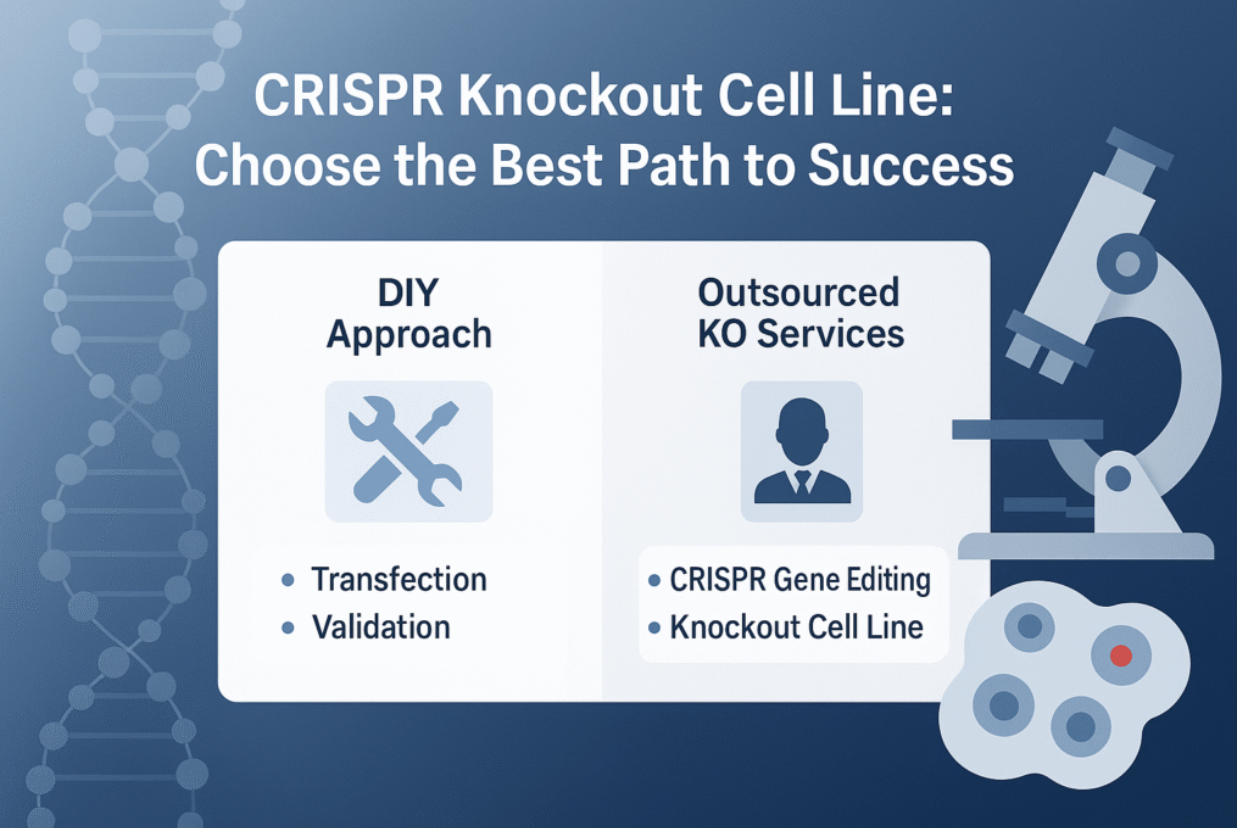
CRISPR gene editing looks deceptively simple on paper, but each step can easily derail your experiment if not executed carefully.
If you’ve ever spent weeks on a CRISPR knockout (KO) project only to find your clones weren’t actually knocked out—or worse, your cells wouldn’t even survive—you know the frustration firsthand. CRISPR gene editing looks deceptively simple on paper, but each step can easily derail your experiment if not executed carefully. So, what’s the smartest way to reliably generate KO cell lines?
This article provides a clear, practical guide, highlighting where most KO projects fail and what you can do to avoid those pitfalls, based on real-world lab experiences.
Why CRISPR KO Experiments Fail: Common Pitfalls
Researchers frequently underestimate critical steps when generating KO lines:
- Poor gRNA targeting causes high off-target rates.
- Inefficient transfection methods lead to low editing efficiency.
- Cell lines often resist single-cell cloning or fail to expand.
- Inadequate validation can result in false conclusions about gene function.
Related stories
Let’s break down these pitfalls and how to navigate them effectively.
Step-by-Step Workflow (with Real-World Examples)
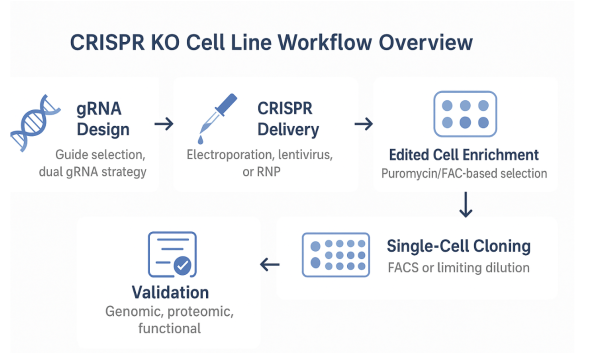
1. Smart gRNA Design
Selecting the right gRNA is more than picking a top-scoring sequence from a web tool. A poorly chosen guide once caused 70% off-target editing in a high-profile Nature study, leading to data retraction.
Pro tip: Choose dual-guide RNA designs targeting critical exons to improve reliability.
2. Optimized Delivery Methods
Not every cell responds well to standard methods. For instance, electroporation can reduce viability below 30% in primary T-cells. Lentiviral vectors are powerful but may integrate randomly, complicating downstream applications.
Best practice: Use delivery protocols tailored to your cell type (e.g., validated electroporation settings or non-integrative RNP delivery).
3. Single-Cell Isolation Challenges
FACS sorting may yield highly pure populations but stresses sensitive cells. Limiting dilution is gentler but slower and less precise.
Experienced labs typically pre-test single-cell viability, using supplements like ROCK inhibitors to boost cloning success.
In-House vs. Outsourced Knockout Cell Line Generation: Which Saves More?
Here’s a clear comparison between doing it yourself and using a professional KO cell line provider:
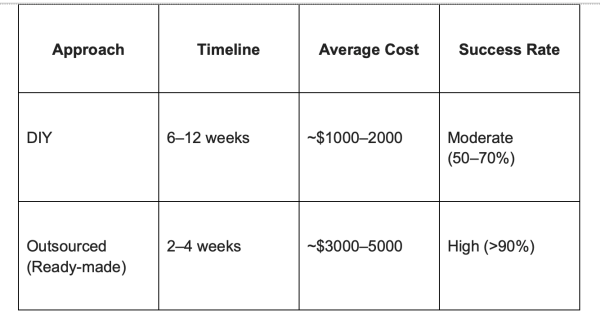
If your lab frequently runs into delays or inconsistent editing efficiency, outsourcing knockout cell line generation might actually be more cost-effective—especially when factoring in the hidden costs of failed experiments and troubleshooting.
Want to see what a fully validated, high-efficiency KO workflow looks like?
Click here to explore Ubigene’s knockout cell line generation process in detail.
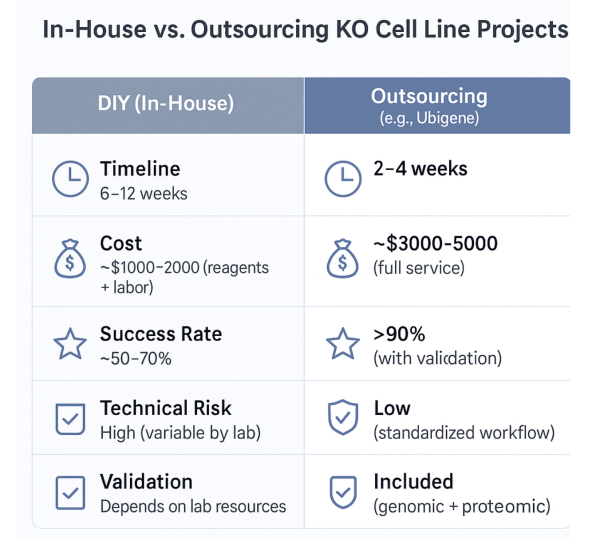
Choosing the Right CRISPR Gene Editing Strategy for Your Lab
Use the following decision guide to match your lab’s needs with the best gene editing approach:
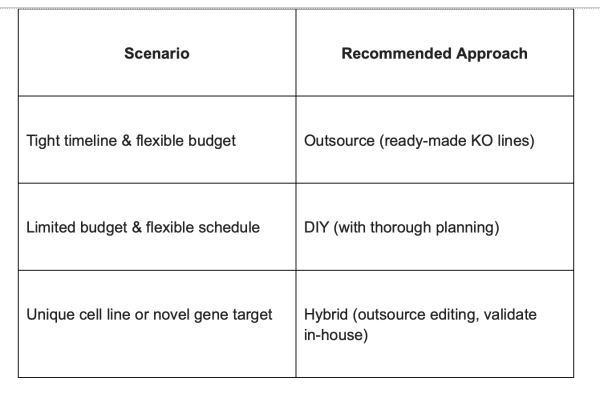
Whether you’re just getting started or scaling up existing efforts, selecting the right CRISPR gene editing service can greatly improve outcomes and efficiency.
To explore a full range of validated solutions—including gene knockout, knockin, point mutation, and stable cell line editing—
Click here to discover how Ubigene’s CRISPR gene editing platform supports research at every stage.
Common KO Cell Line Failures and Proven Solutions
Even well-planned KO projects encounter pitfalls. Here’s how to handle common failures:
- Clonal expansion failure:Supplement media with ROCK inhibitors; test cell-line sensitivity in pilot experiments.
- High off-target rates:Employ RNP delivery for transient editing; design dual-guide systems for precise targeting.
- Incomplete protein loss:Use multiple gRNAs targeting critical exons; always perform protein-level validation.
Understanding these scenarios beforehand saves significant time and budget.
How to Validate KO Cell Lines Properly
Skipping rigorous validation can invalidate months of research. Reliable validation includes:
- Genomic: PCR, Sanger sequencing, or NGS for accurate allele-level data.
- Proteomic: Western blotting (antibody-dependent) or mass spectrometry.
- Functional assays: Flow cytometry, rescue experiments, or reporter gene assays to confirm biological impact.
High-quality KO cell line providers routinely perform these validations, ensuring reproducibility and robust data for publications.
Maintaining Stability of KO Cell Lines Over Time (New Section)
One critical—but often overlooked—aspect of working with KO cell lines is ensuring their stability during long-term storage and routine culturing. Even well-validated KO lines can lose genetic integrity or drift over extended passages, compromising your experimental reliability.
Common issues include:
- Genetic drift: Mutations accumulating over time, especially after extensive passaging.
- Contamination risks: Subtle mycoplasma or bacterial contamination affecting cell growth and phenotype.
- Phenotypic changes: KO phenotype weakening or disappearing due to compensatory mechanisms or selective pressures.
Best practices to ensure stability:
- Low-passage cryopreservation: Freeze multiple early-passage aliquots immediately after validation.
- Routine authentication: Periodically perform STR profiling and PCR validation to confirm genetic consistency.
- Limit passage number: Use KO cell lines within recommended passage limits (<20 passages ideally).
- Regular mycoplasma testing: Monthly testing using PCR-based kits prevents unnoticed contamination.
Following these guidelines can significantly improve the reliability and reproducibility of your research. Commercially available KO lines from providers like Ubigene typically come with strict QC standards, including low-passage guarantees and contamination-free certification.
Selecting the Right Validation Strategy for Your Research Goals
Even after successful CRISPR editing, not all KO validations serve the same purpose. The type and depth of validation you choose should match your intended downstream application. A publication-ready KO cell line for disease modeling, for instance, requires much more stringent validation than a cell line used in internal screening.
Here’s how to align validation with your research needs:
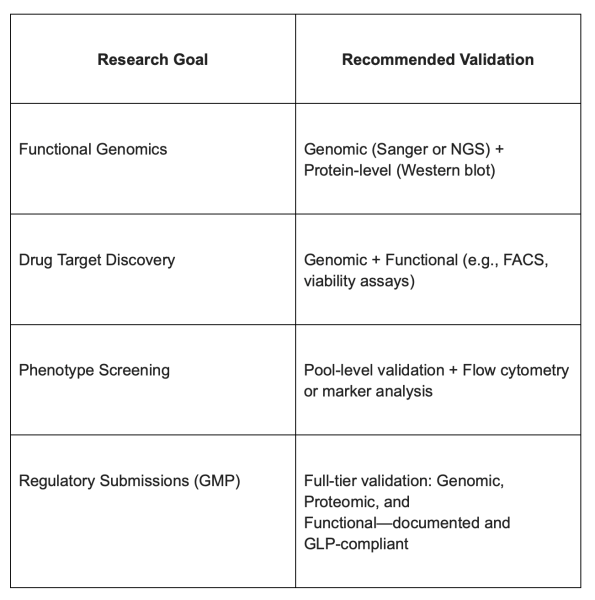
Avoid the “one-size-fits-all” trap. Many labs assume Sanger sequencing is sufficient, but it may miss partial knockouts or alternative splicing events that preserve protein function. If your KO line will guide critical decisions—such as a drug candidate’s mode of action—functional assays and protein-level confirmation are essential.
Bonus tip: For novel or low-expression targets, consider integrating a reporter gene to monitor KO success in real-time, especially during clonal expansion.
With these tailored approaches, researchers can better allocate time and budget without compromising data integrity.
Conclusion: Smarter KO Cell Lines, Better Science
Generating KO cell lines via CRISPR is more than a technical task—it’s strategic planning combined with meticulous execution. Carefully evaluating your project needs against realistic timelines, budgets, and technical capabilities will guide you toward the smartest approach.
Whether you choose DIY or commercial solutions, ensuring rigorous validation, anticipating common pitfalls, and making informed strategic decisions will ultimately determine your project’s success.

For researchers prioritizing efficiency, reliability, and reproducibility, exploring comprehensive solutions like Ubigene’s validated knockout cell line generation and CRISPR gene editing platforms could significantly streamline your workflow.
Science thrives on precision, and knockout experiments are no exception. With smart planning, robust protocols, and experienced support, you can avoid common pitfalls and ensure meaningful, reproducible results.
Comments

Powered by RoundtableAn AI/DeFi-powered Enterprise Media Operating System. Learn more at Roundtable.io.© Roundtable 2026. By using this site you agree to the Terms of Use and Privacy Policy