


Aug 17, 2025 7:00 AM
Updated Aug 20, 2025 10:17 PM
While many contemporary art programs leaned into abstraction and conceptual work, Perlis remained grounded in drawing, perspective, and figurative integrity, elements he considered essential to storytelling.
With a career spanning over forty years of studio instruction and institutional critique, Perlis has become more than just a respected painter. He is a cultural force, a teacher whose commitment to narrative, technical rigor, and moral inquiry has left a mark on both the canvas and the classroom.
Perlis’ teaching career began in the 1970s, and since then, he has influenced hundreds of young artists, most prominently through his long-term positions at the Fashion Institute of Technology (FIT) and Pratt Institute. At FIT, where he served as a professor for over 40 years, Perlis became known for his mastery of classical technique and for his insistence on art as a form of critical engagement.
While many contemporary art programs leaned into abstraction and conceptual work, Perlis remained grounded in drawing, perspective, and figurative integrity, elements he considered essential to storytelling. His pedagogical style was demanding yet compassionate, encouraging students to refine their visual language while challenging them to look directly at the world around them.
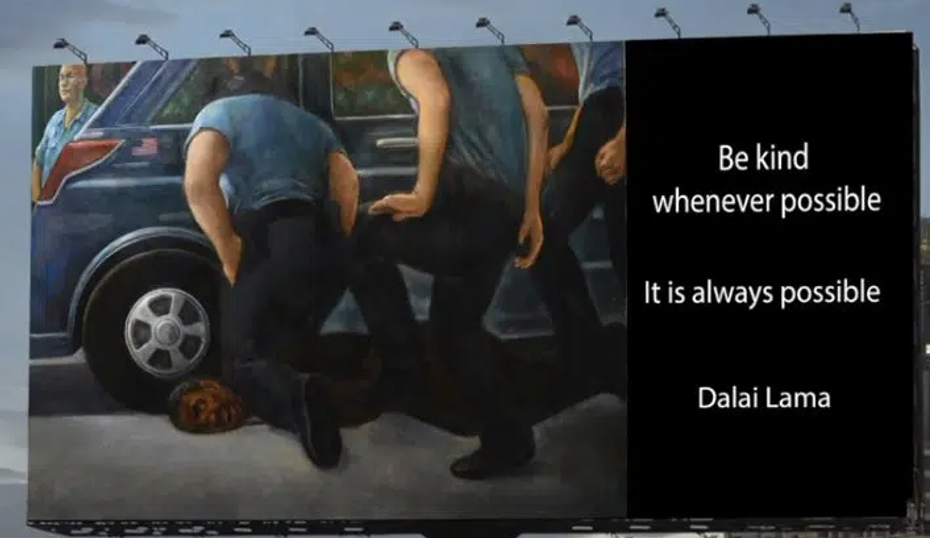
Central to his philosophy was what could be called a curriculum of confrontation. Perlis urged his students to abandon passive aestheticism in favor of content with weight. Social inequality, environmental decay, and political unrest were not topics to be avoided but confronted head-on through visual expression.
Related stories
But not all of his educational contributions came within the bounds of the classroom. Perlis was also a founding member of the Artists’ Choice Museum, a short-lived yet highly influential collective in the late 1970s and early 1980s that sought to give realist artists greater visibility outside institutional hierarchies.
Perlis’ role in this initiative reflected his belief in alternative models of mentorship, where artists learned not just from professors but from one another. Balancing this educational mission with his own prolific studio practice was never easy, but Perlis found the interplay between teaching and creating mutually enriching.
His reciprocal relationship between mentorship and practice is perhaps most visible in the testimonies of his former students, many of whom have gone on to build careers as painters, illustrators, curators, and educators.
His students speak to the transformational power of Perlis’ teaching, not merely as instruction, but as awakening. His critique sessions were known for being brutally honest, yet always rooted in a belief that the student was capable of greatness.
This balance of rigor and faith helped cultivate a rare atmosphere in his classes: one in which talent was nurtured through discipline and care. He offered young artists something many never encountered elsewhere, permission to be serious.
In the contemporary field of art, where educational institutions often prioritize marketability over substance, Donald Perlis’ legacy stands as a radical alternative. He excelled in realism, not out of nostalgia, but out of necessity, because he believed it was the best vehicle for engaging with reality.
His students learned how to wield a brush, but also how to wield it ethically, with awareness of their social context and cultural responsibility. As Perlis continues to produce work from his Brooklyn studio, recently recognized with the 2025–2026 Sharpe-Walentas Studio Program residency, his influence in academia remains ever-present.

Through his former students, his institutional legacy, and the still-resonating impact of the Artists’ Choice Museum, he has ensured that the practice of painting as a form of intellectual and moral labor will persist.
His legacy is not just in the images he has created, but in the generations of artists he has helped to shape, artists who, like their mentor, refuse to look away.
Comments

Powered by RoundtableAn AI/DeFi-powered Enterprise Media Operating System. Learn more at Roundtable.io.© Roundtable 2026. By using this site you agree to the Terms of Use and Privacy Policy