
Diving into the payout structures


Money Lost In Online Casino
Dec 22, 2024 8:00 AM
Updated Dec 25, 2024 12:49 AM
Learn how casinos make money through the mathematical foundations and profit models behind games like slots, blackjack, roulette, and more.
Profit Models Used by Casino Games
The casino industry raked in over $53 billion in gaming revenue in 2021, but how exactly do casinos manage to be so profitable? The answer lies in the payout structures and mathematical foundations underlying the rules and gameplay of popular casino games. By tuning the odds and house edges, casinos are able to consistently turn a profit across thousands and thousands of bets.
Slots or Where the House Always Wins
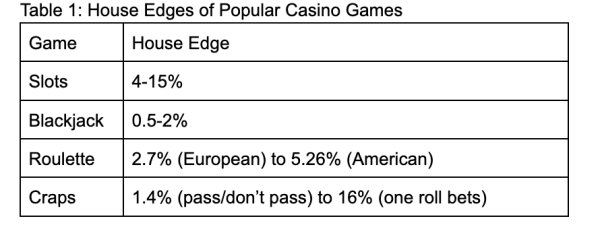
Slot machines actually have some of the widest house edge ranges among Stay Casino NZ games, spanning anywhere from 4% up to 15% depending on the specific machine. This means that for every $100 put into a slot machine, the casino can expect to earn between $4 to $15 in profit. Unlike card games, slots are entirely based on random chance so there are no player decisions or skills that can influence or reduce the house edge. This ensures reliable, long-term profitability for the casino.
Blackjack or Battling the Dealer
Blackjack is unique among table games due to the fact that skilled play can actually lower the house edge and swing the odds in the player’s favor. The average house edge hovers between 0.5% to 2% depending on the specific blackjack variation, number of decks used and house rules in effect. Blackjack strategy charts equip players with the optimal hitting, standing, doubling down and splitting decisions to counter the dealer’s edge. However while card counting can theoretically enable advantage play, casinos have countermeasures in place.
Roulette or Spinning on a Wheel of Chance
In roulette, players are betting on where a ball will land across a wheel with 38 numbered pockets (1-36, 0, and 00). With payouts scaled to the actual odds of any number hitting, the house collects its edge through the extra 0 and 00 pockets which represent losses for players. European roulette has a house edge of 2.7% while American roulette is slightly higher at 5.26% due to the extra 00 pocket. As a game of pure chance, no amount of skill or strategy can overcome the mathematical house edge.
Related stories
Craps or Understanding the Dice Outcomes
From pass/don’t pass bets with a modest 1.4% house edge up to one roll proposition bets at over 16%, craps actually covers the entire spectrum. The payouts perfectly correlate to the probability of any particular dice total occurring. On wagers with only a small house edge, the casino generates reliable revenue through the sheer volume of bets over thousands and thousands of rolls. One roll bets with house edges exceeding 15% produce fewer but much more substantial wins.
In Conclusion

While individual players can sometimes book short term winning sessions through temporary swings of luck, math dictates that casinos will eventually edge out ahead over hundreds of thousands of bets. Through precise tuning of payout tables and odds, casinos are able to bake in a small, long run profit into every single game on the floor. It’s this underlying structure that enables the casino industry to rack up over $50 billion in annual gaming revenue. So next time you sit down to play, remember that the house edge is always lurking beneath the surface!
Comments

Powered by RoundtableAn AI/DeFi-powered Enterprise Media Operating System. Learn more at Roundtable.io.© Roundtable 2026. By using this site you agree to the Terms of Use and Privacy Policy